

Jazz history is full of extraordinary personalities. The musicians who shaped the music often lived lives every bit as dramatic, complex and unpredictable as the sounds they created.
From the early pioneers of New Orleans through to the innovators of bebop, modal jazz and modern improvisation, the story of jazz is really a collection of individual journeys. Musicians developed new musical languages, navigated difficult social realities and built careers in an art form that was constantly evolving.
In this guide we’ve gathered 50 of the best jazz biographies and autobiographies ever written, covering figures such as Louis Armstrong, Charlie Parker, Miles Davis, Duke Ellington, Thelonious Monk and Herbie Hancock.
Some of these books were written by historians and critics who spent years researching their subjects. Others come directly from the musicians themselves, offering a rare view of life on the bandstand, in the studio and on the road.
If you want to understand jazz through the lives of the people who created it, these books are an excellent place to start.
In a rush? Here’s our quick-start guide before we dig into the full 50…
- Best jazz autobiography: Miles by Miles Davis
- Best researched biography: Thelonious Monk: The Life and Times of an American Original by Robin Kelley
- Best for understanding bebop: To Be, or Not… to Bop by Dizzy Gillespie
- Best for musical analysis: John Coltrane: His Life and Music by Lewis Porter
- Best for Charlie Parker fans: Bird Lives! by Ross Russell
- Best for jazz history: Louis Armstrong: An Extravagant Life by Laurence Bergreen
- Best for a brutal honesty: Straight Life by Art Pepper
- Most personal portrait of a jazz giant: Sophisticated Giant by Maxine Gordon
- Best for understanding jazz composition: Duke: A Life of Duke Ellington by Terry Teachout
Note: As an Amazon Associate we earn from qualifying purchases. This post contains affiliate links, meaning we may receive a commission if you click on a link and make a purchase, at no cost to you.
Jazz Trumpet Biographies
Miles: The Autobiography

Written with poet Quincy Troupe, Miles Davis’s autobiography traces the career of one of the most influential musicians in modern jazz.
Davis describes his early musical development, his time working with Charlie Parker in the bebop era and the groundbreaking groups he later led throughout the 1950s and 1960s.
The book is particularly revealing in its descriptions of musicians such as John Coltrane, Cannonball Adderley and Herbie Hancock, giving readers a rare insider perspective on some of the most important recordings in jazz history.
To Be, or Not… to Bop

Dizzy Gillespie played a central role in the development of bebop during the 1940s.
His autobiography recounts the creative atmosphere surrounding the birth of that movement, when musicians such as Charlie Parker and Thelonious Monk began experimenting with new harmonic and rhythmic ideas.
The book combines humour, personal stories and historical insight, making it one of the most engaging accounts of the bebop era.
Louis Armstrong: An Extravagant Life

Laurence Bergreen’s biography traces Armstrong’s life from his childhood in New Orleans to his global fame as a musician and entertainer. Using extensive archival research, Bergreen reconstructs the social and musical environment that shaped Armstrong’s career and the early development of jazz.
Satchmo: My Life in New Orleans – Louis Armstrong

In this autobiographical account Armstrong reflects on his upbringing and the musical culture of early twentieth-century New Orleans. He describes the brass band parades, dance halls and musicians who influenced his development.
Clifford Brown: The Life and Art of the Legendary Jazz Trumpeter – Nick Catalano

Clifford Brown’s career was tragically short, yet his lyrical trumpet style became hugely influential.
Nick Catalano’s biography explores Brown’s life and recordings, particularly his work with drummer Max Roach.
Lee Morgan: His Life, Music and Culture – Tom Perchard
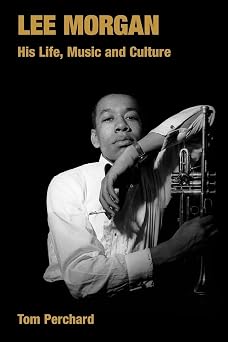
Lee Morgan emerged as a teenage trumpet prodigy with Dizzy Gillespie’s band before becoming one of the leading voices of hard bop.
This biography examines both his musical achievements and the circumstances surrounding his tragic death in 1972.
Alto Saxophone Biographies
Bird Lives!

Ross Russell’s Bird Lives! was one of the earliest full-length biographies of Charlie Parker, the alto saxophonist whose innovations helped launch the bebop revolution in the mid-1940s.
Russell was not only a writer but also the founder of Dial Records, the label that produced many of Parker’s most famous recordings. This gave him unusually close access to Parker and the musicians around him, and much of the book is built from first-hand observation of the bebop scene in Los Angeles and New York.
The biography traces Parker’s early years in Kansas City, where he absorbed the blues-heavy swing style of the local bands before developing the harmonic and rhythmic approach that would transform jazz improvisation.
Russell also places Parker within the wider social and musical environment of the time, describing the clubs, musicians and recording sessions that shaped the early bebop movement.
Although some details have been debated by later historians, Bird Lives! remains one of the most widely read and influential books about Parker and the birth of bebop.
Charlie Parker: His Music and Life

Carl Woideck’s biography takes a more analytical approach to Charlie Parker’s life and work than many earlier accounts.
While the book covers the major events of Parker’s life — from his early years in Kansas City through his breakthrough recordings in the 1940s and his later struggles — Woideck places particular emphasis on the music itself.
Drawing on Parker’s recordings, compositions and improvisational style, the book explores how the saxophonist reshaped the harmonic vocabulary of jazz. Woideck examines key performances and recordings in detail, explaining how Parker’s phrasing, rhythmic flexibility and use of advanced harmony created a new language for improvisers.
For readers interested not only in Parker’s life but also in understanding why his playing had such a profound influence on later generations of musicians, this book provides one of the most thorough and carefully researched studies available.
Straight Life

Art Pepper’s autobiography Straight Life is often cited as one of the most powerful memoirs written by a jazz musician.
Written with Laurie Pepper toward the end of his life, the book tells the story of the alto saxophonist’s career on the West Coast jazz scene, where he worked with musicians such as Stan Kenton, Shelly Manne and Chet Baker.
Pepper describes in vivid detail the Los Angeles jazz environment of the 1950s, from club performances and recording sessions to the everyday life of touring musicians. But the book is also notable for its honesty. Pepper writes openly about his struggles with heroin addiction, the prison sentences that interrupted his career and the personal turmoil that accompanied his life in music.
Despite these darker episodes, Straight Life also conveys the intensity of Pepper’s musical commitment and the creative world of the musicians around him.
The result is a compelling portrait of both a gifted improviser and the jazz scene in which he worked.
Benny Carter: A Life in American Music
Benny Carter was one of the most versatile and long-lived figures in jazz history.
As an alto saxophonist, composer and arranger, Carter’s career stretched from the early swing era of the 1920s through to the late twentieth century. Morroe Berger’s biography traces that remarkable journey in detail.
The book examines Carter’s early work with big bands in the 1930s, when he became known for his sophisticated arrangements and lyrical alto saxophone style. It also explores his later career in film and television music, where he became one of the first jazz musicians to work extensively in Hollywood.
Alongside the historical narrative, Berger provides insight into Carter’s approach to composition and arranging, showing how his work helped shape the sound of the swing era.
For readers interested in the broader development of jazz orchestration and big band writing, Carter’s life offers an important perspective on the evolution of the music.
Phil Woods: Life in E Flat

Phil Woods emerged in the 1950s as one of the most accomplished alto saxophonists of the post-bop era.
Often associated with the musical lineage of Charlie Parker, Woods developed a distinctive voice that combined bebop fluency with a strong lyrical sensibility.
Ted Panken’s biography traces Woods’s career from his early studies at the Juilliard School through his work with musicians such as Dizzy Gillespie, Quincy Jones and Bill Evans.
The book also explores Woods’s years living in Europe during the 1960s and 1970s, a period when many American jazz musicians relocated overseas in search of new opportunities.
Through interviews, historical research and detailed discussion of Woods’s recordings, Panken presents a portrait of a musician who remained deeply connected to the bebop tradition while continuing to evolve throughout a long and productive career.
Tenor Saxophone Biographies
Coltrane: The Story of a Sound

Ben Ratliff’s Coltrane: The Story of a Sound takes an unusual approach to jazz biography. Rather than presenting a strictly chronological account of John Coltrane’s life, Ratliff focuses on the evolution of the saxophonist’s musical language and the cultural response to his work.
The book traces Coltrane’s development from his early years playing rhythm and blues and hard bop through the increasingly exploratory recordings of the 1960s. Ratliff examines key moments in Coltrane’s career, including his work with Miles Davis, the formation of his classic quartet with McCoy Tyner, Jimmy Garrison and Elvin Jones, and the later recordings that pushed toward free jazz and spiritual expression.
Alongside the musical discussion, Ratliff looks at how critics, musicians and audiences reacted to Coltrane’s changing style. The result is a thoughtful study of how one artist reshaped the possibilities of jazz improvisation while also provoking debate about the direction of the music.
John Coltrane: His Life and Music

Lewis Porter’s John Coltrane: His Life and Music is widely regarded as one of the most comprehensive studies of the saxophonist.
Porter combines extensive archival research with careful analysis of Coltrane’s recordings, creating a detailed portrait of both the musician and his work. The biography follows Coltrane from his early years in North Carolina and Philadelphia through his rise in the hard bop scene of the 1950s.
Particular attention is given to Coltrane’s time with Miles Davis and Thelonious Monk, two periods that helped shape his musical direction. Porter then examines the extraordinary run of recordings Coltrane made as a bandleader during the 1960s, including landmark albums such as Giant Steps, My Favorite Things and A Love Supreme.
By combining biography with musical analysis, Porter offers readers a deeper understanding of how Coltrane’s style developed and why it became so influential for later generations of jazz musicians.
Saxophone Colossus: A Portrait of Sonny Rollins

Bob Blumenthal’s Saxophone Colossus: A Portrait of Sonny Rollins provides a thoughtful overview of one of the most influential tenor saxophonists in jazz.
Rollins emerged in the 1950s as a leading voice of the hard bop era, recording a series of landmark albums including Saxophone Colossus, Way Out West and Tenor Madness. Blumenthal traces Rollins’s development from his early years in New York through the period when he played alongside musicians such as Miles Davis, Max Roach and Clifford Brown.
The book also explores some of the more unusual aspects of Rollins’s career, including his famous sabbaticals from performing — periods when he stepped away from the stage in order to rethink his musical direction.
Through interviews and historical context, Blumenthal presents a portrait of a musician whose commitment to artistic growth has remained central throughout a career spanning more than half a century.
Sophisticated Giant: The Life and Legacy of Dexter Gordon

Written by Dexter Gordon’s widow Maxine Gordon, Sophisticated Giant offers a deeply personal perspective on the life of the influential tenor saxophonist.
The biography traces Gordon’s career from the early bebop scene of the 1940s, where he played alongside Charlie Parker and Dizzy Gillespie, through his rise as one of the defining tenor players of the hard bop era.
The book also explores Gordon’s long period living in Europe during the 1960s and 1970s, when many American jazz musicians relocated overseas in search of more stable working opportunities and appreciative audiences.
Maxine Gordon draws on personal letters, interviews and recordings to reconstruct both the public and private sides of the saxophonist’s life. The result is a vivid portrait of a musician whose warm tone and relaxed phrasing made him one of the most distinctive voices on the tenor saxophone.
Stan Getz: A Life in Jazz

Stan Getz is often remembered for the bossa nova recordings that brought him international success in the early 1960s, particularly the album Getz/Gilberto, which helped introduce Brazilian music to a global audience.
Donald Maggin’s biography places those famous recordings within the broader arc of Getz’s career, which began in the swing era of the 1940s. As a teenager Getz played in big bands led by Stan Kenton, Jimmy Dorsey and Benny Goodman before establishing himself as a leading tenor saxophonist.
Maggin examines both Getz’s musical achievements and the personal struggles that accompanied his life, including battles with addiction that affected various stages of his career.
The book presents a balanced portrait of a musician whose warm tone and lyrical style helped define the sound of cool jazz while continuing to evolve across several decades.
Footprints: The Life and Work of Wayne Shorter

Wayne Shorter’s career spans several important chapters in modern jazz history, and Michelle Mercer’s biography provides a detailed account of that remarkable journey.
Shorter first gained recognition as a member of Art Blakey’s Jazz Messengers in the late 1950s before joining Miles Davis’s second great quintet in 1964. As both a saxophonist and composer, he contributed significantly to the band’s repertoire, writing pieces such as “Footprints” and “Nefertiti”.
Mercer traces Shorter’s later work with the fusion group Weather Report, which he co-founded with Joe Zawinul, as well as his long career as a bandleader and composer.
The book also explores Shorter’s philosophical outlook and spiritual interests, elements that often influenced his music. Through interviews and historical context, Mercer presents a portrait of a musician whose creativity extended far beyond conventional stylistic boundaries.
An Unsung Cat: The Life and Music of Warne Marsh

Warne Marsh was one of the most distinctive tenor saxophonists to emerge from the circle of pianist and teacher Lennie Tristano.
Unlike many of his contemporaries, Marsh developed a highly linear improvisational style built around complex melodic lines and subtle rhythmic phrasing. His recordings with Lee Konitz and other musicians associated with the Tristano school helped define a quieter but highly sophisticated strand of modern jazz.
Safford Chamberlain’s biography explores Marsh’s life and music in detail, drawing on interviews, recordings and archival material. The book places Marsh within the broader context of post-bebop improvisation while also examining why his contributions have sometimes been overlooked.
For readers interested in the more intellectually oriented side of modern jazz improvisation, Marsh’s story provides a fascinating perspective on an important but often underappreciated figure.
Jazz Pianist & Bandleader Biographies
Thelonious Monk: The Life and Times of an American Original

Robin Kelley’s biography of Thelonious Monk is widely regarded as the most authoritative account of the pianist’s life and career.
Based on more than a decade of research, the book draws on extensive interviews with Monk’s family, fellow musicians and close associates. Kelley also consulted previously unavailable documents and recordings to reconstruct a detailed picture of Monk’s personal and musical life.
The biography traces Monk’s development from his early years in New York’s Harlem neighbourhood through his rise in the bebop scene of the 1940s, when he worked alongside musicians such as Charlie Parker and Dizzy Gillespie at clubs like Minton’s Playhouse.
Kelley also explores the later stages of Monk’s career, including the period when his distinctive compositions — such as “Round Midnight” and “Straight, No Chaser” — became central to the modern jazz repertoire.
The result is a carefully researched portrait of a musician whose unconventional harmonic language and rhythmic approach helped shape the direction of modern jazz.
Duke: A Life of Duke Ellington
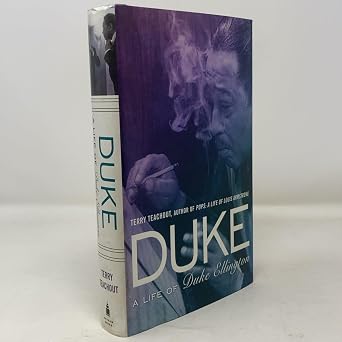
Duke Ellington was one of the most influential composers in American music, and Terry Teachout’s biography offers a detailed examination of both his artistic achievements and his personal life.
Teachout traces Ellington’s career from his early days as a pianist in Washington D.C. to the national recognition he gained through his residency at the Cotton Club in Harlem during the late 1920s. From there the book follows the growth of the Ellington Orchestra, which became one of the most distinctive big bands in jazz.
A central theme of the biography is Ellington’s role as a composer who expanded the possibilities of jazz orchestration. Through works such as Black, Brown and Beige and extended suites written later in his career, Ellington demonstrated that jazz could sustain large-scale compositions as well as short improvisational pieces.
Teachout combines musical discussion with broader cultural context, presenting Ellington not only as a bandleader but also as an important figure in twentieth-century American culture.
Wail: The Life of Bud Powell

Bud Powell played a crucial role in defining the language of bebop piano.
Peter Pullman’s biography explores Powell’s life in depth, beginning with his early years in New York and his involvement in the emerging bebop scene of the 1940s. Powell worked closely with musicians such as Charlie Parker and Dizzy Gillespie, and his piano style translated the rapid melodic lines of bebop improvisation to the keyboard.
Pullman examines Powell’s most important recordings, including his influential sessions for Blue Note Records, which helped establish him as one of the leading pianists of the era.
At the same time, the biography addresses the personal difficulties that marked much of Powell’s life, including mental health struggles and periods of institutionalisation that interrupted his career.
Through detailed research and interviews, Pullman presents a balanced portrait of a musician whose innovations had a lasting impact on modern jazz piano.
Oscar Peterson: A Jazz Odyssey

Oscar Peterson was widely admired for his extraordinary technique and powerful swing feel at the piano.
In Oscar Peterson: A Jazz Odyssey, writer and lyricist Gene Lees traces Peterson’s career from his childhood in Montreal to his emergence as one of the most celebrated jazz pianists of the twentieth century.
Lees explores Peterson’s early recordings and his breakthrough performances with impresario Norman Granz’s Jazz at the Philharmonic tours, which introduced him to international audiences.
The book also examines Peterson’s long series of trio recordings, particularly those made with bassist Ray Brown and guitarist Herb Ellis, which became some of the most influential small-group recordings in jazz.
Alongside the musical discussion, Lees reflects on Peterson’s personality, work ethic and lifelong dedication to developing his craft.
Keith Jarrett: The Man and His Music

Keith Jarrett’s career has followed an unusually wide musical path, moving between jazz improvisation, classical repertoire and solo piano performance.
Ian Carr’s biography traces Jarrett’s development from his early years as a child prodigy through his rise to prominence in the late 1960s. Jarrett first gained major recognition through his work with drummer Art Blakey and later as a member of Miles Davis’s electric bands.
Carr then examines Jarrett’s later career as a bandleader and solo performer. Particular attention is given to the famous solo piano concerts of the 1970s, including the recording of The Köln Concert, which became one of the best-selling solo piano albums in jazz history.
Through interviews and musical discussion, the book explores how Jarrett developed a distinctive approach to improvisation built on spontaneity, lyricism and long-form musical structure.
Mary Lou Williams: Music for the Soul

Mary Lou Williams was one of the most important yet often under-recognised figures in jazz history.
As a pianist, composer and arranger, Williams worked with major swing-era bands including those led by Andy Kirk and Benny Goodman. Her compositions and arrangements helped shape the sound of big band jazz during the 1930s and 1940s.
Tammy Kernodle’s biography traces Williams’s career across several decades, highlighting her ability to adapt to changing musical styles. Williams remained active through the bebop era and later became an important mentor to younger musicians such as Thelonious Monk and Dizzy Gillespie.
The book also explores Williams’s later life, including her turn toward sacred music and her work as an educator.
Kernodle’s study restores Williams to her rightful place as a major creative voice in the history of jazz piano and composition.
Jazz Singer Biographies
Lady Sings the Blues

First published in 1956, Lady Sings the Blues is one of the most famous autobiographies written by a jazz musician. In the book, Billie Holiday recounts her life in stark and often painful detail, from her childhood in Baltimore and Harlem through her rise to international fame as one of the defining voices of jazz.
Holiday describes the harsh realities she faced growing up in poverty, the racism that shaped much of her early career and the complex personal relationships that surrounded her life in music. The book also offers glimpses of the jazz world of the 1930s and 1940s, including her collaborations with musicians such as Lester Young, Teddy Wilson and Count Basie.
Although some details in the autobiography have been debated by historians, the book remains an important personal account of Holiday’s life and the social environment in which she worked.
Billie Holiday: The Musician and the Myth

John Szwed’s biography takes a careful historical approach to the life of Billie Holiday, re-examining both her career and the many stories that have grown around her reputation.
Drawing on recordings, archival sources and contemporary accounts, Szwed looks closely at Holiday’s development as a singer and interpreter of songs. Rather than focusing solely on the tragedies of her personal life, the book emphasises her musical achievements and the distinctive phrasing that made her one of the most influential vocalists in jazz.
Szwed also places Holiday within the broader musical environment of the swing era, discussing her work with bandleaders such as Count Basie and Artie Shaw as well as her later small-group recordings.
The result is a balanced portrait that separates myth from historical reality while highlighting Holiday’s lasting contribution to jazz singing.
Queen of Bebop: The Musical Lives of Sarah Vaughan
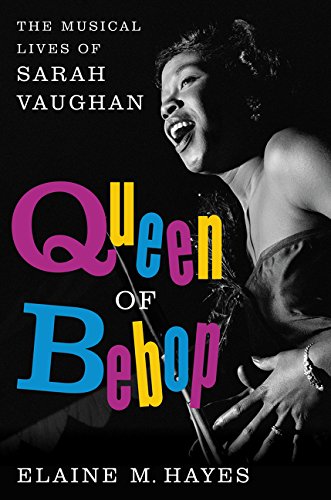
Sarah Vaughan’s extraordinary vocal range and technical command made her one of the most accomplished singers in jazz, and Elaine Hayes’s biography explores the many facets of her career.
The book traces Vaughan’s rise from her early performances in Newark, New Jersey, through her breakthrough with Billy Eckstine’s band during the 1940s — a group that also featured musicians such as Dizzy Gillespie and Charlie Parker at the dawn of the bebop era.
Hayes examines how Vaughan navigated the worlds of jazz, popular music and commercial recording while maintaining a distinctive musical identity. Her interpretations of songs such as “Misty” and “Lullaby of Birdland” demonstrated both her technical skill and her ability to shape melodies with subtle rhythmic phrasing.
By situating Vaughan within the musical and cultural landscape of mid-twentieth-century America, Hayes provides a deeper understanding of the singer’s place in jazz history.
Ella Fitzgerald: A Biography of the First Lady of Jazz

Ella Fitzgerald’s career spanned more than five decades, and Stuart Nicholson’s biography offers a detailed account of her remarkable journey.
The book begins with Fitzgerald’s difficult early years and her breakthrough performance at the Apollo Theater in 1934, which launched her professional career. Nicholson then traces her rise as a singer with Chick Webb’s orchestra before examining her later success as a solo artist.
Particular attention is given to Fitzgerald’s celebrated Songbook recordings of the 1950s and 1960s, in which she interpreted the work of composers such as Cole Porter, George Gershwin and Duke Ellington.
Nicholson combines historical narrative with discussion of Fitzgerald’s musical style, showing how her precise intonation, rhythmic flexibility and improvisational scatting helped define the art of jazz singing.
Nina Simone: Break Down and Let It All Out

Nina Simone’s life and career extended far beyond conventional definitions of jazz performance, and this biography explores her work as a pianist, singer and activist.
Sylvia Hampton and David Nathan trace Simone’s early years as a classically trained pianist in North Carolina before following her emergence as a recording artist during the late 1950s. The book examines the wide range of musical styles she embraced, blending jazz, blues, folk and classical influences.
A significant part of the biography also focuses on Simone’s involvement in the American civil rights movement, during which she wrote and performed songs that addressed racial injustice and political change.
Through interviews and archival material, the authors present a portrait of an artist whose music and activism were closely intertwined.
Jazz Bass Biographies
Beneath the Underdog

Charles Mingus’s autobiography Beneath the Underdog is one of the most unusual and controversial books written by a jazz musician.
Published in 1971, the book blends personal memoir with storytelling and vivid reflections on the music world that Mingus inhabited. Mingus recounts his upbringing in Los Angeles, where he was exposed to a wide range of musical influences, from church music to classical composition and early jazz recordings.
As the narrative moves into his professional career, Mingus describes his experiences working with musicians such as Louis Armstrong, Duke Ellington and Charlie Parker. The book also reflects on the challenges he faced as an ambitious composer trying to push jazz toward larger and more complex forms.
Although the autobiography sometimes blurs the line between fact and exaggeration, it offers a fascinating glimpse into the personality and artistic vision of one of the most original composers in jazz history.
Myself When I Am Real: The Life and Music of Charles Mingus

Gene Santoro’s biography provides a more historically grounded portrait of Charles Mingus than the composer’s own autobiography.
Drawing on interviews, recordings and archival research, Santoro traces Mingus’s development as both a bassist and composer. The book examines his early career as a sideman in the 1940s and 1950s before focusing on the ambitious projects he led as a bandleader.
Particular attention is given to Mingus’s most celebrated recordings, including albums such as Mingus Ah Um and The Black Saint and the Sinner Lady, which demonstrated his ability to combine improvisation with large-scale composition.
Santoro also explores the complexities of Mingus’s personality, including the fierce independence and strong opinions that often shaped his relationships with fellow musicians.
The biography ultimately presents Mingus as a musician who sought to expand the possibilities of jazz composition while maintaining the emotional intensity of improvisation.
Mingus: A Critical Biography

Brian Priestley’s biography offers another detailed study of Mingus’s life and music, placing the bassist within the broader history of postwar jazz.
Priestley examines Mingus’s career as both a performer and composer, highlighting the ways in which his music combined elements of blues, gospel, swing and modern jazz. The book also explores Mingus’s work as a bandleader during the 1950s and 1960s, when he led a series of ensembles that became known for their highly expressive group improvisation.
Alongside the musical discussion, Priestley considers Mingus’s role as a commentator on American society. Many of Mingus’s compositions addressed social and political themes, reflecting his deep engagement with the cultural issues of his time.
Through careful research and musical analysis, the biography presents Mingus as one of the most ambitious and original composers in the history of jazz.
Ron Carter: Finding the Right Notes – Dan Ouellette
Ron Carter is widely recognised as one of the most recorded bassists in jazz history, having appeared on thousands of albums across several decades.
Dan Ouellette’s biography traces Carter’s musical development from his early classical training through his emergence as a major figure in modern jazz during the 1960s. Carter gained international recognition as a member of Miles Davis’s second great quintet alongside Wayne Shorter, Herbie Hancock and Tony Williams.
The book explores Carter’s distinctive approach to the bass, including his lyrical sense of melody and his ability to anchor complex harmonic progressions.
Ouellette also examines Carter’s long career as both a bandleader and sideman, during which he collaborated with musicians ranging from Eric Dolphy and McCoy Tyner to contemporary jazz artists.
The biography presents Carter not only as a virtuoso instrumentalist but also as a thoughtful musician who helped redefine the role of the bass in modern jazz ensembles.
Jazz Guitar Biographies
Django Reinhardt – Charles Delaunay
Charles Delaunay’s biography of Django Reinhardt is one of the earliest serious studies of the legendary guitarist’s life and music. Delaunay was a central figure in the French jazz world and a co-founder of the Hot Club de France, which promoted jazz across Europe during the 1930s and 1940s.
Because of his close connection to Reinhardt and the musicians around him, Delaunay was able to document the guitarist’s career from an unusually informed perspective. The book traces Reinhardt’s early life in Romani travelling communities around Paris before following his rise as a major figure in European jazz through his partnership with violinist Stéphane Grappelli in the Quintette du Hot Club de France.
Delaunay also describes the extraordinary story of Reinhardt’s recovery after the caravan fire that severely injured his left hand, forcing him to develop a unique fingering technique that became central to his style.
The biography remains an important historical document of Reinhardt’s life and the development of European jazz.
Django: The Life and Music of a Gypsy Legend – Michael Dregni
Michael Dregni’s biography offers one of the most detailed modern studies of Django Reinhardt.
Drawing on extensive research and interviews with family members and fellow musicians, Dregni reconstructs Reinhardt’s life from his early years performing in cafés and dance halls around Paris through his international fame during the swing era.
The book explores Reinhardt’s musical development in depth, including his distinctive guitar technique and the melodic phrasing that helped define the sound of gypsy jazz. Dregni also examines the guitarist’s recordings with the Quintette du Hot Club de France, which remain among the most influential guitar recordings in jazz.
Alongside the musical discussion, the biography looks at Reinhardt’s life during the difficult years of the Second World War and the later stages of his career.
For readers interested in the history of jazz guitar, Dregni’s book provides one of the most comprehensive portraits of Reinhardt’s life and legacy.
Wes Montgomery: The Life and Music – Adrian Ingram
Wes Montgomery became one of the most influential jazz guitarists of the 1960s, known for his warm tone and his distinctive technique of playing melodies with his thumb rather than a pick.
Adrian Ingram’s biography traces Montgomery’s musical development from his early years in Indianapolis through his rise to national prominence during the late 1950s. After gaining attention through recordings with his brothers in the Montgomery Brothers group, he went on to record a series of influential albums for Riverside Records.
The book examines Montgomery’s musical style in detail, including his use of octave melodies and chordal improvisation, both of which became widely imitated by later guitarists.
Ingram also discusses Montgomery’s later commercial success during the 1960s, when his recordings began reaching a broader audience. Despite the shorter length of his career, Montgomery’s influence on jazz guitar has remained enduring.
Pat Metheny: The ECM Years – Mervyn Cooke
Pat Metheny emerged in the 1970s as one of the most distinctive voices in modern jazz guitar. Mervyn Cooke’s book focuses on Metheny’s early recordings for ECM Records, a period that established many of the musical ideas that would define his career.
The biography explores Metheny’s collaborations with musicians such as pianist Lyle Mays, bassist Jaco Pastorius and drummer Danny Gottlieb. These recordings introduced a sound that blended jazz improvisation with elements of folk, rock and atmospheric studio production.
Cooke places Metheny’s work within the broader development of contemporary jazz during the 1970s and 1980s, when many musicians began experimenting with new technologies and musical influences.
By examining Metheny’s compositions, recordings and touring career, the book provides insight into how he helped shape the sound of modern jazz guitar while maintaining a strong emphasis on melody and musical storytelling.
Essential Jazz Autobiographies
Raise Up Off Me – Hampton Hawes
Hampton Hawes’s memoir Raise Up Off Me is often considered one of the most compelling autobiographies written by a jazz musician.
Hawes grew up in Los Angeles and became an important figure on the West Coast jazz scene of the 1950s, performing with musicians such as Charlie Parker, Wardell Gray and Dexter Gordon. The book traces his development as a pianist within that vibrant musical environment.
A major part of the memoir deals with Hawes’s struggle with heroin addiction, which eventually led to a prison sentence in the late 1950s. Written after his release — following a rare presidential pardon granted by John F. Kennedy — Hawes reflects on both the difficulties he faced and the musical world that surrounded him.
Alongside its personal revelations, the book offers a vivid picture of the club scene, recording sessions and touring life experienced by jazz musicians during the bebop era.
Treat It Gentle – Sidney Bechet
Sidney Bechet was one of the earliest great soloists in jazz, known for his powerful tone on soprano saxophone and clarinet.
In Treat It Gentle, Bechet recounts his life from his childhood in New Orleans through his travels across the United States and Europe during the early decades of jazz. The book provides a rare first-hand account of the musical environment that produced some of the earliest jazz recordings.
Bechet describes the brass band parades, dance halls and street performances that formed the backdrop to his early musical experiences. He also reflects on the musicians he encountered along the way and the cultural exchanges that helped spread jazz internationally.
The autobiography offers valuable insight into the formative years of jazz and the life of a musician who helped bring the music to audiences around the world.
Possibilities – Herbie Hancock
Herbie Hancock’s autobiography Possibilities traces the career of one of the most inventive musicians in modern jazz.
Hancock recounts his early years as a piano prodigy in Chicago before describing his rise to prominence during the 1960s as a member of Miles Davis’s second great quintet. Alongside Wayne Shorter, Ron Carter and Tony Williams, Hancock helped shape one of the most influential small groups in jazz history.
The book also explores Hancock’s later musical explorations, including his pioneering work with electronic instruments and funk-influenced recordings such as Head Hunters. Throughout the memoir, Hancock reflects on the creative process behind his compositions and improvisations.
Beyond the music itself, Hancock discusses his interests in Buddhism, technology and philosophy, offering readers a broader perspective on the ideas that have shaped his long and varied career.
Good Morning Blues – Count Basie
Good Morning Blues tells the story of pianist and bandleader Count Basie, whose orchestra became one of the defining ensembles of the swing era.
Written with the assistance of Albert Murray, the autobiography traces Basie’s early years in Kansas City, where a thriving nightlife scene allowed jazz musicians to develop their craft through long performances in clubs and dance halls.
Basie describes the musicians who shaped the sound of his orchestra, including Lester Young, Buck Clayton and Jo Jones. He also reflects on the band’s rise to national fame during the 1930s, when their recordings and radio broadcasts helped popularise the Kansas City style of swing.
Through Basie’s relaxed storytelling, the book captures the atmosphere of the big band era and the collaborative spirit that characterised many of the great jazz orchestras.
Music Is My Mistress – Duke Ellington
Duke Ellington’s autobiography Music Is My Mistress offers a personal look at the life of one of the most important composers in jazz history.
Rather than following a strictly chronological structure, Ellington’s memoir moves through memories and reflections on the people and places that shaped his musical journey. He writes about the musicians who played in his orchestra, the experiences of touring and the creative ideas behind many of his compositions.
Ellington also discusses his philosophy of music and the role he believed jazz could play within the broader landscape of American culture.
The book provides a rare opportunity to hear Ellington’s voice directly as he reflects on a career that spanned more than five decades and produced some of the most enduring works in jazz.
Final Thoughts
Jazz biographies offer something that recordings alone can’t fully provide. They reveal the environments in which the music developed, the relationships between musicians and the personal experiences that shaped many of the most important recordings in jazz history.
Reading about the lives of these artists helps place the music in context. The swing era, the bebop revolution of the 1940s, the hard bop movement of the 1950s and the experimental directions of the 1960s and beyond were all shaped by musicians responding to the cultural and social world around them. Through biographies and autobiographies, those stories become much clearer.
Many of the books in this guide also show how different the paths into jazz could be. Some musicians emerged from local club scenes in cities such as New Orleans, Kansas City or New York, while others came through conservatories, big bands or touring ensembles. Yet across these varied backgrounds, a common thread remains: an intense commitment to developing a personal voice in music.
For listeners who want to explore jazz more deeply, these biographies provide an excellent companion to the recordings themselves. They offer insight into the personalities, ideas and historical moments that helped shape one of the most creative musical traditions of the last century.
Billy Strayhorn- Lush Life; The engine that powered Ellington
Good addition!
Three additional jazz bios that should be in your list:
Matthew Ruddick – Funny Valentine: The Story of Chet Baker. This book explores his complete life. Yes, the dark side, but more importantly his exceptional talent as a musician.
Peter Jones – This Is Hip: The Life of Mark Murphy. A thorough portrait of the best male jazz singer after Louis Armstrong.
Four Authors – Jade Visions: The Life and Music of Scott LaFaro. A fine portrait of one of the most influential bassists who had a tragically short life.
Thanks Joe!
Matt, I was wondering if I might leave a plug for my latest study — Kosher Jammers: Jewish connections in jazz – part 1 The USA. I’m not claiming it’s one of the greatest jazz books — that’s not for me to say. But Chris Searle, jazz critic of UK daily newspaper the Morning Star, in his review of my book, which was published in January, enthuses: “Gerber is a profoundly original writer who writes as he speaks. His text is not only serious scholarship, but informal, conversational and full of surprises. This makes his interviews with musicians, record company bosses, musicians’ managers, impresarios and jazz festival organisers speak with the exigencies of real life, so that his book is a succession of voices across the US, and if you love jazz or even have little more than a marginal interest.”
There’s details, and some biographical info, on my website — https://www.mikegerberjournalist.co.uk
I highly recommend adding “Sophisticated Giant: The Life and Legacy of DEXTER GORDON”, written by his wife, Maxine Gordon.
February 27, 2023 will mark Dexter’s 100th birthday.
I expect that there will many events worldwide to celebrate the occasion.
Thanks for sharing Yosef!