

1926–1967 · Tenor and soprano saxophone
John Coltrane
Amsterdam, 1961 · Photo: Dave Brinkman / Anefo, Nationaal Archief (CC0)
The saxophonist who went from Miles Davis’s sideman to A Love Supreme in under ten years. Albums, songs and every story we’ve written about him.
John Coltrane was born in Hamlet, North Carolina, on 23 September 1926 and grew up in High Point. He joined Miles Davis’s quintet in 1955, was fired in 1957 because of his heroin use, got clean, and spent that summer playing with Thelonious Monk at the Five Spot in New York.
Giant Steps (1960) set a new standard for playing over fast chord changes. His quartet with McCoy Tyner, Jimmy Garrison and Elvin Jones then recorded A Love Supreme in December 1964. He died of liver cancer in July 1967, aged 40.
| Born | 23 Sep 1926, Hamlet, North Carolina |
| Died | 17 Jul 1967, Huntington, New York |
| Instrument | Tenor and soprano saxophone |
| Style | Hard bop, modal jazz, free jazz |
| Key records | Blue Train, Giant Steps, My Favorite Things, A Love Supreme |
| Played with | Miles Davis, Thelonious Monk, McCoy Tyner, Elvin Jones |
Where to start
See him play
The classic quartet playing “My Favorite Things” live. Coltrane first recorded the Rodgers and Hammerstein song in 1960, on soprano saxophone, and kept it in his sets for the rest of his life.
Era by era
1955–57
With Miles
Coltrane joined Miles Davis’s first great quintet in 1955 and played on the Prestige marathon sessions. In 1957 he was fired by Miles.
1957–59
Monk and Blue Train
Clean of heroin, he spent the summer of 1957 with Thelonious Monk at the Five Spot and recorded Blue Train, his only album as leader for Blue Note. He rejoined Miles for Milestones and Kind of Blue.
1959–61
Giant Steps
For Atlantic he recorded Giant Steps, and then My Favorite Things, his first big seller. He was on European TV in 1960: watch Coltrane in Düsseldorf.
1961–65
The classic quartet
On Impulse!, with McCoy Tyner, Jimmy Garrison and Elvin Jones, he made Ballads, an album with Duke Ellington and, in December 1964, A Love Supreme.
1965–67
Into free jazz
On Ascension (1965) eleven musicians improvised together. His wife, Alice Coltrane, and Pharoah Sanders joined the band. He died on 17 July 1967.
Stories
John Coltrane Never Explained “Alabama” to His Band. McCoy Tyner Said It Came From Martin Luther King
On the morning of Sunday 15 September 1963, a bomb went off at the 16th Street Baptist Church in Birmingham, Alabama, at about 10:22. Four …
Impulse! Records: 10 Albums That Defined the Label
Few record labels have a catalogue quite like Impulse! Records. Behind those instantly recognisable orange-and-black spines are some of the most extraordinary jazz albums ever …
The 23 Greatest Jazz Albums of the 1950s
Six of the records on this list are not quite what they appear to be. Duke Ellington‘s triumphant comeback at Newport? Partly reconstructed in a …
When Coltrane & Getz Shared the Stage: A Rare 1960 European Jam
Jazz history is often told through famous bands. Miles Davis’s First Great Quintet. The John Coltrane Quartet. Oscar Peterson’s trio. Stan Getz’s various groups. Each …
The Truth Behind the Sonny Rollins / John Coltrane Rivalry (Video)
There’s a narrative that follows jazz history like a shadow. Two giants on the same instrument, coming up at the same time, must be rivals. …
John Coltrane in Düsseldorf, 1960: Rare Television Footage from a Pivotal Year
By 1960, John Coltrane had already established himself as one of the most powerful improvisers in modern jazz. Yet the direction his music would take …
Listening To ‘A Love Supreme: Live in Seattle’
If you haven’t heard the 1965 live recording of John Coltrane playing A Love Supreme in a Seattle club, you’re in for a treat. Released …
Unreleased for 38 Years: Archie Shepp’s A Love Supreme Contribution
When A Love Supreme was released in early 1965, it appeared as a complete statement by John Coltrane’s Classic Quartet — a four-part suite recorded …
How John Coltrane’s Soprano Saxophone Transformed The Jazz World
For all the stories of marathon practice sessions and gradual musical evolution, sometimes the smallest gesture changes the course of jazz history. That’s the case …
How Getting Fired by Miles Davis in 1957 Changed John Coltrane — and Jazz History
In April 1957, Miles Davis made a bold move that would echo across jazz history: he fired John Coltrane from his band. At the time, …

12 Groundbreaking John Coltrane Songs
John Coltrane is one of the most revered and influential jazz saxophone players in history. Known for his both technical virtuosity and deeply spiritual musical …

John Coltrane’s Sheets of Sound
Never content to sit still, groundbreaking saxophonist John Coltrane changed the course of jazz history more than once. In this article, we take a closer …

Duke Ellington & John Coltrane (1963) Impulse!
Two of the most famous jazz musicians in history going head to head? That’s the prospect on this iconic recording “Duke Ellington & John Coltrane” …

Giant Steps | John Coltrane’s Groundbreaking Album
Arguably the most famous saxophone player in history, John Coltrane’s music not only enthralled fans, but changed the way that future generations of jazz musicians …

John Coltrane Lush Life (Inside The Classic Album)
For a musician as virtuosic and genre-changing as tenor saxophonist John Coltrane, getting into the details of each of his albums is a great way …

10 of the Best John Coltrane Albums in Jazz History
American saxophone player John Coltrane is surely one of the most inspiring jazz musicians in jazz history and, in this article, we’ll take a chronological …
John Coltrane on record
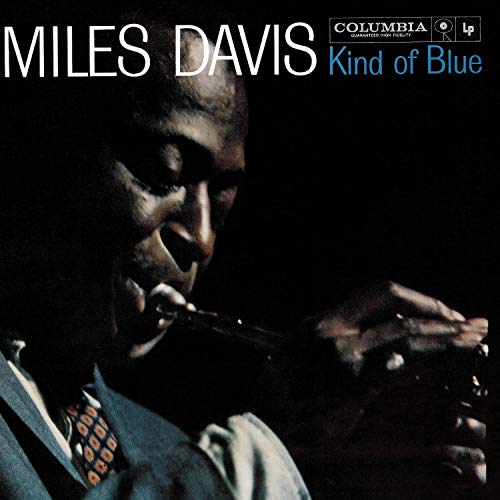
Kind of Blue
Play first: ‘So What’
The 1959 sextet with Coltrane, Cannonball and Bill Evans. Slow, spacious and the best-selling jazz record of all.

Blue Train
Play first: ‘Blue Train’
Coltrane’s only album as leader for Blue Note, with Lee Morgan. Hear this before A Love Supreme.

A Love Supreme
Play first: ‘Acknowledgement’
A four-part suite recorded in December 1964. Play it in order, from the opening bass line.

Relaxin’
Play first: ‘If I Were a Bell’
From the 1956 Prestige sessions that also produced Cookin’, Workin’ and Steamin’. Coltrane is on tenor.
As an Amazon Associate, Jazzfuel earns from qualifying purchases.
Questions
What is John Coltrane’s most famous album?
A Love Supreme, a four-part suite recorded with his quartet in December 1964.
What does “sheets of sound” mean?
The critic Ira Gitler used the phrase for Coltrane’s late-1950s solos, which ran fast runs of notes together into dense waves. More on sheets of sound.
How did John Coltrane die?
Of liver cancer, on 17 July 1967, in Huntington, New York. He was 40.
The best jazz stories, every week
Join almost 20,000 jazz fans on the free weekly email.