
Miles Davis
Albums, songs and the stories behind the records: everything we’ve written about Miles Davis.
Miles Davis was born in Alton, Illinois, on 26 May 1926 and grew up in East St. Louis. He went to New York to study at Juilliard in 1944 and, within a year, had dropped out to play full-time, much of it in Charlie Parker’s band. Over the next 45 years he led the groups behind cool jazz, modal jazz and jazz-rock fusion, and made Kind of Blue, which went five times platinum in the US in 2019, sixty years after it was recorded.
Miles Davis at a glance
- Born: May 26, 1926 (Alton, Illinois, USA)
- Died: September 28, 1991 (Santa Monica, California)
- Instrument: Trumpet, flugelhorn
- Active years: 1944–1991
- Key jazz movements:
Cool jazz · Hard bop · Modal jazz · Jazz fusion - Landmark albums:
Birth of the Cool, Kind of Blue, Sketches of Spain, Bitches Brew - Notable collaborators:
Charlie Parker · John Coltrane · Herbie Hancock · Wayne Shorter · Bill Evans
Where to start with Miles Davis
If you’re new to Miles, start with Kind of Blue, recorded in two sessions at Columbia’s 30th Street Studio in March and April 1959. Then use these three guides to go further.
The story of Kind of Blue
Who played on it, and how little was written down before the sessions.
The most famous Miles Davis albums
One record from each period, from Birth of the Cool to the electric years.
10 legendary Miles Davis songs
From “So What” to “Tutu”, and the stories behind them.
Miles Davis, era by era
Birth of the Cool (1949–50)
Between January 1949 and April 1950, Miles led a nine-piece band whose recordings were later released as Birth of the Cool.
The first great quintet (1955–57)
By 1956 his band included a young John Coltrane. To get out of his Prestige contract and move to Columbia, Miles recorded enough material for four albums in two sessions, the Prestige marathon sessions, including his version of “If I Were a Bell”. The quintet didn’t last: here’s why Miles fired Coltrane in 1957. The same year in Paris he improvised the soundtrack to Louis Malle’s Elevator to the Gallows, and appeared on French TV.
Kind of Blue (1958–59)
With Cannonball Adderley and Bill Evans in the band by 1958, Miles moved towards playing over scales rather than fast chord changes. Evans came back for the Kind of Blue sessions in 1959; watch him talk about Miles. That August, Miles was beaten by a police officer outside Birdland in New York. For where his records sit in the decade, see the greatest jazz albums of the 1950s.
The second great quintet (1964–68)
In 1963 Miles hired a rhythm section of Herbie Hancock, Ron Carter and a 17-year-old Tony Williams, and Wayne Shorter joined in 1964. Read how he tried to hire Ron Carter, the advice he gave Herbie (“don’t play the butter notes”), and how a February 1964 benefit concert in New York, where the band weren’t paid, became two live albums. Then watch the band in Milan in 1964.
The electric years (1968–75)
The change started on Filles de Kilimanjaro (1968). From Bitches Brew (1970) on, Miles plugged in. He was fascinated by Jimi Hendrix, and in the mid-70s guitarist Pete Cosey pushed his band further out than ever. Then, in 1975, he stopped playing in public for five years. For the concert recordings, see the best live jazz fusion albums.
The comeback (1980–91)
He came back in 1980, recorded The Man with the Horn (1981), played a pimp on Miami Vice and made Amandla (1989), one of his last studio albums. In 1986 Wynton Marsalis walked on stage during his set at the Vancouver jazz festival. Miles died in Santa Monica on 28 September 1991, and in 2006 he was inducted into the Rock and Roll Hall of Fame.
All our Miles Davis stories
Every Jazzfuel article on Miles, newest first.



Miles Davis FAQ
What is Miles Davis’ most famous album?
Kind of Blue (1959). It was certified five times platinum in the US in 2019 and is often called the best-selling jazz album of all time. Read the story of Kind of Blue.
What instrument did Miles Davis play?
Trumpet. He also played flugelhorn, notably on Miles Ahead (1957), and organ on stage in the 1970s.
Who played in Miles Davis’ quintets?
The first great quintet (1955–57) was John Coltrane, Red Garland, Paul Chambers and Philly Joe Jones. The second (1964–68) was Wayne Shorter, Herbie Hancock, Ron Carter and Tony Williams.
When did Miles Davis die?
On 28 September 1991 in Santa Monica, California, aged 65, after a stroke and pneumonia.
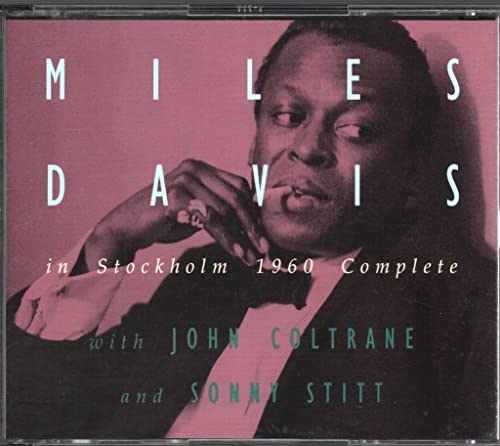
Our picks: Miles Davis live on CD
Three of our favourite Miles Davis live albums, available on CD.


Want the best jazz stories into your inbox?
Join 15,000+ serious jazz fans getting the free weekly email full of the best stories in jazz…