
When Charlie Parker died in March 1955, many musicians quietly wondered whether bebop had reached its natural limit.
Parker himself had reportedly admitted to friends that he felt he had exhausted its vocabulary. “I can’t find anything new to say,” he once remarked.
But even before Parker’s death, another voice was already emerging — one that would reshape modern jazz in a very different way.
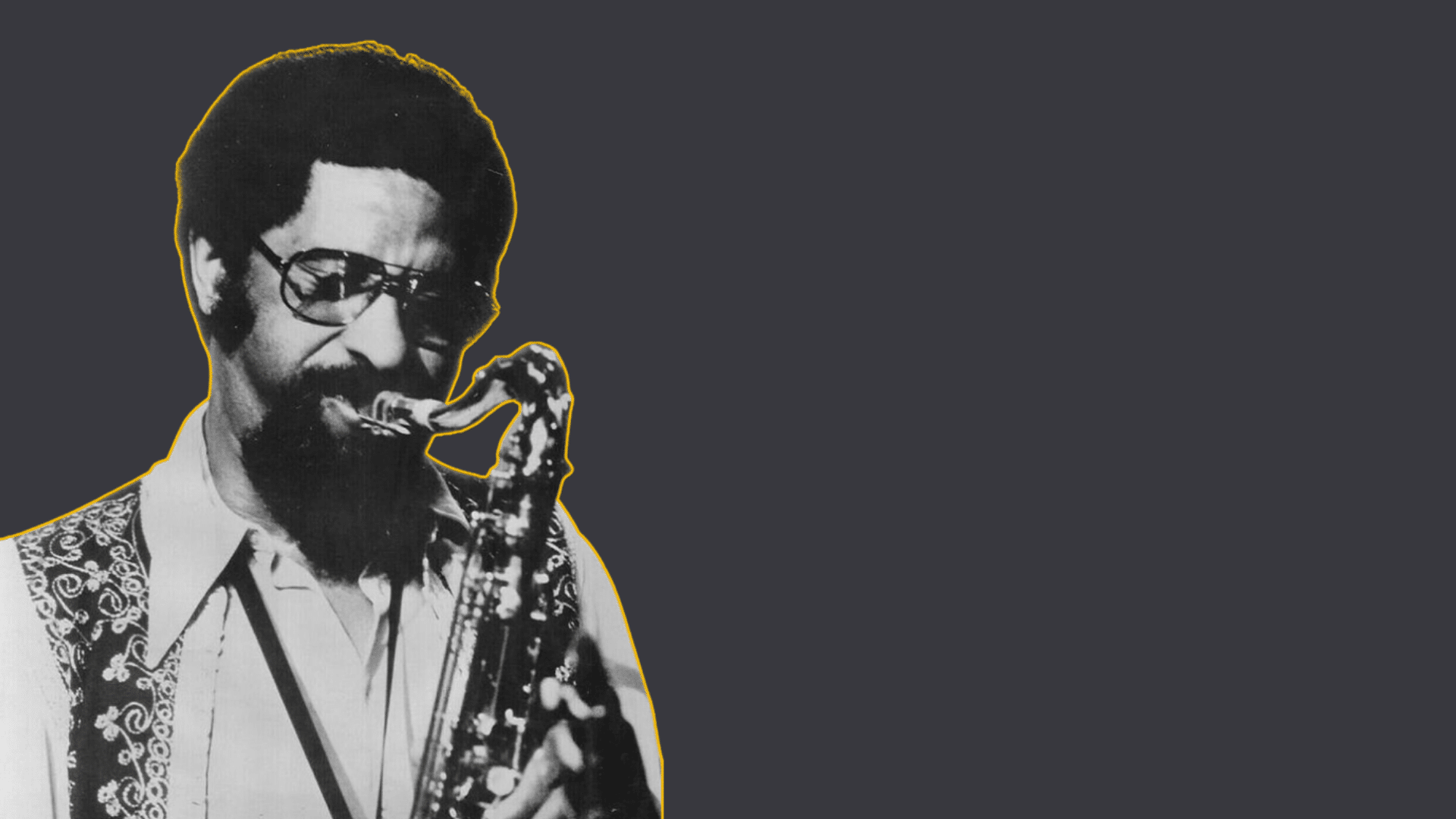
That voice belonged to Walter Theodore “Sonny” Rollins.
From Harlem to the Tenor Saxophone
Born in Harlem on 7 September 1930, Rollins began on piano before switching to alto saxophone as a child. By his mid-teens, he had settled on tenor — the instrument that would become his lifelong means of expression.
By the late 1940s, he was already working alongside future giants, including Bud Powell, J.J. Johnson, and Miles Davis. Unlike many of his peers, Rollins never tried to imitate Parker directly. Instead, he drew inspiration from earlier masters.
He absorbed Coleman Hawkins’ harmonic sophistication and Lester Young’s lyrical phrasing, combining both with a deep rhythmic imagination. From the start, his solos weren’t about showing off speed. They were about shape, logic, and telling a musical story.
Finding His Voice — and Himself
Rollins’ early career was interrupted by drug addiction in the early 1950s. Despite this, his talent remained unmistakable. In 1955, after undergoing experimental methadone treatment, he returned to music with renewed focus.
What followed was an extraordinary run of recordings in a very short space of time.
Between 1954 and 1957, Rollins recorded a string of albums that would define both his career and the hard bop era. Yet even at the height of his success, he remained deeply self-critical.
In 1959, troubled by doubts about his own playing, he withdrew from public performance altogether.
For nearly two years, he practised alone on the pedestrian walkway of New York’s Williamsburg Bridge — often for hours a day — refining his sound in isolation.
When he returned in 1961, he emerged as a more expansive, fearless improviser.
A Master of Spontaneous Composition
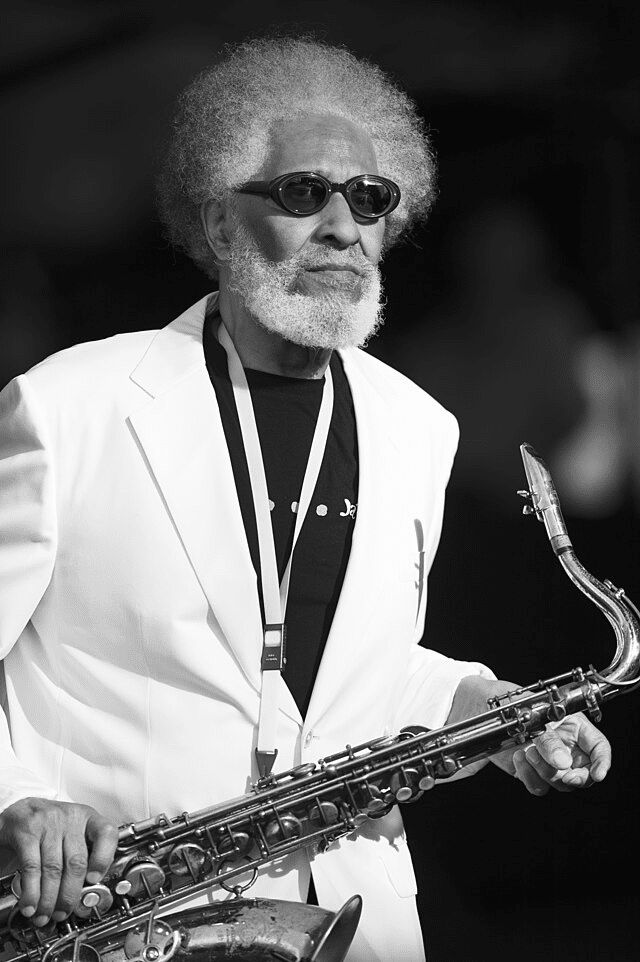
Across seven decades, Rollins developed a style rooted in melody and rhythm. He rarely relied on abstract harmony or free improvisation. Instead, he built solos from small motifs, reshaping them in real time.
His encyclopaedic knowledge of popular songs, standards, and Tin Pan Alley melodies allowed him to weave quotations and references seamlessly into performances. On occasion, he would even play extended solo encores built entirely from linked song titles — famously at Ronnie Scott’s in London.
Hearing Rollins live often felt like watching someone compose in real time, in front of an audience.
The Tunes That Defined Sonny Rollins
The following song selections come from Rollins’ most influential period, when many of his compositions entered the jazz canon. If you are new to his music, this is the place to start.
Oleo
From Bags’ Groove – Miles Davis (Prestige, 1954)
Based on the chord sequence of “I Got Rhythm,” “Oleo” quickly became a bebop standard. Rollins’ solo here is a model of clarity and logic, unfolding with effortless swing.
Miles Davis’ admiration for Rollins was no secret, and their early collaborations remain among the strongest of the era.
Airegin
From Bags’ Groove – Miles Davis (Prestige, 1954)
“Nigeria” spelled backwards, “Airegin” opens with an angular, instantly recognisable melody. Davis plays with characteristic restraint, while Rollins delivers a solo packed with rhythmic invention and unexpected turns.
Pent-Up House
From Sonny Rollins Plus 4 (Prestige, 1956)
Recorded with the Clifford Brown–Max Roach Quintet, this session captured Rollins alongside one of jazz’s greatest ensembles.
After Brown’s fluent opening solo, Rollins enters with a relaxed, almost conversational approach. His unhurried development of ideas remains a masterclass in pacing.
Valse Hot
From Sonny Rollins Plus 4 (Prestige, 1956)
One of jazz’s most enduring waltzes, “Valse Hot” never loses its dance-like character. Even at his most adventurous, Rollins keeps the underlying pulse intact, allowing lyricism and swing to coexist.
Tenor Madness
From Tenor Madness (Prestige, 1956)
This historic meeting with John Coltrane is often described as a “tenor battle,” but the music tells a different story.
Rather than competing, the two saxophonists reveal contrasting personalities: Rollins’ thematic logic alongside Coltrane’s harmonic intensity. The result is collaboration, not confrontation.
St. Thomas
From Saxophone Colossus (Prestige, 1957)
Inspired by Caribbean folk melodies from Rollins’ family background, “St. Thomas” blends calypso rhythms with hard bop sophistication.
Its infectious groove and playful improvisation helped make Saxophone Colossus one of the most widely loved jazz albums ever recorded.
Blue 7
From Saxophone Colossus (Prestige, 1957)
“Blue 7” isn’t just a tune. It’s Rollins building a long, coherent piece almost entirely on the spot.
Musicologist Gunther Schuller famously analysed the performance in detail, showing how Rollins builds large-scale structure from small melodic cells — a rare example of deep formal logic in improvisation.
Way Out West
From Way Out West (Prestige, 1957)
Recorded with Ray Brown and Shelly Manne, this trio session marked Rollins’ first major outing without a chordal instrument.
Without a piano or guitar, Rollins is forced to create the harmony himself as he goes. Recorded in a single overnight session, the album captures him at his most relaxed and inventive.
Sonnymoon for Two
From A Night at the “Village Vanguard” (Blue Note, 1958)
Captured during Rollins’ celebrated Village Vanguard residency, this performance pairs him with Wilbur Ware and Elvin Jones.
Ware’s steady pulse and Jones’ explosive energy push Rollins into extended flights of imagination, making this one of the most electrifying live recordings in jazz.
Alfie’s Theme
From Alfie (Impulse!, 1966)
Rollins composed the entire score for the film Alfie, with arrangements by Oliver Nelson.
The main theme combines swagger, sophistication, and emotional depth. Featuring guitarist Kenny Burrell, it remains one of the finest examples of Rollins’ work beyond the small-group format.
Much of the music was recorded in London, where Rollins collaborated with leading British musicians, including Stan Tracey.
Legacy: Why Sonny Rollins Still Matters
Few musicians have shaped modern improvisation as profoundly as Sonny Rollins.
Alongside Louis Armstrong, Coleman Hawkins, Charlie Parker, and John Coltrane, he stands as one of jazz’s great architectural thinkers — an artist who proved that improvisation could be emotional, disciplined, and deeply serious at the same time.
Now in his nineties, Rollins no longer performs due to respiratory difficulties. Yet his recordings continue to offer lessons in courage, patience, and self-renewal.
For generations of listeners and musicians, his work remains a reminder that true mastery lies not in perfection, but in constant questioning — and the willingness to start again.