

Spend a bit of time with albums led by Dave Holland, and one thing becomes clear quite quickly: they rarely feel built around a single personality.
Even when the musicians involved are major names, the focus is almost always on how the group functions. Lines interlock. Rhythms overlap. Solos grow out of the material rather than sitting on top of it. The music feels designed to be shared rather than dominated.
That approach runs through Holland’s entire discography. From his early work with Miles Davis to his long-running small groups and big band projects, he has consistently organised his music around listening, structure, and collective responsibility.
The albums showcased below are less about moments of individual brilliance (although there are plenty of those!) and more about a bassist looking to create space for ideas and musical conversation.
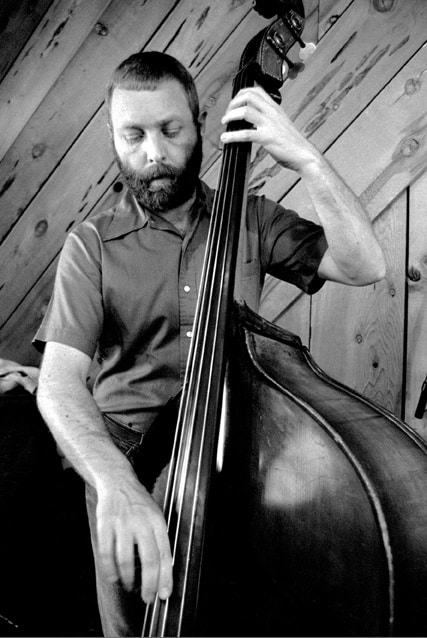
Early Years on the UK Jazz Scene
Dave Holland was born in 1946 in Wolverhampton, England, far from the traditional centres of jazz. Like many British musicians of his generation, he learned largely through records, radio broadcasts, and local jam sessions.
There was no clear institutional pathway into jazz in post-war Britain. Players learned by listening carefully and playing wherever they could. For Holland, this meant developing strong ears, reliable time, and practical musicianship before formal opportunities arrived.
By his late teens, he was active on the London scene, working with visiting American musicians and absorbing a wide range of influences, from hard bop to emerging free improvisation.
This early self-directed education shaped him permanently. He learned to adapt quickly, listen closely, and think in ensemble terms rather than in terms of personal display.
The Miles Davis Years: Learning Inside Change
Everything shifted in 1968, when Miles Davis heard Holland playing at Ronnie Scott’s in London and invited him to join his band.
At just twenty-two years of age, Holland suddenly found himself inside one of the most intense creative environments in jazz.
He appears on Miles Davis albums such as Filles de Kilimanjaro, In a Silent Way, and Bitches Brew.
These records were built around uncertainty. Forms were fluid. Tempos shifted. Roles were undefined. Musicians were expected to find structure in real time.
For a bassist, this was especially demanding and these years taught him how to think about music architecturally, as something that has to hold together even when surface elements are unstable.
That lesson seems to have stayed with him for the rest of his career…
European Freedom and Dave Holland’s Circle
After leaving Miles Davis in the early 1970s, Holland returned to Europe and became deeply involved in open-form improvisation.
One of the most important projects from this period was Circle, with Anthony Braxton, Chick Corea, and Barry Altschul.
Albums such as Paris Concert document a group exploring extreme openness while maintaining internal logic. It’s a far cry from the hard-swinging walking bass of his earlier days!
Conference of the Birds: A Personal Statement
Dave Holland’s first major statement as a leader came with Conference of the Birds.
This remains one of the most influential bass-led albums in jazz.
With Sam Rivers, Braxton, and Altschul, Holland presents a set of compositions built around strong melodic identities and flexible forms.
The title track is a good example of his thinking. The theme is clear. The structure is defined. But development is open and the musicians are free to reshape material as they play.
Rhythm is present, but never rigid, establishing the core of his aesthetic: freedom grounded in design.
Building Bands, Not Projects
From the 1980s onward, Holland focused increasingly on long-term ensembles. Rather than assembling short-term projects for visibility, he preferred developing shared languages over years.
A key example is his quintet with Chris Potter, Robin Eubanks, Steve Nelson, and Billy Kilson.
Albums such as Prime Directive and Not for Nothin’ show this group operating at a high level of integration.
Odd metres feel natural. Counterpoint is clear. Solos emerge organically from compositional frameworks.
The complexity never feels ornamental. It exists because the musicians know how to manage it together. Just check out their Live at Birdland album and you’ll see what we mean!
Dave Holland’s Trio Playing
Alongside larger groups, Holland has always maintained an interest in trio formats, including work with Kenny Barron and Jack DeJohnette which produced the brilliant Triplicate (1988).
In this setting, his approach to shaping a group’s sound becomes especially transparent, with each performance feeling like a real-time conversation.
Thinking Bigger: The Dave Holland Big Band
In the early 2000s, Holland turned more fully toward large-ensemble writing.
Albums such as What Goes Around and Overtime show how he translated small-group thinking into orchestral form.
These are not traditional big band records, but more of an expanded chamber group, arranged for specific players.
The result? Large-scale music that retains intimacy and precision.
A Note on Dave Holland the Composer
Unlike many bass players, Dave Holland could be described as first and foremost a composer.
His pieces are not vehicles for flashy solo display, they’re systems.
Motifs circulate between instruments. Rhythmic cells generate form. Harmonies evolve gradually. Development happens collectively.
This encourages shared responsibility. Every player participates in shaping direction. Over time, this has become one of his most recognisable signatures.
Key Dave Holland albums: Where to Start?
Because Dave Holland has worked in so many contexts, entry points to his discography depend on what you are interested in.
A balanced introduction might include:
- Conference of the Birds — early compositional vision
- Prime Directive — mature quintet writing
- Triplicate — interactive trio playing
- What Goes Around — large-ensemble design
- Not for Nothin’ — peak small-group integration
Together, these albums outline some of his key artistic directions.
In reality, though, Dave Holland’s albums make the most sense when heard as parts of a long, connected process.
From electric-era Miles Davis to free improvisation, from chamber trios to big band writing, he has consistently prioritised structure, listening, and collective intelligence.
For listeners interested in how modern jazz is built from the inside out, his catalogue offers one of the clearest long-term case studies available.