

By 1950, Hazel Scott had already done what very few musicians of any background had managed. She had filled concert halls, appeared in Hollywood films, and built a reputation as one of the most technically gifted pianists of her generation. That year, she became the first Black person to host their own television programme in the United States.
Within weeks, the show was cancelled. The circumstances that led to that cancellation reveal as much about mid-century America as they do about Scott herself – as the short NPR film on her life below shows.
A Prodigy Shaped by Jazz’s Inner Circle
Hazel Scott was born in Trinidad in 1920 and moved to New York as a child. She began playing piano at the age of three and was taken to audition at Juilliard at eight. Her mother, a bandleader, ran a household that attracted some of the most significant jazz musicians of the day.
Two of those regular visitors were Fats Waller and Art Tatum, both widely regarded as among the most accomplished pianists in jazz history. Both took Scott under their wing. The exposure to their approach — Waller’s stride technique, Tatum’s harmonic sophistication — left a lasting mark on how she played.
By the time she was 19, singer Billie Holiday was convinced enough of her abilities to insist that Scott replace her as the headline act at Cafe Society, the famous integrated jazz club in New York. The owner had never heard of her. Holiday’s instruction was simple: don’t ask questions, just hire her.
Swinging the Classics
Scott’s approach at the piano drew on both her classical training and her jazz environment. She was known for taking well-known classical pieces and reshaping them with jazz phrasing, syncopation, and stride piano elements — a style sometimes described as “swinging the classics“. The effect was striking, and audiences responded strongly.
Her dexterity, her vocal ability, and her skills as an arranger are well documented across her recordings. Her most celebrated album remains 1955’s Relaxed Piano Moods, recorded with bassist Charles Mingus and drummer Max Roach — two figures who would go on to shape the direction of jazz in the decades that followed.
Hollywood took notice early. Scott appeared in a number of films during the 1940s, reportedly earning as much as $4,000 a week — the equivalent of around $70,000 today. She consistently refused roles that required her to portray stereotypical or demeaning characters, instead insisting on appearing as herself.
A Career Built on Refusal
Scott’s activism was not separate from her career — it ran directly through it. She refused to perform for segregated audiences at a time when that stance carried real professional consequences. If a venue could not guarantee an integrated audience, she would not take the stage.
The Daughters of the American Revolution barred her from performing at Constitution Hall in Washington — the same organisation that had previously blocked Marian Anderson from singing there. On the set of the 1943 film The Heat’s On, Scott objected to the costumes being prepared for her fellow Black actresses, which she described as deliberately degrading. She refused to continue filming. The cameras sat idle for three days.
Harry Cohn, head of Columbia Pictures, reportedly told her she would never make another film as long as he was alive. It was not an empty threat. Her Hollywood career effectively ended shortly after.
Television, Then Silence
In July 1950, The Hazel Scott Show launched on the DuMont Network. The format was straightforward — Scott performing at the piano, to positive reviews. She was the first Black person to host their own television programme in American broadcasting history.
The show lasted less than three months. In September 1950, Scott was named in Red Channels, the publication that listed artists accused of holding communist sympathies during the early years of the Red Scare. The accusations placed her alongside figures including composer Leonard Bernstein and singer Lena Horne.
Scott voluntarily appeared before the House Un-American Activities Committee to respond to the charges. In her testimony, she challenged what she called the vicious slanders of petty men, and warned that the committee’s methods would not produce loyal citizens but a demoralised group whose creative value had been destroyed. It was a direct and measured statement.
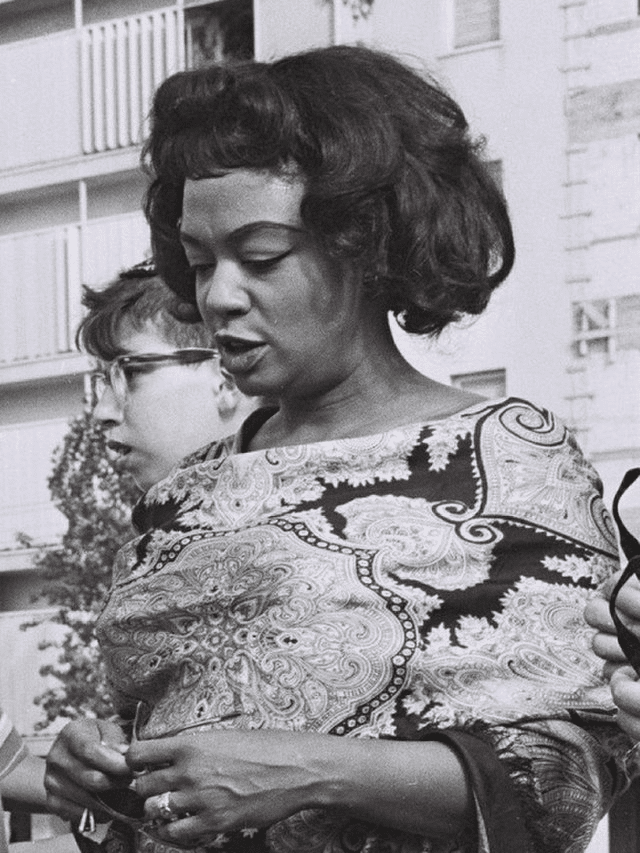
A week after testifying, The Hazel Scott Show was cancelled. Many of the professional opportunities that had previously been available to her disappeared. She eventually left the United States and spent much of the following decade performing in Europe, where audiences remained receptive.
A Legacy Recovered
When Scott returned to the United States, jazz’s place in popular culture had shifted. R&B and rock had taken hold, and the musical world she had helped build looked different. The industry had moved on, in part because she had been pushed out of it.
She died in 1981. In the years since, her reputation has been gradually restored. In 2020, the Library of Congress acquired her personal papers and memorabilia. Organisations including Washington Performing Arts and the Dance Theater of Harlem have helped bring her work back into wider view.
In a 1978 interview, Scott reflected on a career defined as much by what she refused to accept as by what she achieved. “I’ve been brash all my life,” she said, “and it’s gotten me into a lot of trouble. But speaking out has sustained me and given meaning to my life.”
It is music, though, for which she most wanted to be remembered.