

Jazz is often described as “America’s classical music”, but it has never behaved like a museum piece.
It grew in dance halls, bars, churches, recording studios, and on the road. It absorbed new ideas constantly. It travelled across continents. It changed shape every decade. And it produced some of the most unusual stories in music history.
Behind the famous names and classic albums, there are details that even long-time listeners sometimes miss.
Here are ten fun — and completely true — facts about jazz that reveal just how strange, inventive, and influential this music has been.
10. Louis Armstrong Changed the Way Everyone Improvised
Before the 1920s, most early jazz focused on collective improvisation.
Bands played together at the same time, weaving melodies around each other. Individual solos existed, but they were brief and secondary.
That changed when Louis Armstrong began recording with his Hot Five and Hot Seven groups in the mid-1920s.
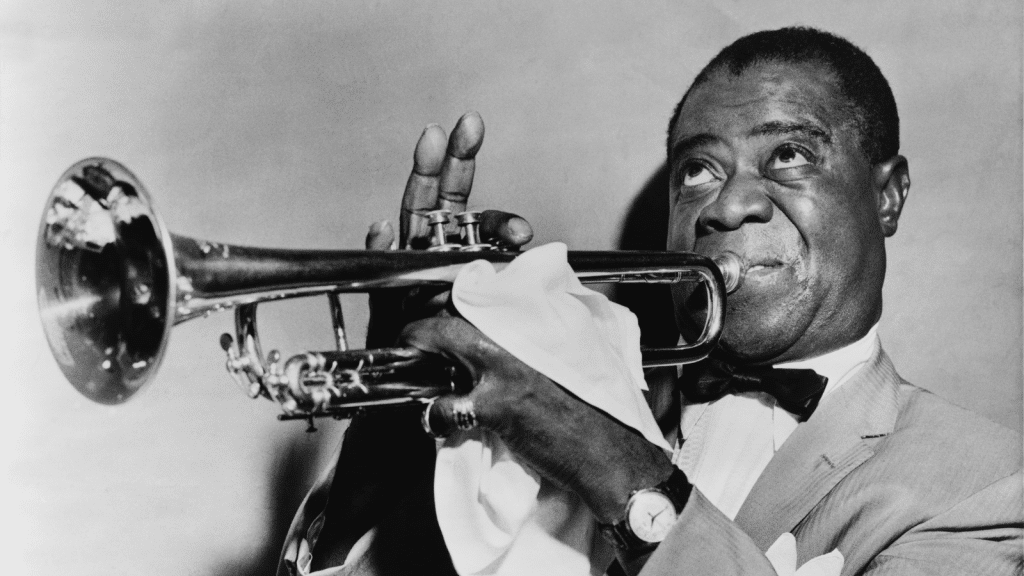
On records like West End Blues and Potato Head Blues, Armstrong placed extended, fully formed solos at the centre of the performance. His improvisations had structure, narrative, and emotional arc. They were not decorative. They were the main event.
After that, jazz became a soloist’s art.
Nearly every major improviser since — from Charlie Parker to Miles Davis to modern players — builds on the model Armstrong created.
9. “Jazz” Was Once a Slightly Scandalous Word
When the word “jazz” first appeared in print in the early 1910s, it did not mean “sophisticated music”.
It was slang, often associated with energy, excitement, and sometimes sexuality. In some contexts, it carried slightly risqué connotations.
Early musicians were not always keen on the term. Duke Ellington preferred “American music”. Many Black musicians felt “jazz” was used dismissively by white promoters and critics.
Over time, the word was reclaimed and reshaped.
Today it stands for one of the world’s most respected musical traditions. But its early history was far from polite.
8. Charlie Parker Learned by Playing 12 Hours a Day
Saxophonist Charlie Parker is often portrayed as a natural genius.
In reality, his breakthrough came after years of obsessive practice.
As a teenager in Kansas City, Parker was famously humiliated during a jam session when he lost his place in a fast tune. Instead of quitting, he doubled down.
Later, he said he practised for up to twelve hours a day, working through scales, chords, and songs relentlessly.
Within a few years, he had transformed himself into the most influential improviser of his generation.
His story is one of the clearest examples in jazz of discipline producing originality.
7. Miles Davis Changed Direction Every Decade
Very few artists reinvent themselves once.
Miles Davis did it repeatedly.
He helped pioneer cool jazz, defined hard bop, shaped modal jazz, led the Second Great Quintet and moved into jazz-rock fusion and beyond.
Albums like Birth of the Cool, Kind of Blue, Miles Smiles, and Bitches Brew sound like different musicians.
Rather than perfecting one style, Miles constantly searched for new environments. He hired young players, encouraged experimentation, and accepted risk.
His career shows that jazz innovation is often about leadership as much as technique.
6. Many Jazz Standards Came from Broadway Shows
Some of the most famous jazz songs were not written by jazz musicians at all.
They came from Broadway and Hollywood. Songs like “All the Things You Are”, “My Funny Valentine”, “Body and Soul” & “Stella by Starlight” were originally show tunes.
Jazz musicians adopted them because they had strong melodies and rich harmonies. Over time, improvisers transformed them into vehicles for exploration.
What began as popular entertainment became the backbone of the jazz repertoire.
5. John Coltrane’s “Giant Steps” Is Still The Ultimate Technical Test
When John Coltrane released Giant Steps in 1960, musicians were stunned.
The title track moves through three distant key centres at high speed, following a complex harmonic cycle now known as “Coltrane changes”.
At fast tempos, the chord progression is unforgiving. There is little time to think.
More than sixty years later, “Giant Steps” remains a rite of passage for jazz students. Being able to improvise fluently over it is still seen as a technical milestone.
It is one of the few compositions that permanently raised the difficulty level of the music.
4. Jazz Helped Shape Rock, Hip-Hop, and Film Music
Jazz is often treated as a separate world. In reality, it sits at the centre of modern popular music.
Rock musicians borrowed harmony and improvisation from jazz. Hip-hop producers sampled jazz records extensively in the 1990s. Film composers drew on jazz harmony and orchestration.
Artists from Jimi Hendrix to Kendrick Lamar to Hans Zimmer have absorbed jazz thinking.
Even when the sound is not overtly “jazzy”, the underlying language often is.
3. Many Jazz Musicians Were Classically Trained
Despite the stereotype of jazz as purely “street music”, many major figures had formal training.
Ron Carter studied at Eastman and Manhattan School of Music.
Herbie Hancock studied classical piano.
John Lewis trained in composition.
Wynton Marsalis attended Juilliard.
Classical study gave these musicians strong technique and theoretical grounding. Jazz gave them freedom and personal voice.
For many, the combination was essential.
2. Some of the Most Important Albums Were Recorded in One Day
Many classic jazz records were made incredibly quickly.
Kind of Blue was largely recorded in two sessions.
Blue Train was recorded in one day.
Somethin’ Else took one session.
Musicians arrived prepared, rehearsed briefly, and recorded live.
The result was music with urgency and focus.
Modern recording often allows endless revision. Early jazz relied on trust and instinct.
1. Jazz Is Still Being Reinvented Right Now
Jazz is sometimes described as “nostalgic” – it isn’t!
Today’s musicians are blending jazz with:
- electronic music
- hip-hop
- African traditions
- classical composition
- spoken word
Artists like Kamasi Washington, Nubya Garcia, Brad Mehldau, and many others are extending the tradition in new directions.
Jazz has always evolved. It still does.
Why These Facts Matter
Jazz is not just a collection of old records.
It is a living system built on:
- listening
- experimentation
- discipline
- collaboration
- curiosity
The stories behind the music show how much work, thought, and courage went into creating it.
For casual listeners, they reveal hidden depth.
For serious fans, they offer fresh perspective.
Either way, they remind us that jazz has always been bigger than its stereotypes.
Looking for more? Dig into our guide of the 50 greatest jazz albums of all time!