
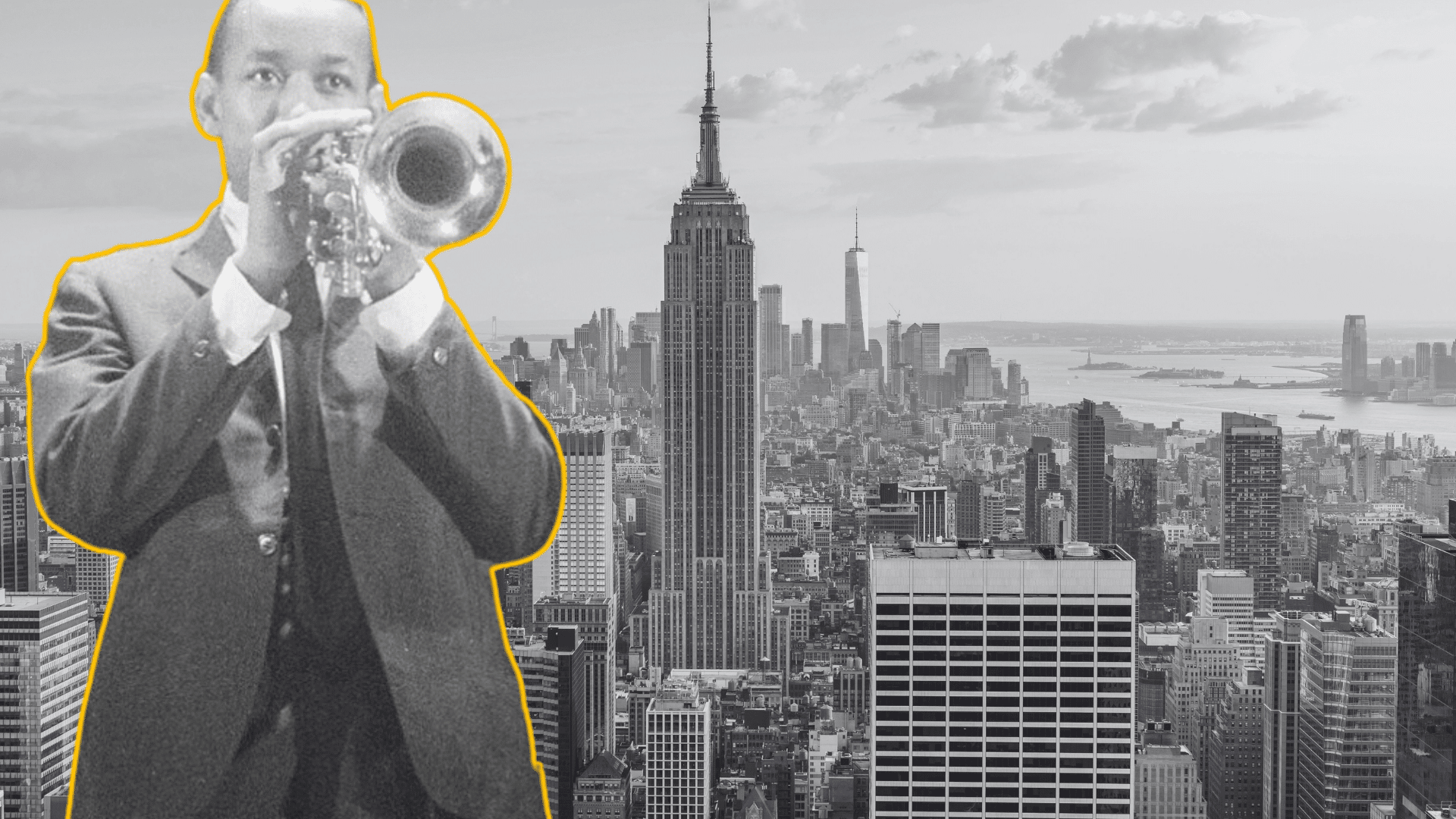
Shot dead aged 33 at a popular New York club, the story of Lee Morgan is a particularly tragic one. Pianist Harold Mabern was on stage with him that fateful night. In an interview given before his death in 2019, he shared his impressions — which you’ll find below.
On February 19, 1972, Lee Morgan was performing at Slugs’ Saloon in New York’s East Village, leading one of the working bands that defined the final phase of his career.
By then, Morgan was no longer simply the teenage prodigy who had passed through Dizzy Gillespie’s orchestra or the rising star of Art Blakey’s Jazz Messengers. He had already lived through a period of addiction, a disappearance from the scene, and a gradual return to regular performing and recording. The music he was making at the start of the 1970s reflects that trajectory: still rooted in hard bop, but increasingly open in form and direction.
That night at Slugs followed a familiar pattern. The band played a set, took a break, and prepared to continue. Among those on stage was pianist Harold Mabern, who had been working closely with Morgan during this period. In later interviews, Mabern described the evening in simple terms: they had just played a good set. It was, by all accounts, a normal working night.
During the break, an argument took place inside the club involving Morgan and his partner, Helen Moore. Moore shot Morgan at close range. The injury was not immediately fatal, but the conditions that night proved significant.
New York was in the middle of a heavy snowstorm, and emergency services were delayed. Accounts of the incident, including those later reported in a New York Times profile, note that the ambulance took longer than usual to arrive.
Morgan died before even reaching a hospital. He was 33 years old.
For those on the bandstand, the event was not an abstract story but something experienced at close range. Mabern later recalled that his “whole system was messed up for a month” after witnessing it, a reaction that conveys the shock more clearly than any reconstruction of events.
The band had been playing together minutes earlier; the shift from routine to crisis was abrupt and disorienting. That perspective is easily lost when the story is reduced to a single line in a biography, but it remains central to understanding how the night was experienced by those present.
It is also important to place that moment within the broader arc of Morgan’s career. His death did not come at a point of decline but during a period of renewed activity.
The recordings from his final years, including sessions released after his death, show a musician still developing his approach, extending the language he had established in the 1960s without abandoning its clarity or directness. There is no sense of finality in that music; if anything, it suggests continuation.
Hearing those recordings now, the timing inevitably changes the way they are received. Not because the music signals an ending, but because it does not. It captures a musician in motion, still refining ideas, still working within a band context that was evolving around him. The abruptness of what happened at Slugs sits in contrast to that continuity.
The events of that night have been revisited in different ways over the years. The documentary I Called Him Morgan draws on archival interviews, including Moore’s own account, to reconstruct both the relationship and the circumstances leading up to the shooting. It does not resolve every detail, but it adds a layer of perspective that moves beyond the headline version of the story.
Even so, the most direct way into that night remains the recollections of the musicians who were there. Their accounts do not attempt to dramatise the event; if anything, they emphasise its confusion, its immediacy, and its aftermath. What emerges is not a tidy narrative, but a working night that changed without warning.
That sense of interruption — of something ongoing that suddenly stopped — is difficult to separate from the music Morgan left behind. Not because it defines it, but because it frames the moment in which it was being made.
Looking for more? Check out our pick of the greatest Lee Morgan albums here.