

There are some recordings that feel less like albums and more like documents — fragments of a moment that might otherwise have disappeared. One Night in Birdland belongs to that category.
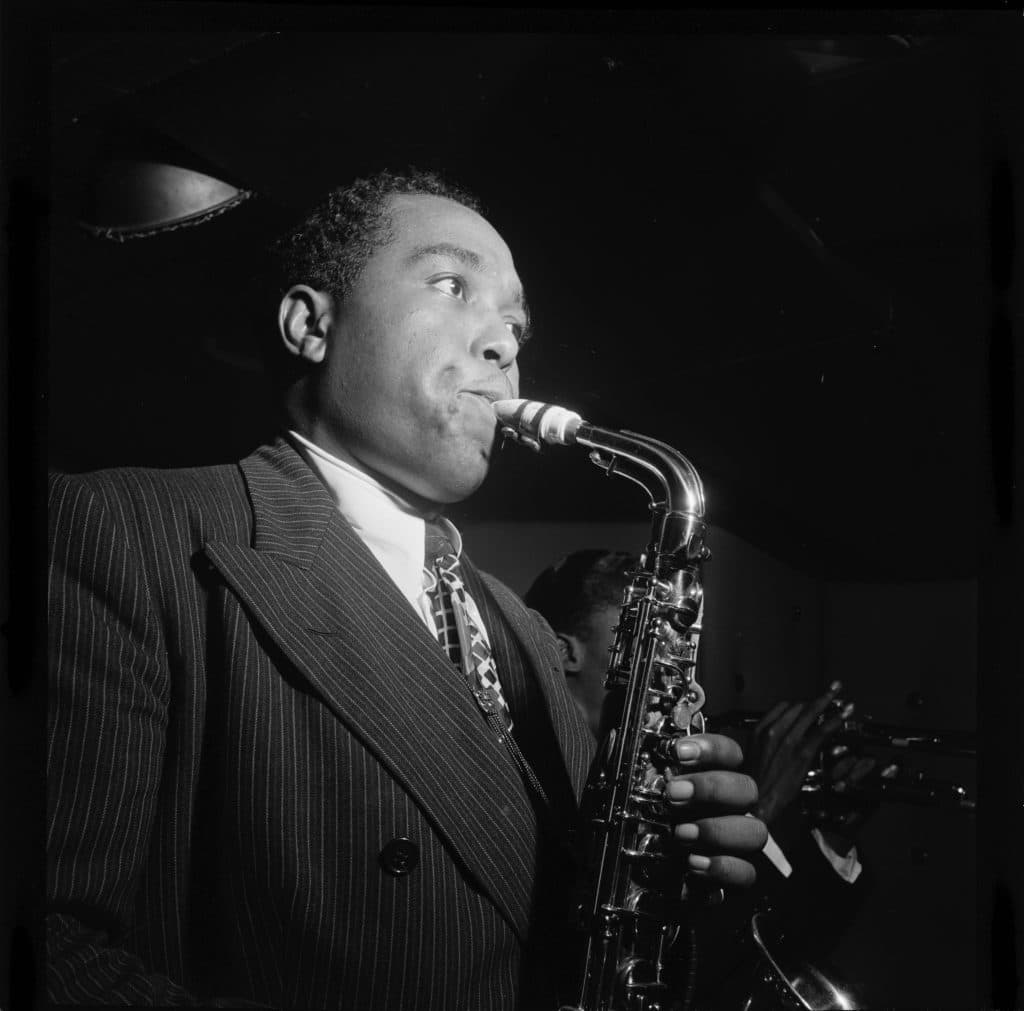
Captured in May 1950 at the famous New York club Birdland, the music brings together Charlie Parker and a remarkable group of musicians in a setting where bebop was still unfolding in real time. The sound quality is rough, the atmosphere unpolished, but the playing carries an urgency that studio recordings rarely match.
What makes this album compelling is not perfection. It’s proximity — the sense of being close to the music as it happens.
Birdland, 1950: Where Bebop Lived
By 1950, Birdland had become one of the central locations for modern jazz in New York. Musicians gathered there not just to perform, but to test ideas, challenge one another, and push the language forward night after night.
The recordings that make up One Night in Birdland were taped on May 15–16, 1950, not in a formal studio but on a private device capturing the live set.
That context matters. These performances were never meant to be polished releases. They were working music — spontaneous, evolving, sometimes uneven, but often electrifying.
The Lineup: A Bebop All-Star Group
The quintet assembled for these sessions reflects the strength of the bebop scene at the time:
- Charlie Parker — alto saxophone
- Fats Navarro — trumpet
- Bud Powell — piano
- Curley Russell — bass
- Art Blakey — drums
Each player brought a distinct voice.
Navarro’s trumpet lines are strikingly fluid, sometimes matching Parker in intensity. Powell’s piano anchors the harmonic movement with clarity and drive. Blakey, still early in his career, provides rhythmic propulsion without overwhelming the group.
The interaction between Parker and Navarro is one of the defining elements of the recording. Rather than competing, they often seem to complete each other’s ideas, creating a conversational flow that moves quickly but remains coherent.
The Music: Extended Forms and Open Improvisation
Unlike tightly structured studio sessions, One Night in Birdland unfolds through extended performances. Tunes stretch beyond standard lengths, allowing soloists to develop ideas across multiple choruses.
Pieces like “Ornithology,” “A Night in Tunisia,” and “‘Round Midnight” provide familiar frameworks, but the improvisations move far beyond the written themes.
Parker’s playing here is both precise and unguarded. His lines flow rapidly, yet each phrase retains shape and direction. Even in the more chaotic passages, there is an underlying logic — a sense that every note belongs within a larger design.
Navarro’s contributions are equally striking. Some critics have noted moments where his presence nearly rivals Parker’s, not in volume but in clarity and invention.
Sound vs. Substance
Any discussion of One Night in Birdland inevitably returns to the sound quality. The recordings were made on a private tape, and the audio reflects that origin — uneven levels, background noise, and limited fidelity.
Yet this limitation becomes part of the album’s identity. The rough sound places the listener inside the room rather than at a distance. Applause, crowd noise, and ambient sound contribute to the sense of immediacy.
Critics have consistently acknowledged this trade-off. While the recording is not technically polished, the musical content has been widely praised for its brilliance and historical value.
Parker in Context
By 1950, Parker was already a central figure in modern jazz. His work throughout the 1940s had helped define bebop as a new musical language, one built on harmonic complexity, rhythmic flexibility, and rapid melodic development.
What One Night in Birdland reveals is how that language functioned in a live setting. The music feels less contained than studio recordings from the same period. Tempos fluctuate, solos expand unpredictably, and the ensemble reacts moment by moment.
This is Parker not as icon, but as working musician — listening, responding, adjusting in real time.
Why This Recording Still Matters
Many live jazz recordings document performances that could be recreated elsewhere. One Night in Birdland feels different. It captures a specific moment in a specific place — a club where the music itself was still being defined.
The combination of Parker, Navarro, and Powell alone would make the album significant. The fact that they are heard in an informal, unfiltered environment gives the recording additional weight.
Across decades of reissues and rediscovery, the album has remained important not because it is perfect, but because it is alive.
Final Thoughts
One Night in Birdland stands slightly outside the usual idea of an album. It is not carefully constructed, not sonically refined, and not designed for easy listening. Instead, it offers something more direct.
It places the listener inside a room in 1950, where a group of musicians explored the possibilities of a new musical language. The edges are rough, the sound imperfect, but the ideas remain clear.
For anyone interested in bebop as it actually sounded on the bandstand — not just in the studio — this recording remains one of the most revealing documents available.