

“It’s hard to understand why such a quiet gem has slipped through the net…”
History has a habit of simplifying stories, and Nat Adderley’s is often reduced to a footnote.
That quote above from the Penguin Guide to Jazz about a lesser-known Nat Adderley album says it all.
As the younger brother of Julian “Cannonball” Adderley, he has long been framed as the supporting player—present, reliable, but secondary. The records tell a different story. Nat Adderley was a distinctive soloist, a sharp composer, and a musician who kept working and evolving without making a fuss about it.
When Cannonball arrived in New York in 1955 like a thunderclap, Nat was there too—not riding coattails, but making his own case on the bandstand. The difference between them was never ability. It was visibility.
Listen closely, and Nat Adderley emerges as one of the most thoughtful cornet voices of the post‑bop era.
Early Years: Choosing the Cornet
Nathaniel Adderley was born on 25 November 1931 in Tampa, Florida. Music came naturally in the household, and when Cannonball set aside the trumpet in favour of the alto saxophone, Nat picked it up and began playing seriously at fifteen.
The brothers gigged around Tallahassee after the family relocated there, learning the old‑fashioned way: on bandstands and in small clubs. Nat even played briefly with Ray Charles in the late 1940s, though at that stage music was not yet a certainty. He studied sociology at college, keeping jazz close but not central.
One decision would define his sound. Around 1950, Nat switched from trumpet to cornet, drawn to its softer edge and rounder tone. At a time when the instrument had largely fallen out of favour, he brought it back into modern jazz conversation, linking early voices like Red Allen with contemporary players shaped by bebop.
Café Bohemia and the Moment Everything Changed
The turning point came in 1955.
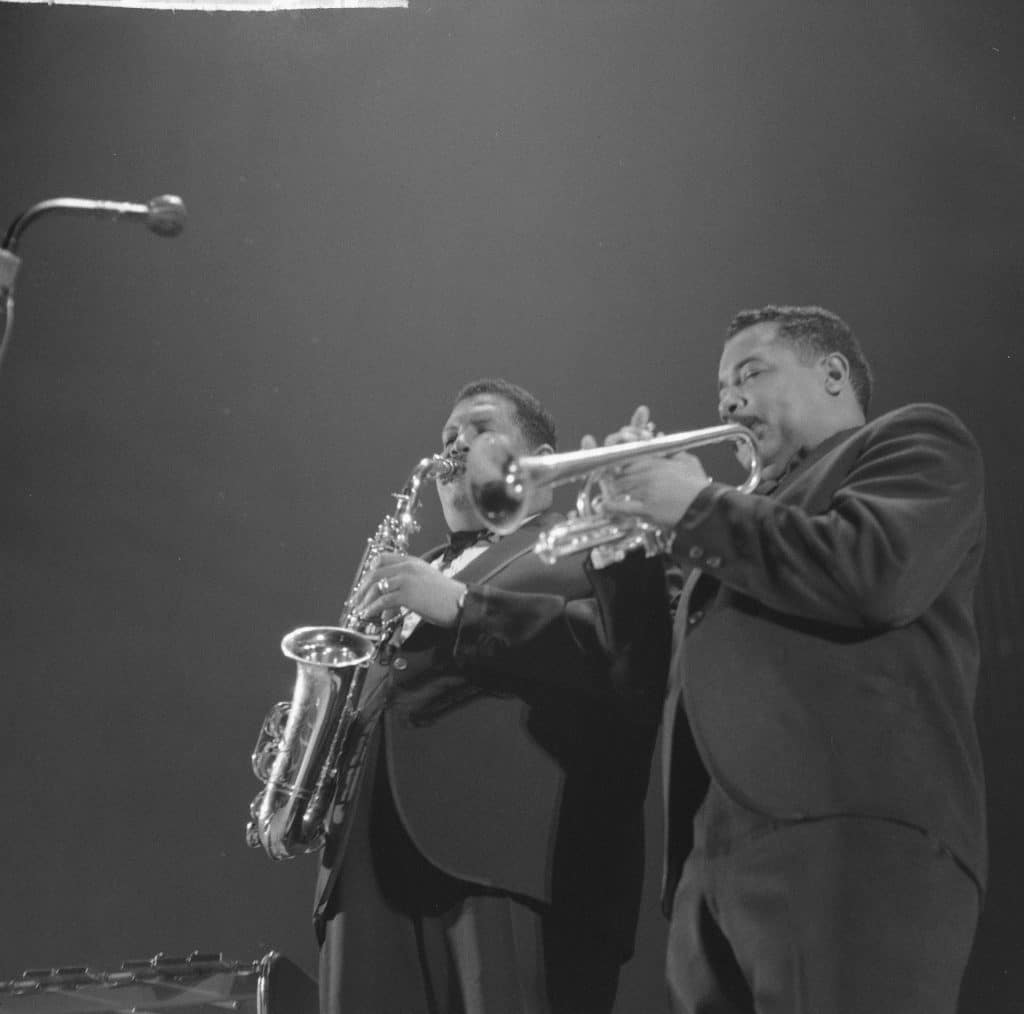
At the Café Bohemia in Greenwich Village, Cannonball was invited to sit in with Oscar Pettiford’s band when the regular saxophonist failed to appear. Nat joined him on the stand. The response was immediate.
Almost overnight, the Adderley brothers were welcomed into the New York jazz scene. Recording opportunities followed quickly, along with steady work. Both recorded under their own names for Verve that same year, and by 1956 the Cannonball Adderley Quintet was in place.
When Cannonball joined Miles Davis in 1959, the band disbanded. When it re‑formed in 1961, it did more than survive—it helped keep hard bop vital and played a major role in bringing soul jazz into the mainstream.
Essential Nat Adderley Albums
Nat Adderley recorded extensively as a leader. These albums show him at his clearest and most compelling.
Introducing Nat Adderley (1955)
Despite the title, this is not Nat’s first album—that honour belongs to That’s Nat, recorded three months earlier. It is the first to feature both Adderley brothers together.
With Horace Silver on piano, Paul Chambers on bass, and Roy Haynes on drums, the session is a classic blowing date. Nat sounds poised and alert, matching Cannonball’s blues‑inflected alto solo for solo. Nothing revolutionary happens here—but everything works.
Work Song (1960)
This is the record that defines Nat Adderley.
Recorded over two days in January 1960, Work Song places him as the sole horn and gives him space to shape a full statement. The title track—his most enduring composition—is built on economy and groove, and his solo unfolds with quiet authority rather than showmanship.
With Wes Montgomery on guitar and Bobby Timmons on piano, the session is stacked in Nat’s favour. Ballads such as “Violets for Your Furs” reveal just how strong a storyteller he could be at slow tempos, his cornet tone warm and unforced.
If there is one Nat Adderley album to own, this is it.
Little Big Horn! (1963)
Nat wrote all eight compositions here, and the confidence shows. The opener, “El Chico,” announces itself with a bold, full cornet sound that never tips into harshness.
The album balances funk‑leaning hooks with lyricism. “Roses for Your Pillow” is a standout—unhurried, generous, and beautifully shaped. Junior Mance anchors the piano chair, while Kenny Burrell and Jim Hall split guitar duties with ease.
Here, he sounds relaxed, confident, and in charge of the session.
Sayin’ Something (1966)
A record of contrasts.
Half the album features an eleven‑piece ensemble, half a small group. The larger arrangements have their moments—“Manchild” grooves hard, while “Gospelette” highlights Nat’s lyricism—but it’s the quintet tracks that make the album essential.
With Herbie Hancock on piano, Joe Henderson on tenor, Bob Cranshaw on bass, and Roy McCurdy on drums, the small‑group material is outstanding. Nat’s solo on Hancock’s “Cantaloupe Island” is a lesson in understatement. His own “The Other Side” confirms his standing as a composer who could inspire first‑rate improvising from elite company.
A Little New York Midtown Music (1979)
Still rooted in hard bop, but with a lighter sonic touch, helped by Victor Feldman’s electric piano. The frontline pairing of Nat with Johnny Griffin works beautifully here—a marked contrast to their earlier, less comfortable meeting on Branching Out.
Muted cornet colours the title track, while Griffin brings fire to “Sunshine Sammy.” Even the lone standard, “Come Rain or Shine,” benefits from Feldman’s sensitive comping and the relaxed assurance of both horns.
Sophisticated Swing: The EmArcy Small Group Sessions (1956–1958)
A slight cheat, but a worthwhile one.
This two‑CD set gathers four albums recorded between 1956 and 1958, including Sophisticated Swing and To the Ivy League. The music captures the Adderley brothers establishing themselves at the front of the modern jazz scene, playing standards and originals with polish and drive.
With Junior Mance, Sam Jones, Al McKibbon, Specs Wright, and Jimmy Cobb among the supporting cast, the quality rarely dips. If shelf space is limited, this set makes a strong case for itself.
Reflection and Legacy
Nat Adderley’s legacy has always been quieter than his brother’s, but it has lasted just as long.
As a cornetist, he brought warmth and subtlety into modern settings that often favoured edge and volume. As a composer, he wrote tunes that outlived his reputation as a sideman. And as a bandleader, he found a rare balance between groove, sophistication, and accessibility — without diluting any of them.
His music rewards patience and repeat listening.
For listeners willing to look beyond the spotlight, Nat Adderley offers something increasingly rare in jazz: clarity without posturing, soul without excess, and a catalogue built on consistency rather than hype.
He never needed to be loud to leave a lasting mark.
“It’s hard to understand why such a quiet gem has slipped through the net”
That quote above from the Penguin Guide to Jazz about a lesser-known Nat Adderley album says it all.
Which album?