

In the late 1950s, Miles Davis recorded the haunting soundtrack to Louis Malle’s film Ascenseur pour l’échafaud — improvised live in Paris as the musicians watched the scenes unfold. As you can hear below, it was a remarkable session which pre-dated Kind of Blue, and forever changed the sound of jazz on film.
In December 1957, Miles Davis travelled to Paris for a handful of club dates. He was 31 years old and already a major name in American jazz — known for his lyrical trumpet sound, cool phrasing, and an instinct for finding new directions just when others thought the path had been set.
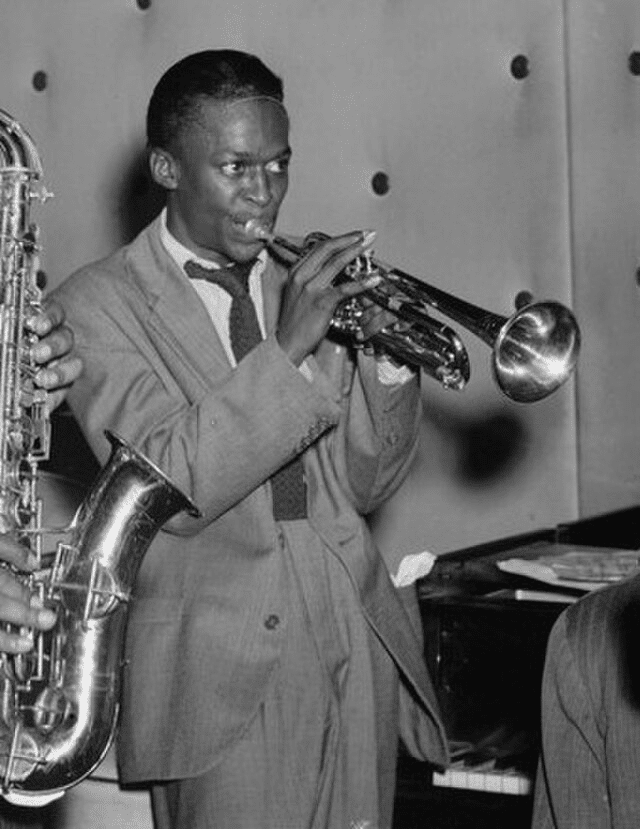
By chance, that same winter, a young French filmmaker named Louis Malle was finishing his debut feature, Ascenseur pour l’échafaud (Elevator to the Gallows). Malle wanted something different for the film’s music — not a conventional orchestral score, but something raw, modern, and improvised.
A mutual acquaintance, the journalist and jazz enthusiast Marcel Romano, introduced the two. Malle played a few scenes for Miles and suggested that he might write something for them. Miles accepted immediately.
It turned into one of the most remarkable film sessions in jazz history.
No script, no score
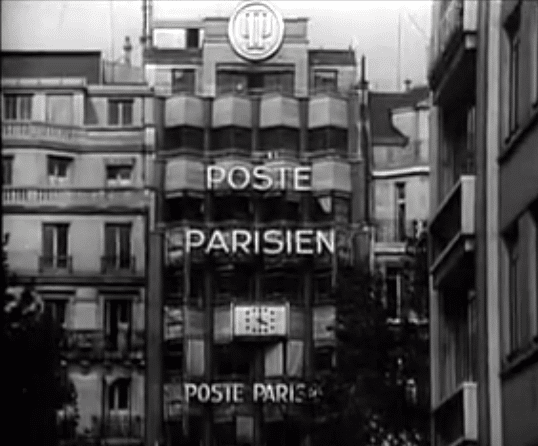
There was no written music. Malle and Romano simply projected key scenes from the film at the Le Poste Parisien recording studio and asked Miles to play what he felt.
He agreed, but he wanted time to prepare. The story goes that he asked for a piano to be delivered to his hotel room so he could sketch out ideas through the night.
Whether or not that detail is apocryphal, there’s no doubt that when he arrived at the studio on 4 December, he had a clear concept: atmosphere, not melody; mood over structure.
To realise it, he called on a group of local musicians he had met on the Paris scene:
- Barney Wilen – tenor saxophone
- René Urtreger – piano
- Pierre Michelot – double bass
- Kenny Clarke – drums
Clarke, the only American in the group, was already a legend from his Bebop years in New York. The rest were among the most respected young modernists in France.
“Two chords — stay cool”
When the session began, Malle dimmed the lights and projected the film on the wall. Jeanne Moreau, the star, wandered through the rain-soaked Paris streets, her face lit only by shop windows and passing cars.
Miles, standing beside the screen, lifted his muted trumpet and began to play — slow, spacious phrases full of tension and restraint. He reportedly told the band, “Two chords, D minor and C7 — stay cool.”
For hours, the musicians improvised to the projected images, each take guided by the film’s pacing rather than any fixed bar lines. There were no second chances: what they played was captured live, in sync with the film.
Listening now, it’s astonishing how naturally the music fits the images — as if it had been scored note for note. But it wasn’t. The soundtrack was almost entirely improvised, a dialogue between sound and picture.
The result was hauntingly minimal: sparse trumpet lines, brushed cymbals, dark piano voicings and sustained bass notes. The silence between the notes was as important as the notes themselves.
A turning point
The soundtrack to the film was released in early 1958, a few months after the film’s premiere.
Critics praised it not just as a film score but as a work of art in its own right. In France, it reinforced Miles’ status as the embodiment of modern cool. In the United States, it caught the attention of musicians interested in new harmonic ideas.
Musically, Ascenseur pour l’échafaud marked a shift in Miles’ approach. Instead of relying on complex chord progressions, he began to think in terms of scales, space, and texture.
That approach would reach full expression two years later on Kind of Blue (1959), the defining statement of modal jazz.
René Urtreger later said, “Miles gave us almost nothing — just a couple of chords and a feeling. But he created a world.”
It’s a concise summary of how Miles operated throughout his career: limiting the materials, expanding the imagination.
Film and music intertwined
Louis Malle’s film itself is a dark, atmospheric thriller about love, guilt, and bad timing. Jeanne Moreau plays Florence, waiting for her lover to return after a planned murder goes wrong. The camera follows her wandering through Paris at night, searching for him while the tension builds.
Without Miles’ music, those scenes might have felt slow. With it, they became hypnotic. His trumpet seemed to echo her inner thoughts — lonely, anxious, unresolved.
This interplay between image and sound influenced a generation of filmmakers and composers. Later jazz scores, from Duke Ellington’s Anatomy of a Murder to Herbie Hancock’s Blow-Up, would owe something to that Paris night in 1957.
Even today, when you watch the film, the music feels almost contemporary: a nocturnal mood that could sit comfortably in a modern soundtrack or art-house film.
A rare meeting of worlds
For Miles, the session was more than a creative experiment. It was also a statement of independence. In America, jazz musicians were often boxed into small clubs and race-segregated circuits. In Paris, he found respect, freedom, and collaboration across art forms.
He would return to France many times in later years, but Ascenseur pour l’échafaud remains the most complete record of that early connection between American jazz and European cinema.
Elevator to the Gallows: The legacy
Looking back, it’s clear how much this short, improvised session changed both jazz and film. It proved that a soundtrack didn’t need a written score to carry emotional weight — it just needed musicians who could listen, react, and play truthfully in the moment.
The album still sounds strikingly fresh today. The trumpet tone is distant but intimate, the rhythm section light yet insistent. There’s no grand melody, no flashy solos — just atmosphere and feeling.
And yet from that atmosphere came a whole new way of thinking about jazz: less about harmony, more about sound; less about showing, more about saying only what matters.
Looking for more Miles? Check out our guide to his greatest moments here.