

Few jazz musicians documented such a wide artistic development as openly as alto saxophonist Jackie McLean.
Across more than four decades of recording, his albums trace a clear line from hard bop traditionalism through modal experimentation and into the freer, more abstract language of the 1960s and beyond. Unlike many of his contemporaries, McLean did not settle permanently into a single stylistic identity. Instead, he kept revisiting his assumptions about sound, harmony, and structure.
Sometimes this led to commercial success. Sometimes it led to marginalisation. Almost always, it led to honest, engaged music.
His catalogue does not offer a neat narrative of steady progress. It shows a musician repeatedly questioning where he stood and what he wanted to say.
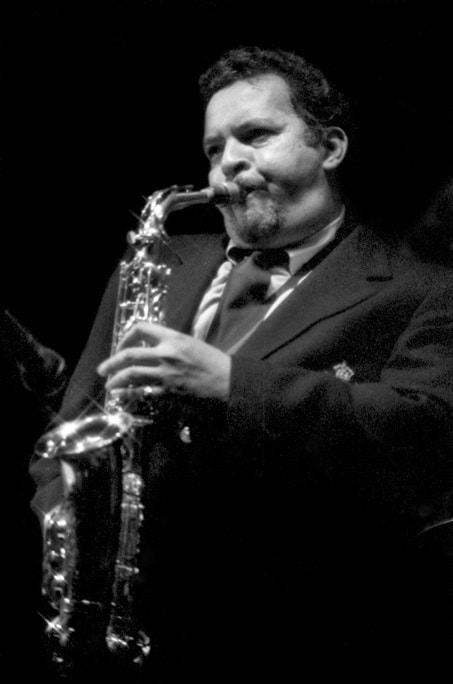
Apprenticeship: Learning Inside the Bebop Tradition
Born in New York in 1931, McLean grew up close to the centre of the bebop world. As a teenager, he absorbed the language of Charlie Parker, whose influence would remain audible throughout his life.
By the early 1950s, he was already working professionally with musicians such as Miles Davis and Art Blakey. These early years were formative in two ways.
First, they gave him a deep grounding in bebop harmony and phrasing. Second, they exposed him to the discipline required to function in demanding band environments.
At this stage, McLean’s playing was rooted firmly in established vocabulary. What distinguished him was not radicalism but intensity. Even within conventional frameworks, he favoured a biting tone and assertive articulation.
First Leadership Statements: Finding His Own Space
McLean’s early albums as a leader show him negotiating between tradition and individuality.
One of the clearest examples is Jackie McLean & Co., recorded with a strong supporting cast including Mal Waldron.
The repertoire is conventional, but the execution is not routine. McLean’s phrasing stretches phrases slightly beyond expected boundaries, and his tone carries more edge than most alto players of the period.
He was not yet challenging harmonic systems, but he was already resisting smoothness.
This tension between control and friction would become a defining feature.
Blue Note and Artistic Freedom
The most important phase of McLean’s career began in the late 1950s, when he became a regular recording artist for Blue Note Records.
Under producer Alfred Lion, musicians were encouraged to explore personal directions without immediate commercial pressure. For McLean, this environment proved decisive.
Albums such as Jackie’s Bag and Swing, Swang, Swingin’ still operate within hard bop structures, but signs of transition are already present.
Harmonies loosen. Rhythmic placement becomes more flexible. Solos begin to prioritise contour over chord resolution.
He was preparing for a larger shift.
The Breakthrough: Let Freedom Ring
That shift arrives fully on Let Freedom Ring.
This album marks McLean’s first sustained engagement with modal and post-bop concepts. Working with pianist Walter Davis Jr., bassist Herbie Lewis, and drummer Billy Higgins, he moves away from strict chord sequences.
Instead, improvisations unfold over broader harmonic fields. Phrases stretch across bar lines. Resolution becomes optional rather than obligatory.
What makes the album convincing is that McLean does not abandon structure. He redefines it. The music remains organised, but the organising principles are more flexible.
This record is often the point where listeners first hear him as a modernist rather than a hard bop stylist.
Pushing Further: Destination… Out! and One Step Beyond
In the mid-1960s, McLean entered his most experimental period.
Albums such as Destination… Out! and One Step Beyond engage directly with avant-garde ideas circulating at the time.
Collaborations with Grachan Moncur III and Bobby Hutcherson introduced new compositional frameworks based on intervallic harmony and open form.
Here, McLean’s tone becomes sharper and more insistent. His lines fragment more frequently. Silence becomes an active element.
These records were controversial on release. Some listeners heard them as disorienting. Others recognised them as necessary extensions of his earlier thinking.
With hindsight, they represent one of the most coherent personal engagements with the post-bop movement.
Political Context and New Soil
McLean’s artistic development in the 1960s was inseparable from social and political change.
He was increasingly conscious of his role as a Black artist working in a shifting cultural landscape. This awareness informs albums such as New Soil, whose title reflects both musical and social renewal.
While not overtly political in lyrical terms, these records embody a search for autonomy and self-definition. The move away from fixed forms mirrored a broader desire for intellectual and creative independence.
McLean was not interested in abstraction for its own sake. He was interested in what abstraction allowed him to express.
Withdrawal from the Recording Industry
By the late 1960s, McLean’s experimental direction had made him less attractive to major labels. Recording opportunities diminished.
Rather than moderating his style, he shifted focus.
He accepted a teaching position at the Hartt School in Connecticut and began building one of the most influential jazz education programmes in the United States.
This period marks a change in visibility, not in commitment.
He continued performing and recording intermittently, often on smaller labels, while investing heavily in mentoring younger musicians.
Return and Reassessment: The 1970s and 1980s
When McLean returned more actively to recording in the 1970s and 1980s, his music reflected synthesis rather than retreat.
Albums such as New York Calling and Dynasty integrate hard bop, modal, and freer elements into a more unified language.
The tone softens slightly. Phrasing becomes more spacious. Harmonic movement regains prominence.
These are not nostalgia projects. They show a musician reworking earlier ideas with greater perspective.
He sounds less driven by urgency and more by architectural thinking.
Sound, Tone, and Physicality
McLean’s alto sound is among the most recognisable in jazz.
It is dry, penetrating, and slightly acidic. Unlike the rounded tone favoured by players such as Cannonball Adderley, McLean embraced friction.
This was not a technical limitation. It was a deliberate aesthetic choice.
He valued projection, clarity, and emotional directness over warmth. His articulation emphasised attack. Notes often begin sharply and decay quickly.
Over time, this approach gave his playing urgency even at moderate tempos.
Repertoire and Compositional Thinking
Although McLean recorded many standards, his most important albums rely heavily on original material and contemporary compositions.
He gravitated towards writers who challenged conventional harmony, including Moncur, Hutcherson, and later younger collaborators.
Even when performing familiar tunes, he tended to reshape them structurally, altering phrasing patterns and harmonic emphasis.
This preference reflects his broader artistic priorities: interpretation over reproduction.
Approaching the Discography
Because McLean’s career includes several stylistic phases, entry points depend on listener interests.
A balanced route might include:
- Jackie’s Bag for late hard bop
- Let Freedom Ring for early modernism
- Destination… Out! for avant-garde engagement
- New York Calling for late synthesis
Together, these albums outline his core developments.
Education and Long-Term Influence
McLean’s impact extends beyond recordings.
At the Hartt School, he trained generations of musicians, emphasising historical awareness, technical discipline, and personal voice. His students included major figures in contemporary jazz.
This educational work reinforced his belief that tradition and innovation were not opposites but interdependent processes.
That philosophy runs through his entire catalogue.
Listening to Jackie McLean in Context
Jackie McLean’s albums reward chronological listening.
He did not move in straight lines. He tested ideas, abandoned some, returned to others, and reassembled his language repeatedly. Each phase responds to earlier work rather than replacing it.
Across hard bop, modal jazz, and avant-garde exploration, he maintained a commitment to emotional clarity and structural integrity. His willingness to risk misunderstanding in pursuit of artistic honesty distinguishes his catalogue from many more comfortable careers.
For listeners interested in how jazz evolves from within, his recordings offer one of the clearest long-term case studies available.
This essay is an excellent introduction to JM’s life. I”ve listened to all these albums (even the one with his son) and I really liked the albums influenced by Ornette Coleman. His distinctively sharp sound was refreshing. Thank you for posting this writing.