

Among jazz pianists, few careers were as long, consistent, and carefully constructed as that of Hank Jones.
From the late 1940s through the early 2010s, Jones recorded continuously, appearing on hundreds of sessions as a sideman and building a substantial catalogue as a leader. He worked in bebop, swing, vocal accompaniment, small-group jazz, and late-career chamber settings, adapting to changing musical climates without abandoning his core values.
What makes his discography distinctive is not a single dramatic reinvention or stylistic pivot. It is the way refinement accumulates over time. Jones developed an approach based on balance, clarity, and structural awareness, and he applied it across decades.
His albums document how musical intelligence can sustain a career without relying on spectacle.
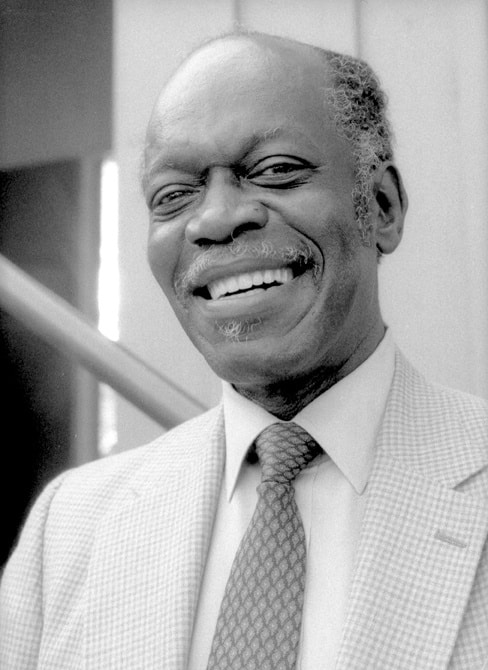
Early Foundations: Detroit, Bebop, and Professional Discipline
Born in 1918 in Vicksburg, Mississippi, and raised in Detroit, Jones grew up in a musically active household. His brothers Thad Jones and Elvin Jones would also become major figures, but Hank was the first to establish himself professionally.
By the mid-1940s, he had moved to New York and was working with leading bebop musicians, including Billy Eckstine and Charlie Parker.
These early years shaped his approach. Bebop demanded harmonic fluency, rhythmic precision, and adaptability. Jones absorbed these requirements thoroughly, but he never adopted the aggressive attack associated with some of his peers. Even in fast tempos, his playing prioritised clarity and balance.
This combination of technical command and restraint would define his work.
Establishing a Voice: The Trio and Early Leadership
Jones’s first major leadership statement came with The Trio, recorded in 1955.
This album introduces many of the qualities that would remain central to his work: careful voicing, controlled dynamics, and an emphasis on melodic coherence. Working in a trio setting allowed Jones to demonstrate how he organised harmony and rhythm without relying on density.
Rather than filling space, he focused on proportion. Chords are voiced to support the bass line. Single-note lines are shaped to complement the drummer’s time feel. Solos develop logically rather than episodically.
This record established him as a leader with a distinct musical philosophy.
The Art of Accompaniment: Working with Vocalists
One of the most important dimensions of Jones’s career was his work as an accompanist.
During the 1950s and 1960s, he became one of the most trusted pianists for singers, recording extensively with Ella Fitzgerald, Sarah Vaughan, and others.
His role in Fitzgerald’s Songbook series is especially significant. These recordings required sensitivity to lyrics, phrasing, and narrative pacing. Jones supported vocal lines without crowding them, adjusting voicings and rhythmic placement to enhance clarity.
This experience sharpened his sense of musical architecture and influenced his later instrumental work. Even in purely instrumental settings, his playing often reflects a singer’s awareness of line and breath.
Mature Style: Hanky Panky and Small-Group Balance
By the late 1950s, Jones had reached full artistic maturity. Albums such as Hanky Panky capture this phase.
Recorded with bassist Paul Chambers and drummer Max Roach, Hanky Panky places Jones in a highly responsive rhythm section. The interplay is subtle rather than overtly dramatic. Each musician adjusts continuously to the others, creating a flexible but stable framework.
Jones’s comping here is particularly instructive. He avoids repetitive patterns, instead tailoring harmonic support to each soloist’s phrasing. His own solos balance linear improvisation with chordal thinking, maintaining forward motion without sacrificing harmonic depth.
This album remains one of the clearest demonstrations of his small-group authority.
Solo Piano and Structural Thinking
Jones was never primarily known as a solo pianist, but his solo recordings reveal much about his musical priorities.
On Piano in the Background and later solo projects, he treats the piano as an orchestrated instrument. Left-hand voicings outline harmonic movement clearly, while the right hand develops melodic material with restraint.
He avoids the impressionistic wash favoured by some pianists, preferring transparent textures that allow inner voices to remain audible. Even at slow tempos, his time feel remains firm.
This structural approach makes his solo recordings particularly rewarding for close listening.
The Great Jazz Trio: Late-Career Renewal
In the 1970s and 1980s, Jones experienced a renewed phase of prominence through his work with bassist Ron Carter and drummer Tony Williams in the Great Jazz Trio.
Albums such as At the Village Vanguard show how Jones adapted to a more contemporary rhythmic environment without abandoning his aesthetic.
Williams’s aggressive, elastic drumming required precise rhythmic negotiation. Jones responded by refining his placement and voicing, creating contrast rather than competition.
These recordings demonstrate his ability to engage with younger musicians on equal terms, contributing experience without imposing rigidity.
Repertoire and Interpretation
Throughout his career, Jones relied heavily on standard repertoire.
Rather than seeking obscure material or radically reworking familiar tunes, he focused on interpretive depth. His performances of pieces like “Autumn Leaves,” “My Funny Valentine,” and “All the Things You Are” reveal careful attention to harmonic narrative.
He often altered internal voicings, adjusted chord substitutions, and reshaped phrase lengths to refresh well-known material. These changes are rarely obvious on first hearing but accumulate over repeated listens.
This approach reflects his belief that longevity comes from deepening engagement rather than novelty.
Technical Control and Touch
Jones’s technical foundation was exceptionally strong.
His touch was even across registers. His articulation was precise without becoming mechanical. Pedalling was restrained and purposeful. He maintained control at extreme tempos without sacrificing clarity.
Unlike some pianists who foreground virtuosity, Jones integrated technique into musical context. Rapid passages emerge organically from harmonic movement rather than serving as standalone displays.
This integration allowed him to remain effective well into his eighties and nineties.
Later Recordings and Reflective Depth
In the final decades of his life, Jones recorded a series of intimate, reflective albums that emphasised tone and pacing.
Projects such as Hank Jones & Frank Wess and later trio recordings with younger collaborators show a musician refining essentials rather than revisiting past formulas.
His tempo choices slowed slightly. Phrasing became more spacious. Harmonic movement remained clear but less densely packed.
These changes were adaptive rather than compensatory. He reshaped material to suit evolving physical and expressive conditions.
Navigating the Discography
Given the scale of his output, approaching Jones’s catalogue can seem daunting.
A practical path might begin with:
- The Trio for early leadership
- Hanky Panky for small-group maturity
- At the Village Vanguard for later renewal
- A Great Jazz Trio recording for ensemble balance
- A late trio album for reflective depth
These points outline his development without requiring exhaustive exploration.
Professionalism and Musical Ethics
Jones’s reputation among musicians rested heavily on reliability.
He arrived prepared. He listened closely. He adapted quickly. He avoided unnecessary conflict. These qualities made him a preferred collaborator across generations.
This professionalism extended to artistic choices. He avoided projects that conflicted with his musical values, even when they offered greater visibility. Instead, he prioritised environments that supported sustained musical dialogue.
Over time, this selectivity produced a catalogue marked by coherence.
Listening to Hank Jones Over Time
Hank Jones’s albums are best understood as parts of a long, cumulative process.
Across bebop, vocal accompaniment, small-group jazz, and late-career chamber settings, he built a body of work shaped by proportion, attentiveness, and structural clarity. His choices about repertoire, collaborators, and performance contexts reinforced these priorities.
Even in his final recordings, he continued refining voicing, touch, and timing rather than relying on reputation.
For listeners willing to follow his development across decades, his discography offers a rare example of how technical mastery, musical intelligence, and professional discipline can sustain artistic relevance without distortion or compromise.