

Before Gene Krupa arrived on the scene, the drummer’s job was simple: keep time, stay out of the way, and let the horns do the talking. In most swing orchestras of the early 1930s, the kit sat at the back of the bandstand for a reason. Krupa changed all of that — dramatically, irreversibly, and with a showmanship that made audiences forget anyone else was on stage.
His breakthrough moment came with Benny Goodman’s orchestra, and if you want to understand exactly what the fuss was about, track down the 1937 recording of “Sing, Sing, Sing” and turn it up loud.
That performance — relentless, physical, impossible to ignore — is the sound of a drummer claiming the spotlight for the first time. By the late 1930s Krupa was a genuine star, one of the most recognisable musicians in American popular music, and hungry to lead his own band.
Across Gene Krupa albums, listeners can trace both the evolution of swing-era big bands and the growing prominence of the drummer as a musical personality.
From Chicago Clubs to National Fame
Born in Chicago in 1909, Krupa grew up in a city where jazz was flourishing in dance halls and theaters. As a young musician he absorbed influences from early jazz drummers while developing a more forceful approach to the instrument.
His national reputation grew rapidly in the mid-1930s through recordings and touring with Benny Goodman’s orchestra. Yet Krupa soon sought independence, forming his own band in 1938.
The albums that followed highlight not only his rhythmic power but also his ability to assemble compelling ensembles featuring rising jazz talents.
Gene Krupa and His Orchestra (1941)
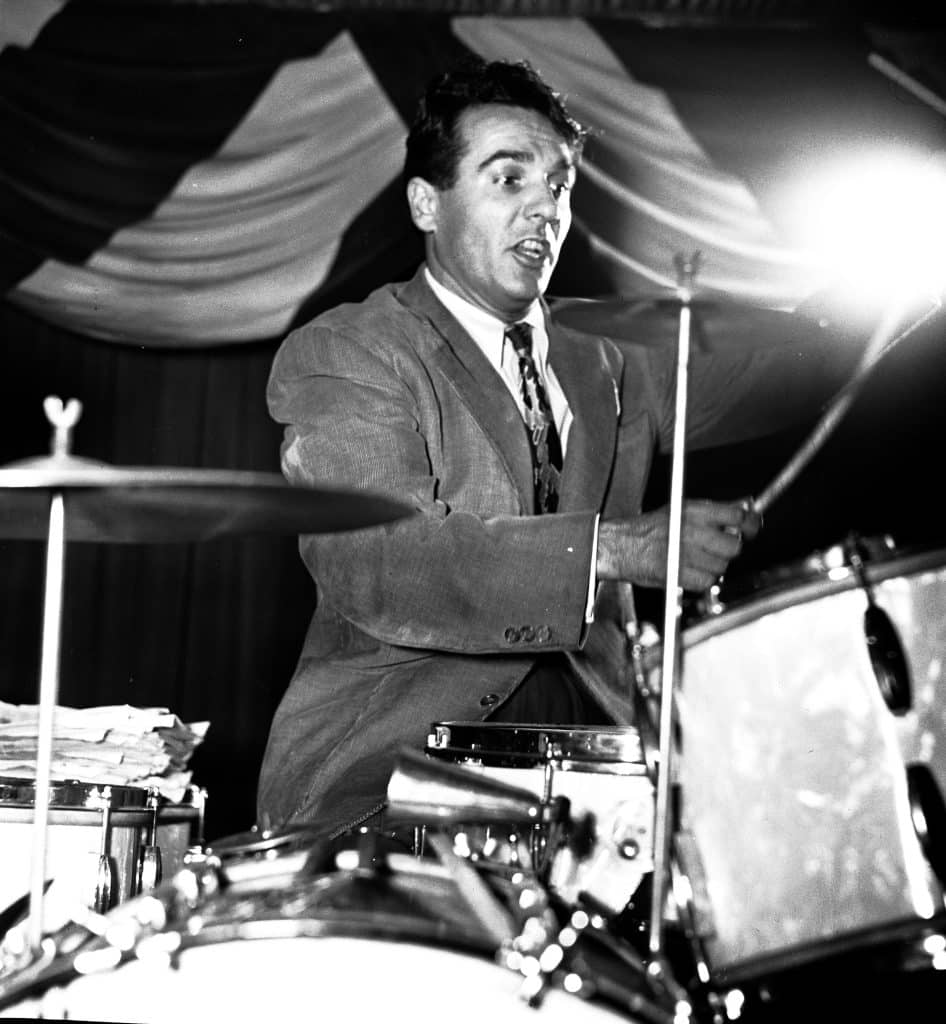
This is Krupa’s orchestra at full swing-era power, and it’s a fantastic entry point. The brass arrangements hit hard, the rhythm drives everything forward, and Krupa holds it all together without ever letting you forget who’s in charge.

What makes this record special, though, is vocalist Anita O’Day — her clipped, rhythmic phrasing is a perfect match for Krupa’s energy, and the interplay between them gives the whole album a chemistry that his later recordings rarely matched.
Drum Boogie (1942)
The early 1940s brought one of Krupa’s best-known recordings, “Drum Boogie,” which became closely associated with his orchestra. The track emphasizes his ability to integrate drum features directly into the arrangement rather than presenting them as isolated solos.

This period cemented Krupa’s reputation as one of the most recognizable drummers of the swing era. Among Gene Krupa albums, these recordings show the drummer at the peak of his big-band popularity.
Krupa and Rich (1955)
By the mid-1950s the big band economy had collapsed, and many swing-era giants were struggling to find their footing.
Krupa’s solution was inspired: pair up with the only drummer whose ego and ability could match his own.
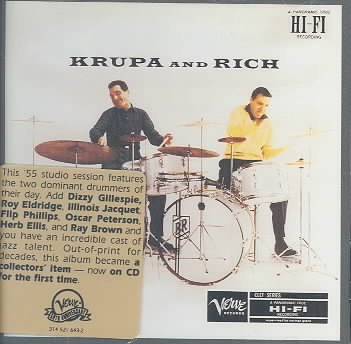
Rather than the competitive showdown you might expect, Krupa and Rich find a genuine musical conversation here — two masters who understood the instrument deeply enough to actually listen to each other. Essential listening for any drummer, but thrilling for everyone else too.
The Drum Battle (1959)
Released in 1959, The Drum Battle continues the partnership between Krupa and Buddy Rich. The performances emphasize rhythmic exchanges between the two drummers while maintaining strong ensemble arrangements.

The album highlights Krupa’s enduring sense of swing even as the jazz world shifted toward bebop and modern styles.
Among later Gene Krupa albums, this recording remains one of the most celebrated.
Krupa Plays Mulligan (1958)

This one tends to get overlooked, which is a shame — it’s arguably the most musically interesting album in Krupa’s discography as a leader. The smaller ensemble strips away the big-band bombast and forces him to play differently: lighter, more conversational, responding to the horns rather than driving them.
If your only image of Krupa is the wild-eyed showman of “Sing, Sing, Sing,” this record will surprise you.
Gene Krupa Big Band (1960)
By 1960, Krupa had returned to the big-band format that first brought him fame. The album captures a seasoned bandleader revisiting the energetic swing style that defined his career.
The arrangements retain classic swing elements while benefiting from improved recording technology of the era. Krupa’s drumming remains energetic, though more controlled than in his earlier years.
A Listening Route Through Gene Krupa Albums
For listeners exploring his recordings as a leader, these albums provide a useful entry point:
- Gene Krupa and His Orchestra (1941) — swing-era big band power
- Drum Boogie (1942) — defining drum feature recordings
- Krupa Plays Mulligan (1958) — small-group swing interpretation
- Krupa and Rich (1955) — legendary drummer collaboration
- The Drum Battle (1959) — virtuosic rhythmic dialogue
- Gene Krupa Big Band (1960) — late-career swing revival
Together they reveal how Krupa’s playing evolved as jazz itself changed.
Final Thoughts
Gene Krupa didn’t just play drums — he made you watch drums. In doing so, he permanently changed what audiences expected from a bandstand, and what drummers believed was possible within an ensemble.
The recordings he left behind aren’t just enjoyable listens; they’re a document of a musician who genuinely expanded the art form. Whether you start with the barnstorming big-band sides of the early 1940s or the more reflective small-group work of the late ’50s, you’ll hear a player who never stopped thinking about what the instrument could do.
That curiosity, as much as the fireworks, is what makes his music last.