
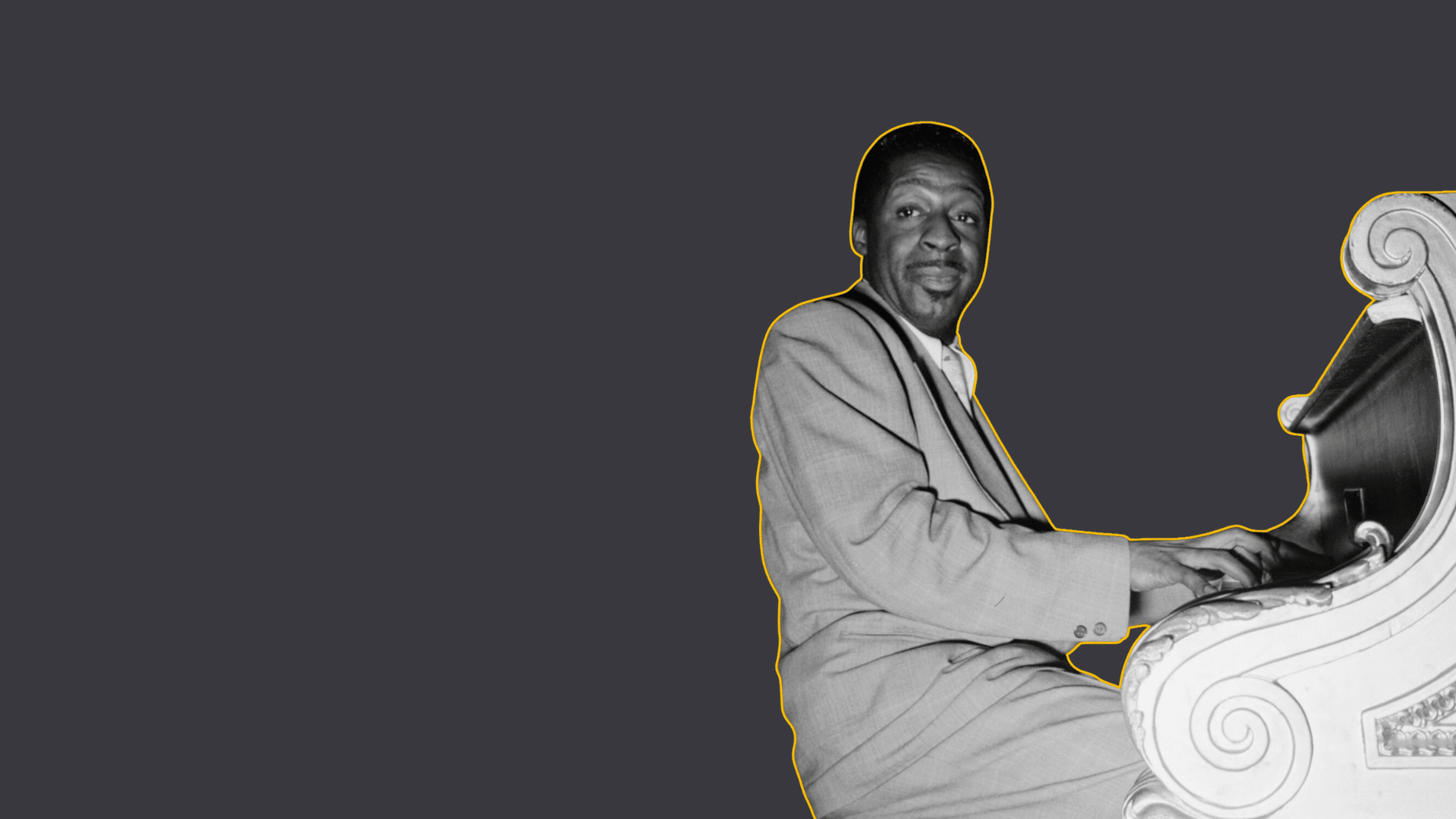
There are very few jazz pianists you can recognise almost immediately.
With Erroll Garner, it often takes only a few seconds. The rolling left hand, the relaxed swing, the way the melody seems to arrive just late enough to feel playful rather than precise—it all gives him away. That kind of musical fingerprint is rare.
And yet Garner is still sometimes misunderstood. He is remembered as a great entertainer, the composer of Misty, the smiling pianist who made audiences feel good. His albums are often treated as extensions of that image rather than as serious artistic statements.
Spend time with them properly, and that idea doesn’t hold up for long.
What emerges instead is a musician who built a self‑contained musical world: deeply rooted in swing, shaped by instinct rather than theory, and sustained over decades without ever hardening into habit. Garner didn’t belong neatly to bebop, cool jazz, or any other label. He worked from his own centre, and his albums document that process with unusual clarity.
This is a look at Erroll Garner’s most important recordings—not as isolated highlights, but as chapters in a continuous artistic life.
Learning by Ear, Not by Rulebook
Garner’s background explains a lot about how he played.
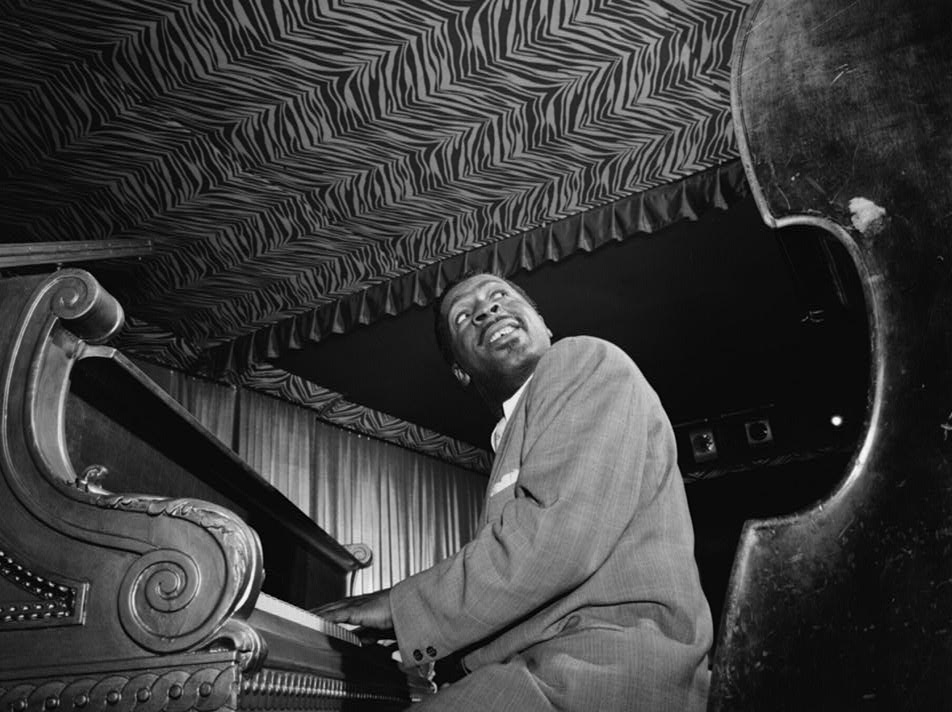
He grew up in Pittsburgh and learned largely by ear, developing outside formal academic systems. He absorbed music by listening, copying, and playing constantly—not by working through exercises or written theory.
That approach stayed with him. Even when his harmony became sophisticated, his playing remained physical and intuitive. His voicings feel shaped by the hands rather than the page. His time feel follows movement and breath as much as bar lines. Phrases often sound as though they’re responding to the room in real time, not to an abstract plan.
Early professional work with swing‑era musicians gave him a deep grounding in groove and ensemble awareness. By the late 1940s, he was already recognised as a formidable soloist, comfortable in clubs, concert halls, and studios alike.
What he never tried to do was sound “correct”.
He focused instead on sounding natural.
Close‑Up in Swing: Defining the Language
One of the clearest early documents of Garner’s mature style is Close‑Up in Swing.
Recorded in 1957, this trio album strips things back to essentials. The repertoire is mostly standards, but the performances never feel routine. What becomes obvious very quickly is how orchestral his piano playing is.
The left hand doesn’t simply keep time. It creates motion, weight, and texture. The right hand reshapes melodies, often entering just behind the beat, creating tension that resolves naturally as the phrase unfolds.
There’s also a strong physical presence in the music. You can sense Garner leaning into certain figures, easing off others, and using dynamics as part of the storytelling.
This album works so well as a starting point because it presents his language without ceremony. No mythology, no framing—just a pianist, a rhythm section, and a fully formed voice.
Concert by the Sea: When the Room Becomes Part of the Music
For many listeners, Erroll Garner becomes fully real through Concert by the Sea.
Recorded live in Carmel, California in 1955 and released the following year, the album became one of the most successful jazz records of its time. Its popularity wasn’t planned. The recording was informal, the sound imperfect, and the atmosphere loose.
That looseness turned out to be its greatest strength.
Garner plays as though he’s in conversation with the audience. He stretches introductions, reshapes tempos, and allows tunes to grow rather than locking them into fixed forms. His performance of “Autumn Leaves” became especially famous, but the entire set operates on the same principle.
What makes the album last isn’t technical display.
It’s communication.
You hear a musician reacting to the room, the instrument, and his own instincts in real time. The rough edges don’t detract—they make the music feel human.
For many listeners, this is the moment Garner stops being a familiar name and becomes someone worth following closely.
Respecting the Song: Plays Gershwin and Kern
Garner is often associated with spontaneity, but he was also a thoughtful studio musician. That side of his artistry comes through clearly on Erroll Garner Plays Gershwin and Kern.
Here, he turns to the music of George Gershwin and Jerome Kern—composers whose melodic strength suited him perfectly. What stands out most is his relationship with the material.
Garner doesn’t treat these songs as vehicles for display. He reshapes harmonies, builds extended introductions, and adjusts pacing, but he never loses sight of what makes the tunes work in the first place. Even at his most exuberant, he seems to be listening closely to the song itself.
The playing feels personal without becoming intrusive. Beneath the humour and flair, there’s a steady musical intelligence guiding every choice.
Thinking Bigger: Soliloquy
By the late 1950s, Garner was interested in expanding his sound.
One of the most ambitious results is Soliloquy, recorded in 1957. Featuring orchestral settings and larger ensembles, it might seem far removed from his trio work. In practice, it reveals another dimension of his imagination.
He adapts easily to the broader canvas. His rhythmic feel remains intact. His phrasing stays unmistakably his own. Even within lush arrangements, he finds space to speak clearly.
Soliloquy matters because it shows that Garner wasn’t confined to small‑group swing. He could work on a larger scale without sacrificing identity.
Late Perspective: The Magician
One of the strongest documents from Garner’s later years is The Magician.
Recorded in 1974, it presents him in a reflective but still energetic mood. His technique remains secure, his sense of humour intact, but the pacing is more patient. Performances unfold slowly. Transitions are given time. The emphasis is on shaping complete musical arcs rather than chasing immediate effect.
Many listeners are surprised by how strong this record is. It makes clear that Garner didn’t peak early and coast. He continued refining his approach well into his later years.
Time Feel and Trio Interaction
A defining feature of Erroll Garner’s albums is his relationship with rhythm sections.
Unlike many pianists, he rarely sits squarely on the beat. His right hand often lags slightly behind, while his left hand pushes forward. That internal tension creates the elasticity that gives his playing so much life.
Bassists and drummers respond by listening closely and adjusting constantly. The result is swing that never feels static, even at moderate tempos.
The time is always moving.
It breathes.
Erroll Garner the Composer
Although best known as a pianist, Garner also left a lasting mark as a composer.
Misty is one of the most recorded ballads in jazz and popular music, but it’s only the most famous example. His albums are filled with originals that share the same strengths: strong melodies, clear harmonic motion, and emotional directness.
On his records, originals and standards sit comfortably together. There’s rarely a sharp line between composition and interpretation. Everything belongs to the same musical language.
That continuity is one reason his catalogue remains so easy to return to.
Finding Your Way In
If you’re approaching Erroll Garner’s albums for the first time, it helps to think in terms of perspective rather than completeness.
Concert by the Sea offers the most immediate sense of his personality in action.
Close‑Up in Swing shows how that personality functions in a focused trio setting.
Plays Gershwin and Kern reveals his sensitivity to classic songwriting.
Soliloquy demonstrates his ability to think on a larger scale.
The Magician gives a view of the mature artist, unhurried and assured.
Taken together, these records show how he thought, played, and evolved.
Why Erroll Garner Still Matters
Erroll Garner matters because he proves that individuality and accessibility don’t have to be opposites.
His music is sophisticated without being forbidding. Joyful without being shallow. Personal without becoming self‑indulgent. He trusted instinct and experience over theory, and he rarely second‑guessed that trust.
That confidence is a big reason his recordings still feel direct and alive.
Closing Reflection
Over time, Erroll Garner’s albums start to feel less like a series of releases and more like an extended conversation with the piano.
From the spontaneity of Concert by the Sea to the measured depth of The Magician, the same core qualities keep resurfacing: rhythmic life, melodic generosity, and a commitment to his own way of making music.
The longer you live with these records, the clearer it becomes how carefully they’re shaped—even when they sound effortless.
That balance is why Erroll Garner’s catalogue continues to reward repeat listening, year after year.
Looking for more? Check out our guide to the best jazz pianists of all time, or dig into the legendary Berlin Jazz Piano Workshop.