
In the mid-1970s, New York’s jazz scene was changing rapidly. Traditional clubs were disappearing, replaced by informal performance spaces where musicians organized concerts themselves. Warehouses, artist lofts, and community venues became laboratories for new music.
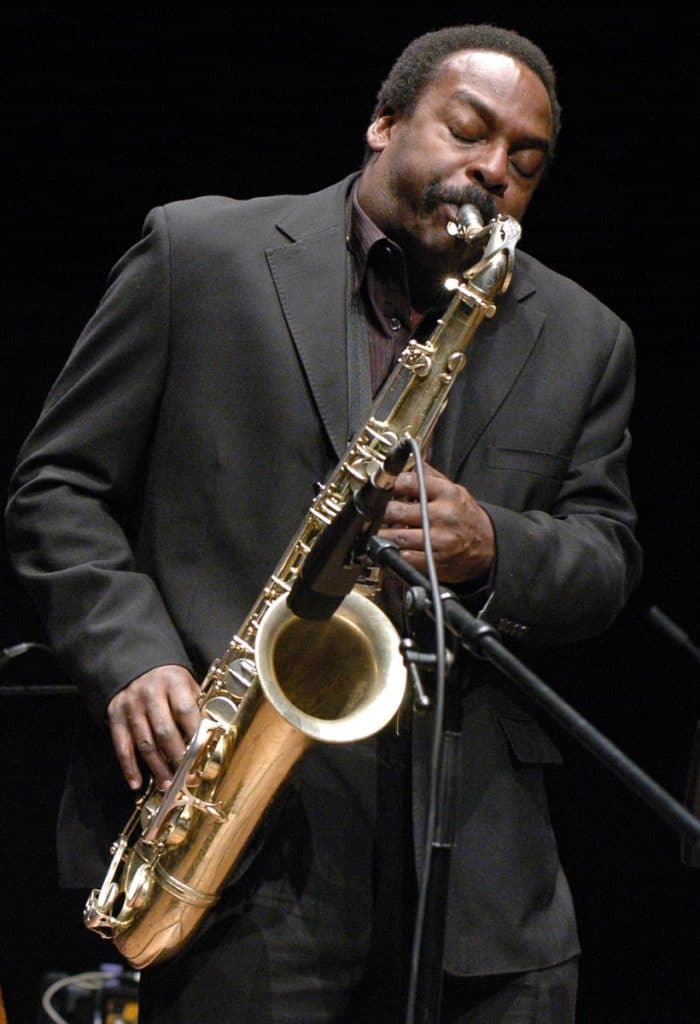
Into this environment stepped a young tenor saxophonist from California: David Murray. His sound was immediately recognizable — broad, slightly raw, capable of eruptive energy but also lyrical warmth. Within a few years he had become one of the defining voices of the so-called loft-jazz generation.
Across David Murray albums, the most striking feature is range. He moves easily between free improvisation, blues-rooted compositions, and large-ensemble writing. The recordings trace not a single stylistic path but a musician constantly reshaping the possibilities of the tenor saxophone.
From California Roots to the New York Loft Scene
Born in Oakland in 1955, Murray began performing professionally while still in his teens. After moving to New York in the mid-1970s, he quickly became involved in the city’s experimental jazz circles. The loft scene encouraged independence — musicians organized concerts, recorded their own music, and collaborated freely across stylistic boundaries.
Murray’s early recordings captured that spirit of discovery. They were raw, ambitious, and often fearless in scale.
Early Breakthrough: Flowers for Albert (1976)
Released in 1976 and dedicated to saxophonist Albert Ayler, Flowers for Albert announced Murray’s arrival with remarkable confidence.
The title track unfolds as a long-form tribute that moves from solemn melody to explosive improvisation. Murray’s tenor sound is full-bodied and unrestrained, yet the piece never loses its structural center. The emotional arc feels deliberate rather than chaotic.
Among early David Murray albums, this recording established him as one of the most compelling voices of the loft generation.
Quartet Exploration: Ming (1980)
By the turn of the decade, Murray had refined his quartet language. Ming, released in 1980, balances avant-garde improvisation with blues-inflected themes.
The ensemble moves fluidly between open sections and tightly shaped melodic passages. Murray’s tenor lines stretch across the rhythm section with sweeping intensity, but moments of lyricism frequently emerge between the bursts of energy.
The album reveals a musician increasingly comfortable integrating structure with freedom.
Expanding Ensemble Ideas: Home (1981)
Released in 1981, Home introduces a broader sonic palette. Murray combines gospel harmonies, blues phrasing, and collective improvisation within a larger ensemble setting.
The music often begins with simple thematic material before expanding into dense textures. Despite the scale, Murray’s tenor remains the emotional center of the recording.
This period marks an important stage in the development of David Murray albums, as his compositions grow increasingly ambitious.
The Octet Years: Murray’s Steps (1983)
During the early 1980s, Murray began working extensively with his octet, an ensemble that allowed him to explore more complex arrangements. Murray’s Steps, released in 1983, highlights the group’s ability to balance structured composition with improvisational flexibility.
The horn arrangements carry echoes of earlier big-band traditions while remaining rooted in modern jazz language. Murray’s solos move between fiery intensity and reflective phrasing.
The album demonstrates how orchestration could expand the expressive range of his music.
Blues Tradition Revisited: Live at Sweet Basil (1984)
Recorded in 1984, this live album places Murray in a small-group context that foregrounds blues influence. The performances feel spontaneous yet tightly focused.
The rhythm section provides a grounded pulse while Murray stretches phrases across extended choruses. His tone remains robust, capable of both gritty growls and soft melodic turns.
Among David Murray albums, this recording highlights the deep blues lineage underlying his more experimental work.
Big Band Ambition: The Hill (1987)
By the late 1980s, Murray had begun writing for larger ensembles. The Hill, released in 1987, features expanded instrumentation and more elaborate arrangements.
The compositions weave together multiple sections, sometimes shifting from lyrical passages to energetic ensemble climaxes. Murray’s saxophone remains central, but the surrounding textures create a richer orchestral environment.
The album reflects a composer increasingly interested in large-scale form.
Mature Quartet Work: Shakill’s Warrior (1991)
Released in 1991 and dedicated to jazz journalist Shakill Ahmed, this album captures Murray’s quartet in powerful form. The compositions combine rhythmic drive with emotionally charged melodies.
Murray’s tenor tone sounds broader than ever here, moving effortlessly between forceful statements and quieter reflections. The balance between freedom and structure feels fully integrated.
This recording remains one of the most widely admired entries in the catalogue of David Murray albums.
Later Career Reflection: Gwotet (2004)
By the early 2000s, Murray’s playing had developed greater restraint. Gwotet, released in 2004, features a quartet exploring melodic clarity alongside improvisational openness.
The compositions unfold gradually, allowing space between phrases. Rather than relying on explosive intensity, Murray shapes long melodic arcs that reveal a more reflective side of his musical personality.
A Listening Route Through David Murray Albums
For listeners approaching his discography, these recordings offer a useful entry point:
- Flowers for Albert (1976) — loft-jazz breakthrough
- Ming (1980) — quartet refinement
- Home (1981) — expanded ensemble writing
- Murray’s Steps (1983) — octet orchestration
- Live at Sweet Basil (1984) — blues-rooted performance
- The Hill (1987) — large-ensemble ambition
- Shakill’s Warrior (1991) — mature quartet power
Together they trace a career defined by constant exploration.
Final Thoughts
David Murray’s discography reflects the restless creativity of modern jazz itself. The recordings move between avant-garde improvisation, blues tradition, and large-ensemble composition without ever settling into one category.
Across David Murray albums, the tenor saxophone remains the guiding voice — sometimes explosive, sometimes lyrical, always searching. That sense of inquiry explains why his music continues to resonate across generations of listeners and musicians alike.