

The Charlie Parker blindfold test is a rare and early insight into the mind and ear of a true jazz genius. We’ve picked out some key highlights from the wide-ranging interview, with musical examples to go with it. See if you can guess, before the end, who it is he describes as ‘the other half of his heartbeat…’
In the summer of 1948, Charlie Parker sat down with jazz critic Leonard Feather at the Royal Roost in New York to take part in what was then a new kind of interview: the Blindfold Test.
Feather had invented the format only a couple of years earlier for Metronome magazine. The idea was simple but revealing — play records for a musician without telling them who’s performing and capture their spontaneous reactions.
Parker’s session—which you can hear in full via the video at the end of this article—became one of the earliest and most illuminating examples ever recorded.
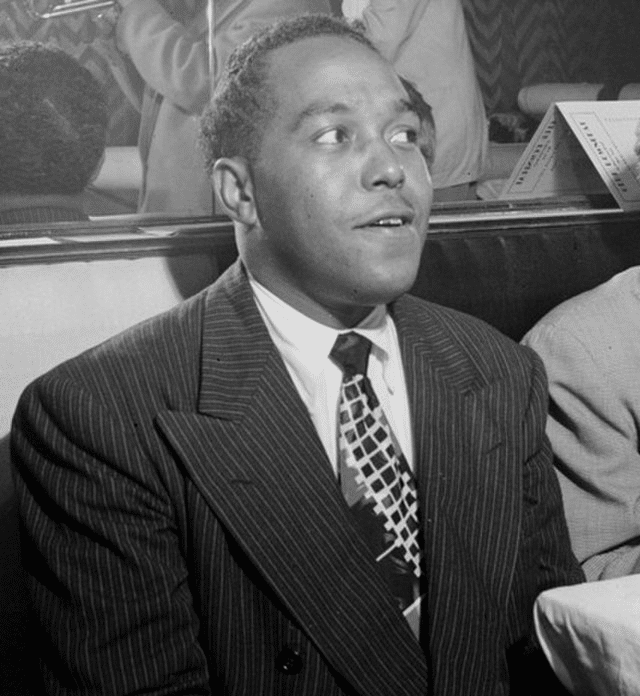
By 1948, Parker had already reshaped modern music. Bebop had moved from the margins into the mainstream, and its co-creator was both celebrated and controversial. Yet in this recording, we glimpse not Parker the icon but Parker the listener — thoughtful, humble, and quick to find value in others’ work.
Feather later recalled that Parker was relaxed and in good humour during the taping, made on a primitive recorder. The transcript, first published in Metronome and reprinted in Down Beat in 1965, still feels like a masterclass in how one of jazz’s sharpest minds listened.
Amongst the 12 tracks he listened to, we learnt his honest opinion on a range of artists, including some of those he was closest to. You can find the full interview at the end, but here are 5 of the most eye-opening opinions, along with the songs he listened to.
Shocking Stan Kenton
Big band leader and arranger Stan Kenton is frequently cited as ahead-of-his-time. It seems Parker was in agreement: “Very weird—marvelous idea… it’s such a shock.”
Love For Benny Goodman
“I don’t agree with people who think Benny’s old-fashioned” was Parker’s comment on hearing Benny Goodman’s octet play Nagasaki. “Benny’s always superb—that’s natural.”
Parker The Dixieland Fan?
Perhaps most surprisingly, a track by Dixieland drummer George Wettling gave him pause for thought: “I like Dixieland, in a way… there’s a status of appreciation you can reach and you listen for it”.
Five Stars For Johnny Hodges
The sole 5-star rating on the blindfold test was reserved for one of his saxophone idols, Johnny Hodges. “He’s a beautiful person. That record deserves all the stars you can muster.” The track in question? Passion Flower with none other than Duke Ellington on piano.
Dizzy Gillespie: The Other Half of His Heartbeat
As two of the original bebop innovators, it’s no surprise that Charlie Parker recognised the trumpet playing of Dizzy Gillespie on the track Stay on It. How he chose to describe him says it all: “Dizzy Gillespie… the other half of my heartbeat”
Wrapping up the Charlie Parker Blindfold Test
At the end of the session, Feather asked Parker for his overall impressions. Parker replied simply: “You’re surprised how mild I liked it. I like all kinds of music.”
It’s a quietly revealing line. Despite the image of Parker as a restless modernist, he refused to draw sharp lines between styles or generations. He could admire Goodman and Hodges just as easily as Gillespie and Stitt.
The Blindfold Test shows him as open-eared, fair-minded, and fundamentally curious — an artist listening without prejudice. His comments are concise, but they reveal a musician guided by feel rather than fashion, by craft rather than category.
More than seven decades later, the recording still speaks volumes. It reminds us that Parker’s genius wasn’t only in what he played but in how he listened — without envy, without ego, always alert to beauty wherever he found it.
So press play on the full Charlie Parker Blindfold Test above, and hear Bird hear the world.
Looking for more? Listen to the full interview via the University of Texas here.