
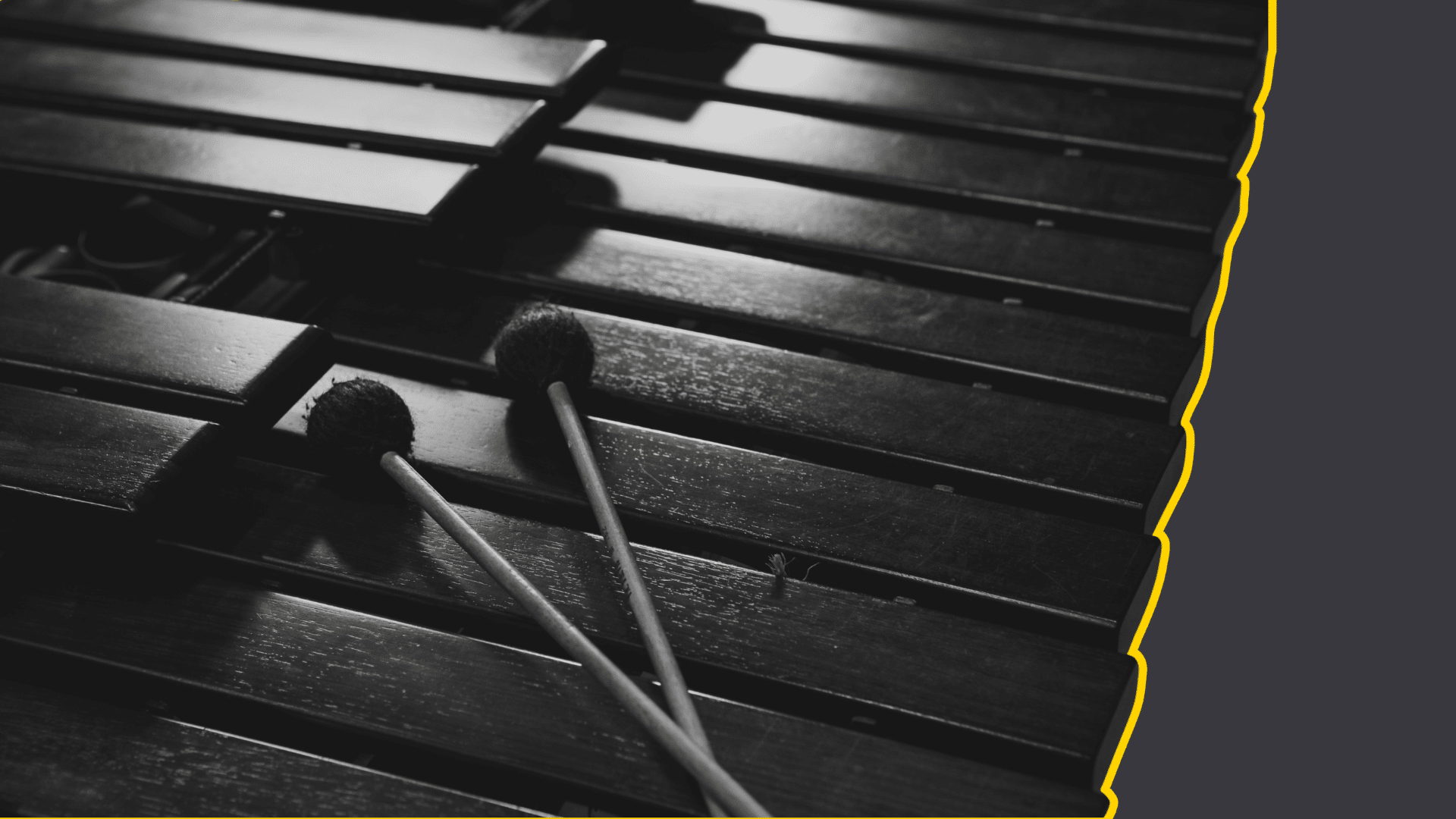
Bobby Hutcherson arrived in New York at a moment when Blue Note’s sound was beginning to stretch beyond hard-bop certainty without abandoning swing. Within a few sessions, his vibraphone tone—bright in attack, lingering in resonance—had become part of that shift. The recordings that followed trace a quiet but continuous widening of modern jazz language, moving from structured dialogue toward open texture and, eventually, late-career clarity.
Following this sequence of Bobby Hutcherson albums reveals change unfolding gradually rather than through rupture. Each session adjusts balance, space, and ensemble color by small degrees, allowing the music to evolve without announcing transformation.
West Coast Foundations and Blue Note Arrival
Raised in Los Angeles, Hutcherson absorbed both jazz and rhythm-and-blues before professional work began in his late teens. Performances with touring musicians passing through the city placed him inside a national network sooner than geography might suggest, and by the time he reached New York in the early 1960s he was already prepared for studio collaboration rather than gradual discovery.
Sessions with artists including Jackie McLean and Eric Dolphy quickly positioned him within Blue Note’s most exploratory circle. Leadership recordings followed almost immediately, not as a break from sideman work but as a natural extension of it.
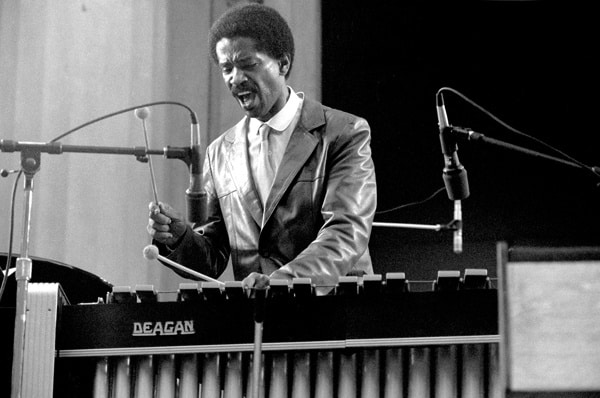
Expanding the Language: Dialogue (1965)
Recorded in 1965 and shaped largely by Andrew Hill’s compositions, Dialogue stands among the earliest Bobby Hutcherson albums to define a personal direction. The ensemble—built from musicians comfortable with open structure—moves away from conventional vibraphone roles. Harmony widens, rhythmic placement loosens, and texture becomes as central as line.
Nothing here declares revolution.
Instead, the music simply steps beyond earlier boundaries and keeps moving.
Lyricism Within Abstraction: Components (1966)
Split between Hill’s writing and Hutcherson’s own compositions, Components balances freedom with melodic clarity. Rhythmic grounding remains present even as harmony stretches outward, and the vibraphone’s sustain allows phrases to overlap in ways piano cannot easily match. Angular structures soften without losing direction.
Within the arc of Bobby Hutcherson albums from the mid-1960s, this recording shows experimentation becoming expressive rather than purely exploratory.
Precision in a Smaller Frame: Happenings (1967)
A quartet setting sharpens focus. Herbie Hancock’s piano introduces harmonic motion beneath Hutcherson’s ringing tone, while Joe Chambers shapes rhythmic space with unusual flexibility. The music feels lighter on the surface yet structurally exact, demonstrating how reduced scale can clarify intention.
Accessibility appears briefly here—never simplified, only distilled.
Modal Reach and Sustained Momentum: Stick-Up! (1968)
With McCoy Tyner at the piano, the sound shifts toward modal breadth and long-line phrasing. Tyner’s quartal harmony supports vibraphone resonance that unfolds gradually rather than fragmenting. The rhythm section maintains forward motion without crowding the texture.
Among late-1960s Bobby Hutcherson albums, this session balances spiritual intensity with formal clarity.
Rhythm, Color, and the Edge of Fusion: Total Eclipse (1969)
Electric bass and denser rhythmic motion reflect broader musical changes at the decade’s close. Hutcherson’s phrasing remains spacious, preventing the music from collapsing into heaviness. Atmosphere and pulse coexist rather than compete.
Adaptation occurs quietly, absorbed into an already flexible voice.
Melodic Openness in a New Decade: San Francisco (1971)
Entering the 1970s, Hutcherson turns toward clearer melodic contour and relaxed swing feel. The West Coast atmosphere mirrors the sound—open, spacious, and less confrontational than earlier Blue Note explorations. Improvisations stretch across groove rather than pushing against form.
Several Bobby Hutcherson albums from this period share that release, but San Francisco captures it most directly.
Electric Texture and Continuity: Cirrus (1974)
Mid-1970s production introduces electric instruments and broader sonic layering. Hutcherson adapts carefully, maintaining melodic focus while allowing texture to thicken around him. Even within fusion-era surroundings, tone and phrasing remain unmistakable.
Continuity, rather than stylistic allegiance, defines this stage of Bobby Hutcherson albums.
Late-Career Reflection: Cruisin’ the ’Bird (1988)
Years later, Hutcherson returned to acoustic settings and familiar repertoire. The playing carries patience instead of urgency, shaped by experience rather than discovery. Standards and originals sit together without hierarchy, unified by touch and timing.
Endurance becomes the quiet subject of the music.
A Listening Path Through Bobby Hutcherson Albums
For listeners approaching Bobby Hutcherson albums for the first time, several recordings provide clear orientation:
- Dialogue (1965) — entry into Blue Note’s exploratory language
- Components (1966) — lyricism within abstraction
- Happenings (1966) — quartet clarity and balance
- Stick-Up! (1966) — modal breadth and sustained motion
- San Francisco (1970) — melodic openness of a new decade
- Cruisin’ the ’Bird (1988) — reflective late-career tone
Together, these recordings trace movement from experimentation toward distilled expression.
Final Thoughts
Across shifting styles—post-bop structure, modal exploration, electric color, and later acoustic return—Bobby Hutcherson albums maintain a consistent center of gravity: clarity of tone, patience of phrasing, and deep ensemble listening. Surrounding contexts evolve, but the sound itself remains steady, suspended in resonance longer than expectation.
That sustained clarity explains why Bobby Hutcherson’s recordings continue to feel present rather than historical. The music does not argue for importance. It simply endures.