

When Black Byrd was released in 1973, it didn’t sound like the Donald Byrd many jazz critics thought they knew.
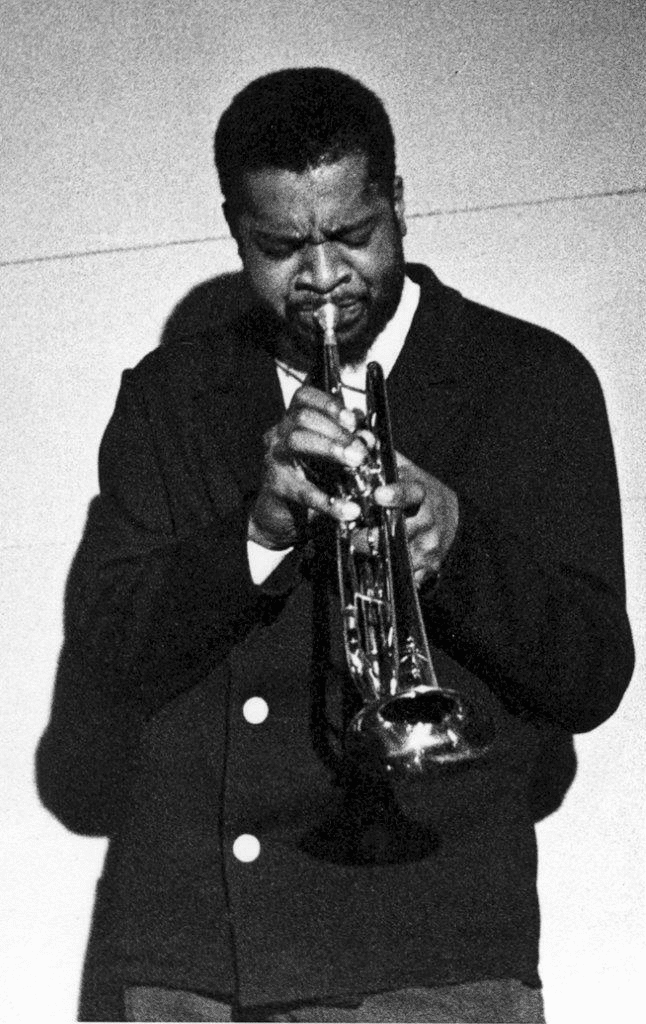
Byrd had built his reputation in the 1950s and 60s as a serious modern jazz trumpeter, recording for Blue Note alongside figures like Jackie McLean, Herbie Hancock and Hank Mobley. Albums such as Byrd in Flight and A New Perspective placed him firmly inside the post-bop lineage. He was respected, academically inclined, and deeply connected to jazz tradition.
Black Byrd challenged all of that.
Produced by Larry and Fonce Mizell, the album leaned unapologetically into funk, R&B and groove-based writing. The melodies were simpler. The rhythms locked in. The production was slick by jazz standards of the time. For some critics, it felt like Byrd had crossed an invisible line — not just stylistically, but culturally.
And yet, audiences heard something entirely different.
A Record That Moved Faster Than the Debate
Commercially, Black Byrd was an immediate success. Within weeks of its release, it became Blue Note’s best-selling album up to that point, reportedly shifting over 100,000 copies in its first six weeks. It topped the Billboard Jazz chart and crossed into wider circulation in a way few jazz records of the early 1970s managed to do.
This wasn’t a slow-burn cult classic. It connected straight away.
The title track, built around a relaxed but insistent groove, set the tone. “Flight Time” and “Love’s So Far Away” followed the same logic: accessible melodies, layered textures, and a rhythmic feel that owed as much to soul and funk as to modern jazz. Byrd’s trumpet sat within the ensemble rather than floating above it, often functioning as a colour rather than a dominating voice.
For listeners outside the jazz press, none of this was a problem. If anything, it was the point.
Why Some Critics Pushed Back
The resistance from parts of the jazz establishment wasn’t really about sales. It was about identity.
Much of the jazz press at the time was still anchored to acoustic post-bop values. Groove-based records, especially those flirting with funk and R&B, were often treated with suspicion rather than curiosity – often framed as a dilution rather than an evolution. Albums like Black Byrd were sometimes treated as compromises, or worse, calculated attempts at crossover success.
The Mizell Brothers’ production style didn’t help matters. Their sound was polished, rhythmically precise and unmistakably contemporary. This was music designed to feel good as much as to be analysed. For critics trained to listen for lineage and difficulty, that accessibility was suspicious.
But Byrd himself didn’t see it that way.
Byrd, Education, and a Broader Audience
Donald Byrd wasn’t just a bandleader — he was also an educator. By the early 1970s, he was increasingly focused on reaching younger Black audiences who weren’t necessarily buying jazz records. Funk, soul and R&B were the languages of the moment, and Byrd understood that refusing to engage with them meant becoming irrelevant.
Black Byrd wasn’t a rejection of jazz values so much as a repositioning of them. The discipline, clarity and ensemble awareness that defined Byrd’s earlier work are still present — they’re just channelled through a different rhythmic and production framework.
That shift proved influential. The album didn’t just succeed on its own terms; it helped reshape Blue Note’s direction in the 1970s. Labels were watching. Musicians were listening. Jazz-funk wasn’t a side road — it was becoming a major lane.
Influence Beyond Jazz Circles
Over time, Black Byrd found a second life beyond its original audience.
The album has been sampled, reissued and rediscovered by DJs, producers and crate-diggers drawn to its textures and grooves. Its clean production and relaxed tempos made it fertile ground for later hip-hop and neo-soul sampling culture. What once felt too commercial to some critics later became a marker of foresight.
Listening today, it’s hard to hear Black Byrd as a misstep. Instead, it sounds like a musician reading the room accurately — and trusting his instincts.
Reassessment Comes Slowly
Like many albums that challenge stylistic boundaries, Black Byrd benefited from distance.
The arguments that surrounded its release now feel tied to a specific moment, when jazz was negotiating its place in a changing musical economy. With hindsight, the album’s success doesn’t look like a betrayal of jazz so much as a reminder that jazz has always absorbed, adapted and redefined itself.
Donald Byrd would continue working in this vein throughout the decade, mentoring younger musicians and leaning further into groove-based projects. For better or worse, Black Byrd marked the point where that direction became impossible to ignore.
What do you think of this record? You can check it out amongst some other jazz fusion greats here.