

Few singers blurred genre lines as naturally as Al Jarreau.
His voice could pivot from scat improvisation to smooth R&B phrasing in a single chorus. It snapped rhythmically one moment and floated the next. What made it compelling was not range alone, but timing — the way he placed syllables slightly ahead or behind the beat, shaping momentum without breaking it.
Listening across Al Jarreau songs reveals a performer who treated melody as flexible material. Even familiar standards felt newly elastic in his hands. Later pop successes carried the same rhythmic intelligence beneath polished production.
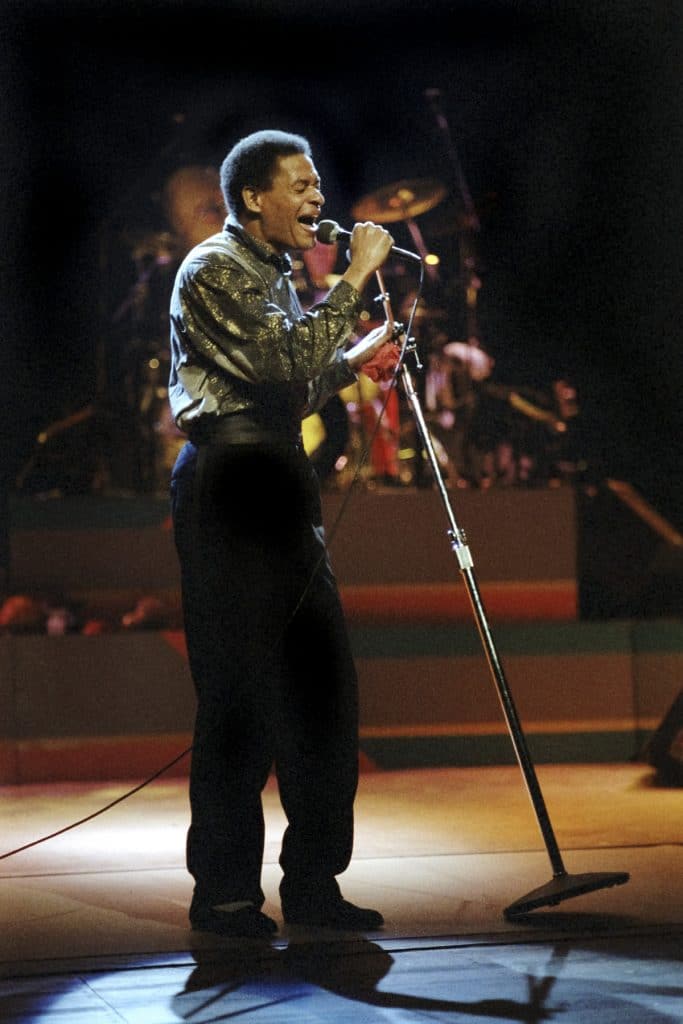
From Milwaukee Clubs to International Stages
Born in Milwaukee in 1940, Jarreau began performing seriously in the 1960s while balancing graduate studies and early professional life outside music. His breakthrough came in the mid-1970s with a European audience that immediately recognized the originality of his vocal approach. By the time he signed with Warner Bros., his identity was already clear: a singer who approached the microphone like an improvising instrumentalist.
That dual instinct — entertainer and improviser — defines the strongest songs in his catalogue.
“We Got By” (1975)
Drawn from his debut album, “We Got By” captures the early balance between jazz phrasing and accessible melody. The groove is relaxed but insistent, allowing Jarreau to bend lines without losing the pulse. His scatting is not ornamental; it feels structural, woven into the rhythm section’s movement.
Even in these early recordings, his control of dynamics stands out. He rarely overstates emotion. Instead, he shapes phrases gradually, allowing intensity to accumulate rather than explode.
“Take Five” (1977)
Jarreau’s vocal interpretation of the Dave Brubeck classic remains one of his most daring performances. Instead of merely adapting the melody, he reconstructs it vocally — turning instrumental lines into elastic syllabic patterns.
The 5/4 time signature becomes playground rather than obstacle.
Where an instrumentalist might rely on tone variation, Jarreau uses articulation and breath. The result feels both respectful and boldly reimagined.
Among Al Jarreau songs, this stands as a clear statement of his improvisational authority.
“Spain (I Can Recall)” (1980)
His lyrical adaptation of Chick Corea’s composition transforms a complex instrumental into a vocal showcase. The phrasing remains rhythmically intricate, yet Jarreau maintains warmth and clarity.
He does not smooth over harmonic twists. Instead, he navigates them with conversational ease, turning technical complexity into expressive flow.
“Roof Garden” (1981)
With Breakin’ Away, Jarreau entered a broader pop audience, and “Roof Garden” became emblematic of that crossover moment. The production is polished, the hooks immediate, yet his rhythmic placement retains subtle swing.
Rather than abandoning jazz instincts, he embeds them inside radio-friendly form. The tension between groove and elasticity keeps the song from flattening into slickness.
“Mornin’” (1983)
Up-tempo and bright, “Mornin’” highlights Jarreau’s buoyant phrasing. The rhythmic feel is crisp, but his vocal line glides slightly across it, adding lift.
The track’s commercial appeal is obvious, yet the improvisational reflex remains audible in the small rhythmic deviations and playful vocal textures.
“After All” (1984)
A duet with George Benson, “After All” softens the dynamic range. Jarreau reins in the acrobatics, focusing instead on clarity and blend. The restraint reveals another strength: emotional understatement.
The phrasing becomes smoother, but never generic. Subtle accents and breath control preserve personality inside the ballad setting.
“Moonlighting (Theme)” (1987)
The theme to the television series Moonlighting introduced Jarreau’s voice to a new generation. The performance is concise and tightly structured, yet still rhythmically alive.
Short phrases land with precision, and the vocal brightness cuts cleanly through orchestral backing. Even in a brief format, his signature elasticity remains present.
“Boogie Down” (1978)
A Grammy-winning performance, “Boogie Down” demonstrates how Jarreau could energize a groove without overpowering it. The scatting interacts directly with percussion accents, almost functioning as an additional rhythm instrument.
Energy builds through layering rather than sheer volume.
“Agua de Beber” (1978)
His interpretation of the Antônio Carlos Jobim standard shows his sensitivity to Brazilian rhythm. Instead of exaggerating phrasing, he leans gently into the syncopation, allowing the melody to breathe.
The performance underscores his ability to adapt stylistically without diluting his vocal identity.
A Listening Path Through Al Jarreau Songs
For those exploring his catalogue, these recordings offer a clear starting point:
- “We Got By” (1975) — early jazz-soul balance
- “Take Five” (1977) — rhythmic reinvention
- “Spain (I Can Recall)” (1980) — virtuosic vocal adaptation
- “Roof Garden” (1981) — crossover precision
- “Mornin’” (1983) — pop-era energy
- “After All” (1984) — understated duet clarity
Together they trace a career built on flexibility rather than fixed style.
Final Thoughts
Al Jarreau’s recordings resist easy classification. Jazz singer, R&B stylist, pop crossover success — each label fits partially, but none fully captures the rhythmic intelligence that defines his voice. He treated melody as living material, reshaping it in real time while preserving its emotional core.
Across decades, the defining trait remains timing.
Syllables stretch. Accents shift. Breath becomes punctuation. What endures is not simply range, but placement — the subtle art of where a note begins and how long it lasts.
That sensitivity explains why these songs continue to resonate long after their original release dates.