

Conversation about singers often circles tone, range, and control.
Abbey Lincoln had all of those things.
A distinctive sound. Reliable pitch. A deep instinct for phrasing.
But they were never the centre of her music.
What set Lincoln apart was seriousness of intent.
She didn’t treat songs as display pieces. She treated them as statements—about dignity, politics, love, fear, ageing, and self‑respect.
Across six decades, her recordings trace not just a career, but a long act of self‑definition.
She changed. She resisted categories. She refused the comfort of a fixed role.
And she allowed those shifts to remain audible.
Her catalogue only fully makes sense when heard as a continuous story rather than a handful of highlights.
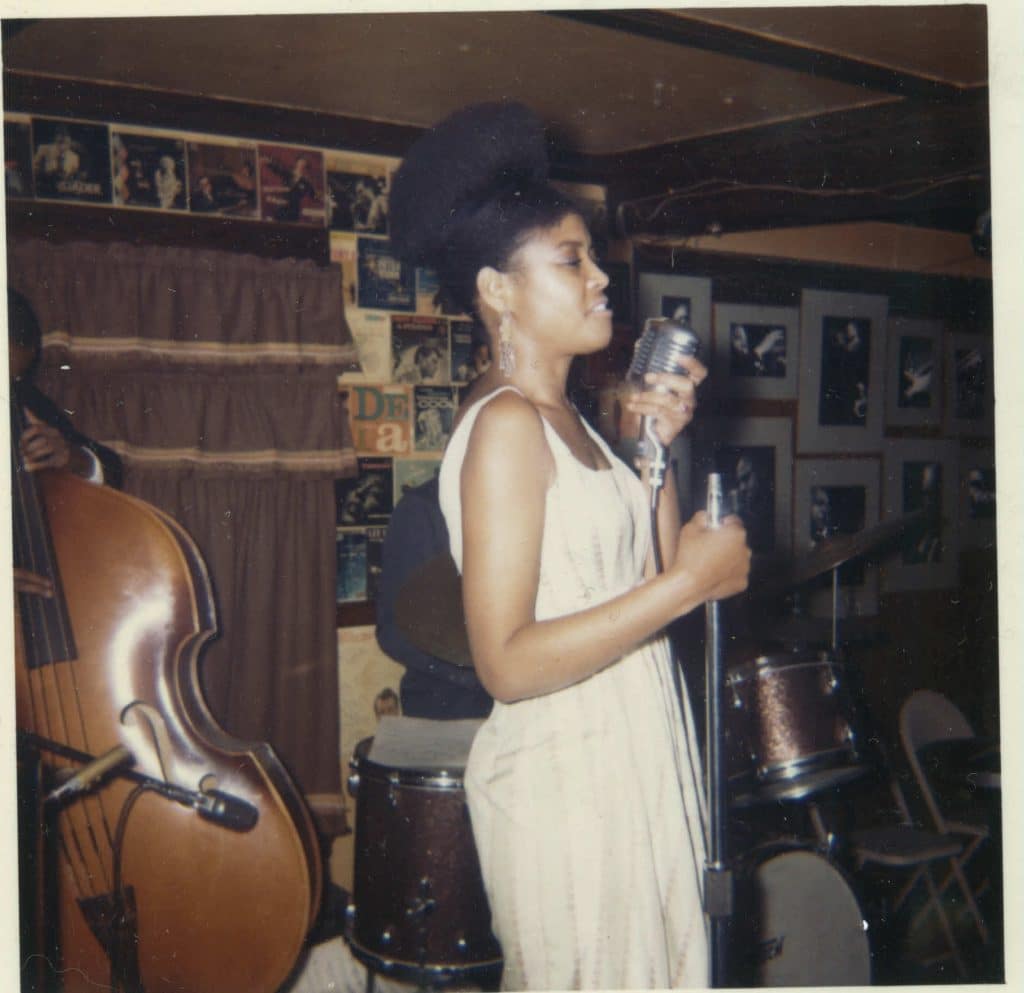
From Chicago to New York: Learning the Craft
Born Anna Marie Wooldridge in Chicago in 1930 and raised in Michigan, Lincoln came up the way many singers of her generation did—clubs, touring bands, late‑night sessions, and practical experience rather than classrooms.
By the early 1950s she was in Los Angeles, working as both singer and actress.
The earliest recordings show a capable performer still searching for shape. She could swing, handle ballads, and sit comfortably inside standard arrangements, but the deeper authority wasn’t there yet.
That changed when she moved to New York and formed a close personal and artistic partnership with drummer and composer Max Roach.
Roach pushed her toward harder questions—about material, message, and responsibility.
Lincoln responded by stepping beyond the traditional role of jazz singer.
Nothing after this point sounds accidental.
Political Voice, Personal Risk: Straight Ahead
The decisive early statement arrived in 1961 with Straight Ahead.
Not the smoothest record in her catalogue, but perhaps the most uncompromising.
Recorded in the heat of the civil rights era, it places identity, injustice, and pride directly at the centre of the music.
Lincoln sings with focus rather than polish.
She doesn’t soften difficult ideas or hide behind metaphor.
Roach’s drumming adds urgency without clutter, keeping attention on the voice and the words.
Some listeners still find the album uncomfortable.
That discomfort is intentional.
Here, Lincoln stops being an interpreter and becomes a cultural voice willing to risk rejection.
Interior Space: Abbey Is Blue
Two years earlier, Abbey Is Blue revealed a very different strength.
Ballads and standards dominate.
The mood is quiet, inward, controlled.
Lincoln stretches phrases gently, almost conversationally.
She refuses melodrama.
Heartbreak unfolds without theatrical emphasis, which makes it feel more real.
For listeners who know only the political Lincoln, this record is essential.
It shows how much she could say while barely raising her voice.
The Roach Years and Expanding Identity
Her collaboration with Max Roach produced some of the most politically charged music in jazz, including We Insist! Freedom Now Suite.
Just as important, it pushed Lincoln toward writing her own material and shaping her own narrative.
By the time of People in Me, social awareness and private reflection had merged.
Ageing, identity, and memory sit beside politics without separation.
Songwriting became a form of autonomy.
No intermediaries. No softened message.
Only what she meant to say.
Withdrawal, Then Clarity
By the late 1960s and 1970s, Lincoln largely stepped back from recording.
This is often described as decline.
It feels closer to refusal.
She was rejecting roles that no longer fit and waiting for conditions that allowed control.
When she returned in the late ’80s and ’90s, the direction was unmistakable.
Stripped‑down. Reflective. Completely her own.
The Late Renaissance: Verve Years
Her most sustained period of recording came late.
You Gotta Pay the Band (1991)
Produced by Stanley Clarke, this album quietly reintroduced Lincoln to a wider audience.
The tone is reflective, grounded, unhurried.
The World Is Falling Down (1994)
The voice is rougher now, lower, marked by time.
She uses that change as expression rather than limitation.
Everything feels spoken from experience.
Who Used to Dance (1996)
One of the great late statements.
Stevie Wonder, Stevie Nicks, and Lincoln’s own songs sit together naturally.
Her reading of “And It’s Supposed to Be Love” is devastating in its restraint.
No drama. Just truth.
Writing as Self‑Portrait
From the 1970s onward, Lincoln relied increasingly on her own compositions.
Albums like A Turtle’s Dream and Devil’s Got Your Tongue show a writer uninterested in ornament.
The language is plain, conversational, rooted in lived experience—relationships, doubt, spiritual searching, ageing.
She chose honesty over comfort every time.
A Voice That Refused to Hide Age
One of the most remarkable things in Lincoln’s catalogue is how openly it records change.
The early voice is bright and flexible.
By the 1990s, it’s darker, grainier, slower.
She doesn’t disguise it.
She builds a new style around it—shorter phrases, deliberate silence, shifting between speech and song.
Instead of weakening authority, age deepens it.
Looking Back Without Nostalgia: Abbey Sings Abbey
On Abbey Sings Abbey, she revisits her own compositions from the distance of years.
The tempos are slower.
The tone more fragile.
The meaning clearer.
It plays like a quiet autobiography—an artist examining her own past without sentimentality.
Few musicians attempt that.
Fewer succeed.
Where to Begin
A simple path through the catalogue:
- Abbey Is Blue – lyrical intimacy
- Straight Ahead – political and artistic turning point
- Who Used to Dance – late‑career mastery
- Abbey Sings Abbey – reflective self‑portrait
Together, they outline an entire artistic life.
Refusing the Easy Version
Abbey Lincoln never accepted easy positioning.
She rejected material she didn’t believe in.
Challenged expectations placed on Black women in jazz.
Insisted on authorship—musical and personal.
That independence narrowed commercial visibility.
It strengthened artistic permanence.
You can hear her influence in singers who value depth over decoration—Cassandra Wilson, Dee Dee Bridgewater, Dianne Reeves—but imitation was never the point.
Integrity was.
Listening Abbey Lincoln Across Time
Abbey Lincoln’s albums aren’t background music.
They ask for attention.
They reward patience.
They reveal more each time.
Across ballads, protest songs, personal reflections, and late‑life reassessments, she built a catalogue unified not by style, but by principle.
She sang what she believed.
Recorded what she meant.
Left behind one of the most truthful bodies of work in modern jazz.
Follow the records long enough, and you don’t just hear a singer.
You hear a life—unsoftened, unresolved, and completely her own.