

Few independent labels have brought together as many of jazz’s leading artists as Mack Avenue Records. Christian McBride, Cécile McLorin Salvant, Gary Burton, Kenny Garrett, Julian Lage and Emmet Cohen have all made defining records for the Detroit-based label.
Since launching in 1999, Mack Avenue has built an unusually rich catalogue: Grammy-winning big bands, modern vocal jazz, hard bop, contemporary guitar music and Danilo Pérez’s ambitious Panamanian suite. These ten albums, listed chronologically, are the best place to start.
Let us know in the comments section which are your favourites!
Eugene Maslov – When I Need to Smile (1999)
Mack Avenue’s first release came from Eugene Maslov, a classically trained pianist who had studied at the Rimsky-Korsakov Conservatory in his native St. Petersburg before settling in the Detroit area.
The label existed at all because of one person: Gretchen Carhartt Valade, chair of the Detroit workwear company Carhartt and a lifelong jazz fan, who founded Mack Avenue in Grosse Pointe Farms, Michigan, and built its early catalogue around veteran names like Terry Gibbs, Oscar Castro-Neves and George Shearing. Maslov’s record itself is a modest, straightforward trio session rather than a canonical jazz classic.
Its significance is almost entirely retrospective: it was the opening entry in a catalogue that would go on to include multiple Grammy winners and, through through Valade’s philanthropy, a $10 million gift in 2006 to secure the future of the Detroit Jazz Festival.
Gerald Wilson Orchestra – New York, New Sound (2003)
By 2003, Gerald Wilson had been writing and leading big bands since the swing era of the 1930s and 40s, and Mack Avenue brought the then-84-year-old arranger to Clinton Recording Studio in New York with a genuinely all-star band: trumpeters Clark Terry and Jon Faddis, saxophonists Frank Wess and Jimmy Heath, pianists Kenny Barron and Renee Rosnes, all working from Wilson’s charts.
The Penguin Guide to Jazz called it “a record any jazz lover should be delighted to hear.” What matters for Mack Avenue’s story is the choice itself: three years after its debut, an independent label with no track record chose to build a record around one of the last great swing-era arranger-bandleaders rather than chase a younger, more marketable sound.
That willingness to work with major veteran artists became a defining trait of the label’s identity.
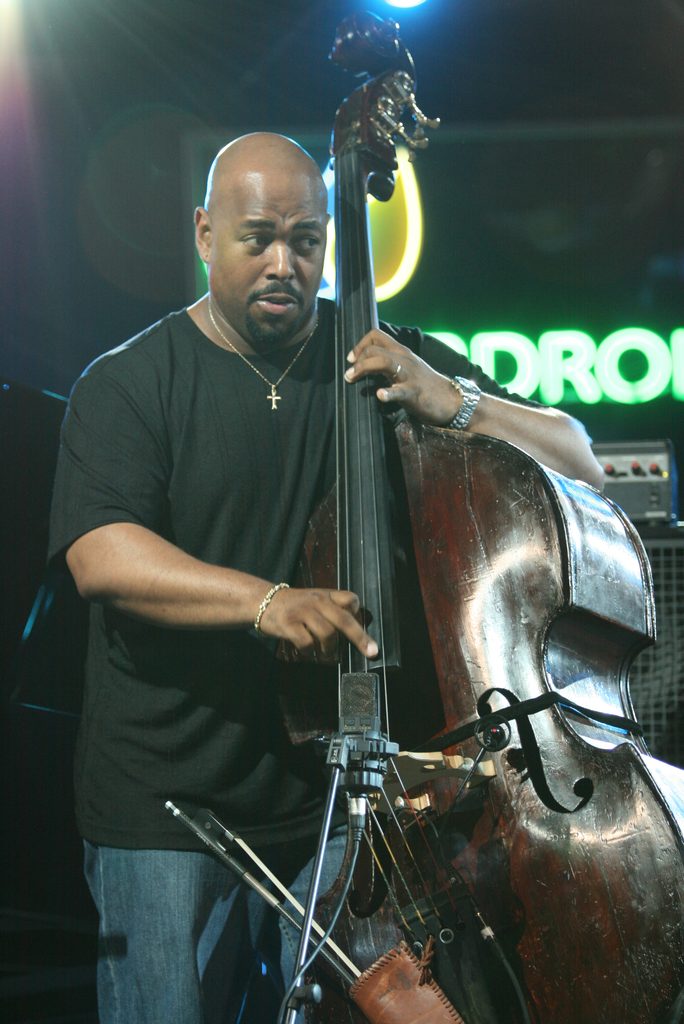
Christian McBride & Inside Straight – Kind of Brown (2009)
McBride’s first album of new material in six years introduced Inside Straight, the working quintet he built around saxophonist Steve Wilson, vibraphonist Warren Wolf, pianist Eric Reed and drummer Carl Allen.
Ten tracks, mostly McBride originals with contributions from Freddie Hubbard and Eric Reed, balanced hard-bop vocabulary with a cleaner, more contemporary finish, and the album reached number 23 on the Billboard Jazz Albums chart and earned a NAACP Image Award nomination.
Reception split along familiar lines — one critic called it McBride’s best record, another dismissed it as “jazz for middle managers” — but the commercial and creative momentum it built made McBride one of Mack Avenue’s most visible artists for the next decade, first with Inside Straight and then with the big band that followed two years later.
Gary Burton – Common Ground (2011)
Burton assembled a new quartet for this record, recorded at NYU’s Steinhardt School, and gave the youngest member, guitarist Julian Lage, real room inside it alongside bassist Scott Colley and drummer Antonio Sanchez.
The material mixes originals from across the band with a Keith Jarrett composition, and critics noted a chemistry that felt earned rather than assembled for the occasion; AllMusic’s Ken Dryden placed it “alongside the many landmark albums in Gary Burton’s vast discography.”
What makes it notable for Mack Avenue is the model of mentorship it set: Burton, already in his late sixties and one of the vibraphone’s defining figures, didn’t use younger players as sidemen filling out his sound but let Lage in particular help shape where the record went, a dynamic the label would return to a decade later with Emmet Cohen’s guest-heavy sessions.
Christian McBride Big Band – The Good Feeling (2011)
McBride had been writing for large ensembles since a Jazz at Lincoln Center commission roughly fifteen years earlier, and one piece from that early work found its way onto this, his first outing as a big-band leader.
The seventeen-piece band, including saxophonists Ron Blake and Steve Wilson, trumpeter Nicholas Payton and drummer Ulysses Owens Jr., played eleven McBride arrangements, six of them originals, and the record won the Grammy for Best Large Jazz Ensemble Album in 2012.
It wasn’t a one-off vanity project: McBride kept the big band as an active, touring vehicle for years afterward, and the record remains the clearest evidence that his bass-playing fame was matched by a serious, long-developed skill as a composer and arranger.
Kenny Garrett – Seeds from the Underground (2012)
Garrett built his thirteenth studio album around gratitude rather than a single concept, describing the ten tracks as musical thank-you notes to the family, friends, mentors and influences who shaped him, with individual pieces dedicated to figures including saxophonist Jackie McLean (“J. Mac”) and drummer Roy Haynes (“Haynes Here”).
Backed by pianist Benito Gonzalez, bassist Nat Reeves, drummer Ronald Bruner and percussionist Rudy Bird, plus a small vocal choir on several tracks, Garrett moves between hard-driving rhythmic vamps and more spiritually inflected material without losing the melodic clarity that made him accessible to listeners well outside the jazz-saxophone core audience.
It reached number 10 on the Billboard Top Jazz Albums chart and earned two Grammy nominations, including Best Jazz Instrumental Album, along with an Echo Award for best international jazz saxophone performance.
Danilo Pérez – Panama 500 (2014)
Pérez built this suite around the 500th anniversary of Vasco Núñez de Balboa’s 1513 crossing of the Isthmus of Panama, the first time a European had seen the Pacific Ocean from the Americas, and used the record to tell his home country’s history from before that crossing through Spanish colonization to the building of the Panama Canal.
The band ranges from a jazz core of John Patitucci, Brian Blade, Ben Street and Adam Cruz to violinist Alex Hargreaves, cellist Sachi Patitucci and a group of Guna musicians playing traditional instruments, and Pérez deliberately opens the record with invocations of Guna spiritual belief rather than treating the indigenous perspective as a footnote.
It’s the clearest example on this list of Mack Avenue backing a record that is as much cultural document as jazz album, without the result feeling like homework.
Cécile McLorin Salvant – Dreams and Daggers (2017)
Recorded mostly live at the Village Vanguard with pianist Aaron Diehl’s trio, plus studio tracks built around a string quartet, this double album was the record that made clear Salvant wasn’t simply an exceptional young interpreter of standards but a genuine dramatist working in song form.
She treats set pieces about desire, jealousy and heartbreak as short stories rather than vehicles for vocal display, mixing her own compositions in among older material and finding fresh tension in songs that have been recorded hundreds of times before.
It won the Grammy for Best Jazz Vocal Album, the second of three Mack Avenue albums by Salvant to take that award, and confirmed Salvant, signed to Mack Avenue since her 2013 debut WomanChild, as the most acclaimed new jazz vocalist of her generation.
Julian Lage – Love Hurts (2019)
Lage produced this record himself, a first for him, recording live at Wilco’s Chicago studio, The Loft, in September 2018. His new trio, with bassist Jorge Roeder and drummer Dave King, worked through eight covers and just two originals, pulling material from Ornette Coleman, Keith Jarrett and Jimmy Giuffre alongside the pop standard “Love Hurts” itself, recorded decades earlier by both the Everly Brothers and Roy Orbison.
The record is a case for Lage as something other than a technical marvel: the songs are chosen for what he called simply loving them, and the trio’s restraint and touch, not any display of speed, are what the album is actually about.
Emmet Cohen – Future Stride (2021)
Cohen’s regular trio, with bassist Russell Hall and drummer Kyle Poole, is joined here by saxophonist Melissa Aldana and trumpeter Marquis Hill, and the record treats stride piano less as a museum piece than as raw material for something new.
The opening track draws on a Louis Armstrong recording from the late 1920s with the Carroll Dickerson Orchestra; the title piece folds together the vocabulary of Fats Waller, Art Tatum, Teddy Wilson and James P. Johnson into a distinctly contemporary shape; a cover of Duke Ellington’s “Pitter Panther Patter” nods to bassist Jimmy Blanton’s innovations on the original.
It’s a fitting way to close this list: a young pianist treating the deepest roots of jazz piano as living material, more than two decades into a catalogue that has always made room for that kind of ambition.
