
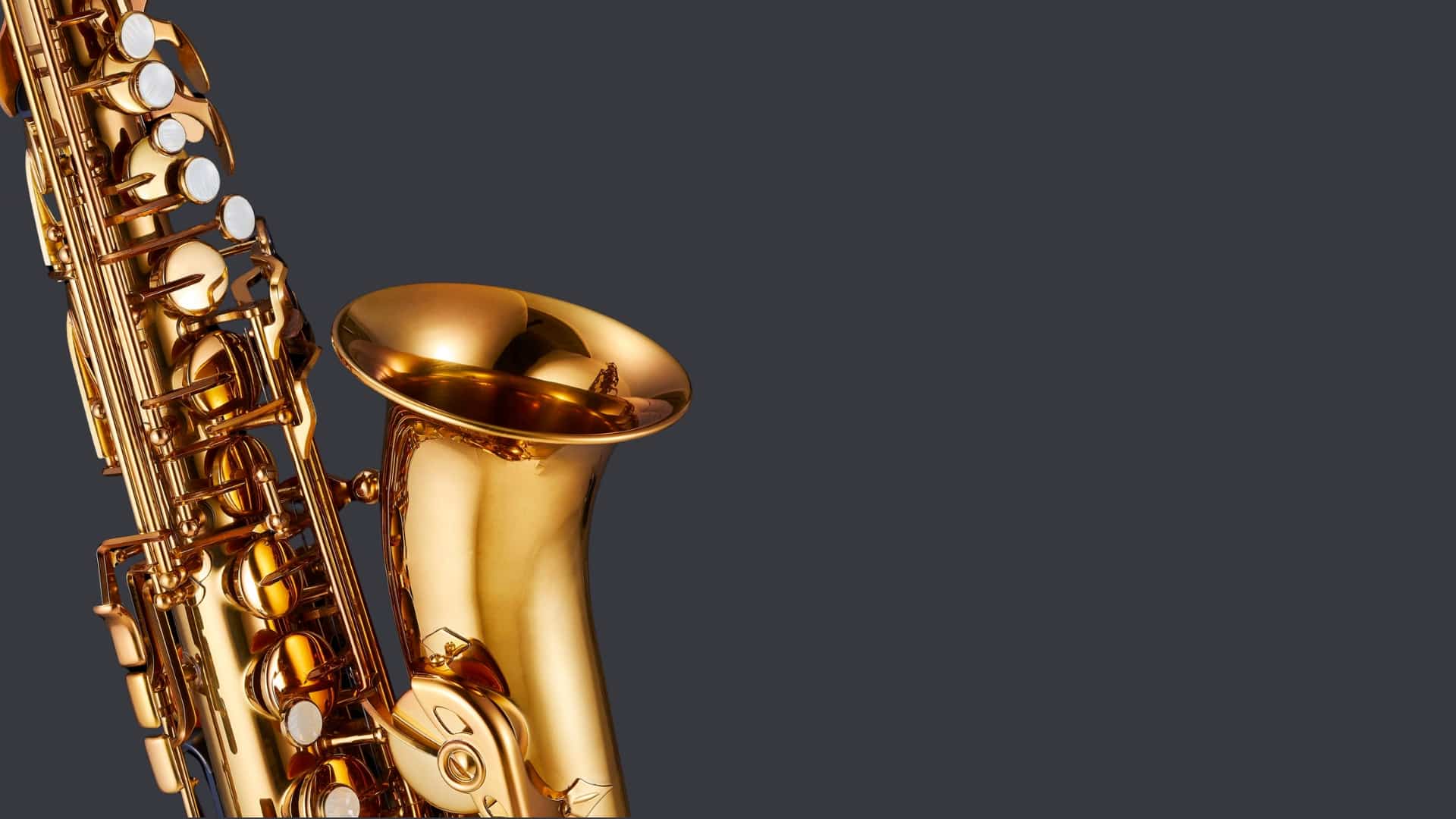
Born in Chicago on 13 October 1927, Lee Konitz was one of jazz’s most singular improvisers.
In an era when almost every alto saxophonist was chasing Charlie Parker’s vocabulary, Konitz chose another route. He developed a cool, linear style built on melody, logic, and long‑form development—an approach that quietly reshaped modern improvisation.
Konitz began on clarinet at the age of 11, inspired by Benny Goodman, before briefly switching to tenor saxophone under the influence of Lester Young. He eventually settled on alto, where his light tone and unhurried phrasing stood in stark contrast to bebop’s firepower.
His breakthrough came with the Claude Thornhill Orchestra in 1947, where his understated sound caught the attention of Miles Davis. Konitz went on to appear on all of the Birth of the Cool nonet sessions between 1948 and 1950, becoming one of the defining voices of cool jazz.
A stint with the Stan Kenton Orchestra followed, but pianist Lennie Tristano had the deepest impact on his thinking. Alongside Warne Marsh, Konitz absorbed Tristano’s emphasis on counterpoint, melodic logic, and rhythmic displacement—ideas that stayed with him for life. Jazz historian Gunther Schuller later highlighted Konitz’s thematic development as a model of modern improvisational logic.

From the 1960s onward, Konitz was unmistakably himself. He refined his approach to standards while also exploring free improvisation, collaborating with figures such as British guitarist Derek Bailey and participating in Bailey’s Company improvisation concerts. Few jazz musicians balanced tradition and experimentation with such ease.
Below is a selection of essential Lee Konitz recordings that trace his evolution across seven decades.
Essential Lee Konitz Songs
Tautology – from Subconscious-Lee (Prestige, 1949–50)
Recorded around the same time as Birth of the Cool, this Konitz composition captures him in close dialogue with Warne Marsh. The two saxophones move in intricate, conversational lines, revealing Konitz’s early search for a personal language.
These Foolish Things – from Lee Konitz Plays with the Gerry Mulligan Quartet (Pacific Jazz, 1953)
With Mulligan and Chet Baker, Konitz creates a floating, chamber‑like atmosphere. The improvisation feels conversational rather than competitive—a hallmark of the West Coast cool aesthetic.
There Will Be Another You – from Lee Konitz with Warne Marsh (Atlantic, 1955)
A Tristano‑school summit featuring Sal Mosca and Billy Bauer. Oscar Pettiford’s tune becomes a vehicle for Konitz and Marsh’s parallel melodic thinking—two minds tracing similar but never identical paths.
You’d Be So Nice to Come Home To – from Motion (Verve, 1961)
Often cited among the great modern jazz albums, Motion finds Konitz in a chordless trio with Sonny Dallas and Elvin Jones. His extended solo is a masterclass in thematic development and spontaneous structure.
I Concentrate on You – from I Concentrate on You: A Tribute to Cole Porter (SteepleChase, 1974)
A duo with bassist Red Mitchell that proves how little Konitz needed to say something profound. With only bass accompaniment, his phrasing becomes intimate and conversational.
The Song Is You – from Lone-Lee (SteepleChase, 1974)
A daring solo saxophone album recorded just months after the Red Mitchell session. Konitz’s long improvisation on this standard remains a landmark in solo jazz saxophone—deeply melodic yet structurally rigorous.
Subconscious Lee – from Star Eyes, Hamburg 1983 (Hatology, 1983)
A duo with Martial Solal that reimagines a familiar Konitz composition. Solal pushes him into new harmonic corners, and Konitz responds with remarkable elasticity.
All Things Considered – from Zounds (Soul Note, 1990)
A quartet with Kenny Werner, Ron McClure, and Bill Stewart that blends open improvisation with structured writing. Konitz moves effortlessly between abstraction and form.
Lover Man – from Out of Nowhere (SteepleChase, 1997)
With Paul Bley, Jay Anderson, and Billy Drummond, Konitz revisits a familiar standard and finds fresh angles. His dialogue with Bley is spacious, subtle, and full of harmonic detours.
’Round Midnight – from Alone Together (Blue Note, 1996)
Featuring Charlie Haden and a young Brad Mehldau, this performance bridges generations. Mehldau holds his own, while Konitz shows his language was as modern as any younger player’s.
Lee Konitz’s Legacy
Lee Konitz’s career is a reminder that jazz evolution does not require volume or virtuoso display. While others chased Parker’s vocabulary, Konitz built a parallel universe—cool, linear, and endlessly inquisitive.
Across seven decades, he never stopped rethinking how to improvise. From cool jazz architect to free improviser to elder statesman, he remained curious, adaptable, and unmistakably himself.
He died on 5 April 2020 from pneumonia complications during the COVID‑19 pandemic, but his influence lives on in modern improvisers who value melody, space, and long‑form development over bebop fireworks.
For anyone interested in how jazz improvisation can evolve without abandoning tradition, Lee Konitz remains quietly essential.