
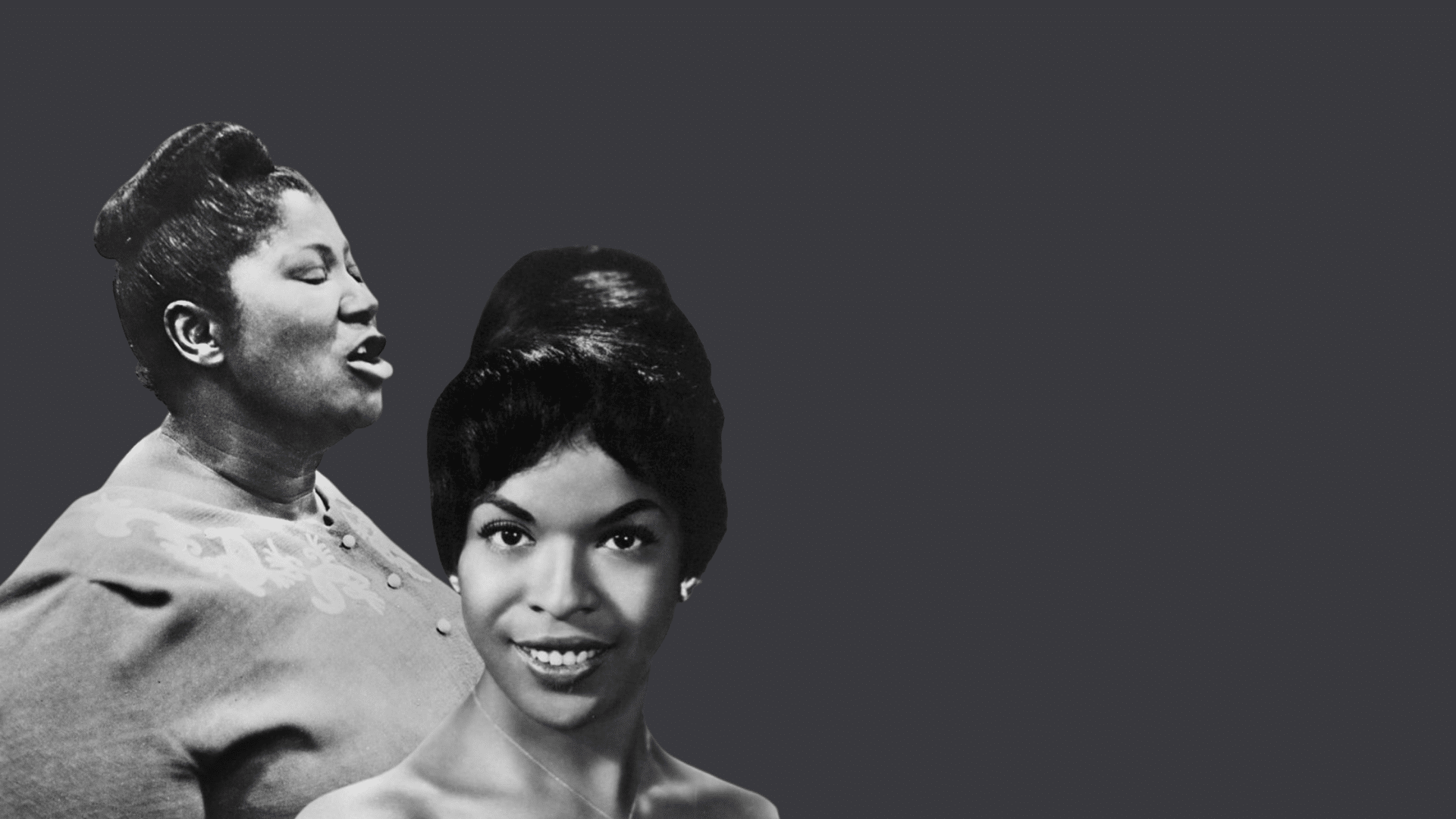
Many of jazz’s most expressive vocalists were shaped long before they ever stepped onto a bandstand. They learned to sing in churches. They learned to listen in choirs. They learned to respond, improvise, and testify through music.
Long before “jazz vocal technique” became a formal concept, gospel music had already taught generations of singers how to turn emotion, faith, and rhythm into sound.
This is the story of how gospel and jazz grew together — and why their connection still shapes vocal jazz today.
Gospel Jazz 101: Shared Roots
Gospel and jazz emerged from the same cultural foundations. Both developed within African American communities in the early twentieth century, drawing on musical elements such as:
- Call-and-response
- Improvisation
- Collective participation
- Rhythmic intensity
- Emotional directness
In churches, singers learned to project, phrase, and react in real time. In clubs, those same instincts became jazz.
The environments were different. The musical language was related.
Improvisation, Testimony, and Call-and-Response
One of the strongest links between gospel and jazz is improvisation.
In gospel, improvisation appears in extended vocal runs, spontaneous phrasing, and responsive interaction with congregations. In jazz, it becomes solo development, melodic variation, and harmonic exploration.
Call-and-response connects both traditions. In church, the congregation answers the singer. In jazz, the band answers the soloist. Both forms rely on dialogue. Music is never a monologue.
The Church as a Training Ground
For many jazz musicians, church was the first conservatoire.
It was where they learned pitch control, breath support, emotional projection, and audience awareness. Sunday services became laboratories for timing and expression.
By the time many singers reached jazz clubs, they already understood how to command a room.
Gospel Voices in Jazz: Key Figures
Here are 9 vocalists – plus a special bonus name – who best display the fusion of gospel/jazz music, from early pioneers to singers active today. Let us know in the comments section who your favourites are – or what you think we missed!
1. Mahalia Jackson
Mahalia Jackson never considered herself a jazz singer, yet her influence on jazz vocalists is enormous.
Rooted firmly in the Black church tradition of New Orleans and later Chicago, Jackson developed a vocal style built on emotional intensity, rhythmic flexibility, and absolute conviction. Her phrasing owed as much to sermon delivery as to musical technique.
Although she avoided nightclubs and secular touring for much of her career, she performed with major jazz figures, including Duke Ellington and Louis Armstrong (here, at Newport 1970). These connections reflected mutual respect rather than stylistic crossover.
Her recordings with Duke Ellington, particularly Black, Brown and Beige (1958), demonstrated how gospel intensity could live inside extended jazz forms. “Come Sunday” remains one of the clearest bridges between sacred and secular traditions.
Jackson also played a major cultural role beyond music, performing at civil rights events and remaining closely associated with Martin Luther King Jr.
Recommended Mahalia Jackson album: Black, Brown and Beige (with Duke Ellington, 1958)
2. Clara Ward
With the Clara Ward Singers, Clara Ward brought theatrical intensity and harmonic sophistication to gospel performance.
Trained by her mother Gertrude Ward, Clara developed an unusually dramatic performance style, combining virtuosic vocal technique with emotionally charged storytelling. Her concerts often blurred the line between worship and stage performance.
The Clara Ward Singers became one of the most influential gospel groups of the mid-20th century, shaping how ensemble gospel singing would be presented for decades.
Ward’s appearances alongside jazz and secular musicians reflected the porous boundary between church and club in the postwar period. While she remained rooted in gospel, her phrasing and rhythmic feel influenced later crossover singers.
Her life was marked by personal struggle and intense touring schedules, which added further emotional depth to her performances.
Recommended Clara Ward album: The Best of the Clara Ward Singers
3. Kim Burrell
Kim Burrell represents a modern continuation of the gospel–jazz connection.
Raised in a Houston church led by her pastor father, Burrell absorbed gospel traditions from childhood while developing unusually advanced harmonic awareness and rhythmic flexibility.
Unlike many contemporary gospel singers, her phrasing often reflects deep jazz influence, with subtle timing shifts and improvisational phrasing that resemble instrumental solos.
Her ability to move between gospel, R&B, and jazz settings has made her a sought-after collaborator. Work with artists such as Pharrell Williams and appearances in mainstream projects broadened her audience without diluting her gospel identity.
Burrell also remains active in ministry, maintaining strong ties to church life alongside her recording career.
Recommended Kim Burrell album: Everlasting Life (1998)
4. Tramaine Hawkins
Emerging from the Edwin Hawkins Singers, Tramaine Hawkins developed a style that blended gospel fervour with pop and jazz sensibilities.
Her early exposure to ensemble singing, harmony, and crossover repertoire prepared her for a career that would bridge church and commercial music.
“Oh Happy Day” demonstrated how gospel-rooted singing could reach mainstream audiences, and Hawkins became one of the most recognisable voices associated with that movement.
As a solo artist, she refined a more personal style, combining emotional power with careful control and technical discipline.
Her longevity reflects both vocal durability and adaptability across changing musical eras.
Recommended Tramaine Hawkins album: Tramaine Hawkins (1978)
5. Gregory Porter
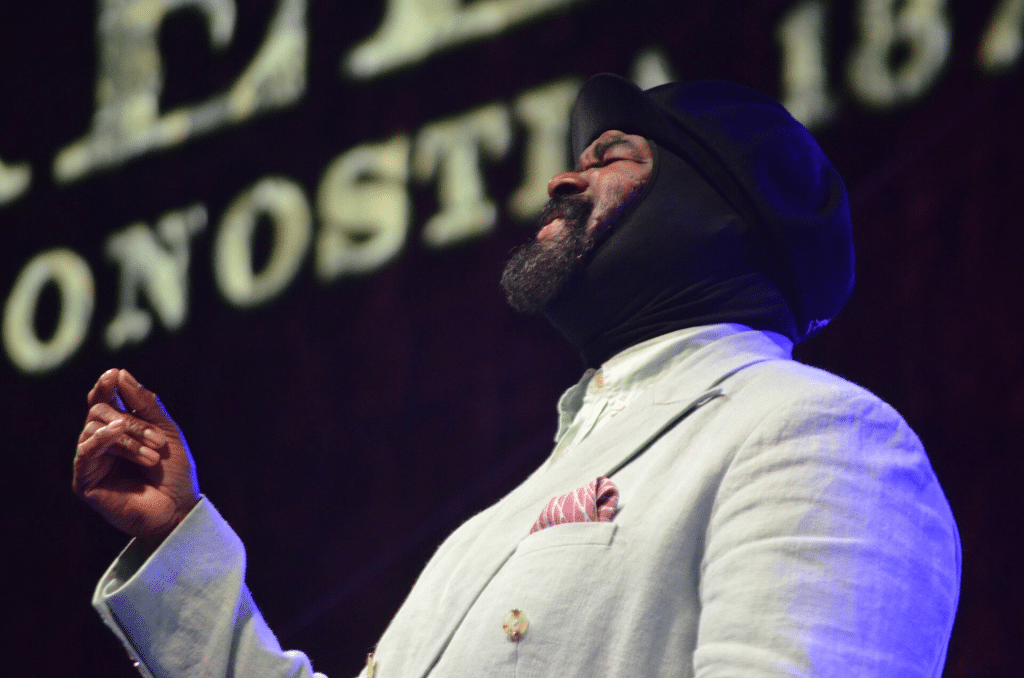
Gregory Porter stands among the clearest modern examples of gospel-rooted jazz singing.
Raised in church and strongly influenced by his mother’s spiritual outlook, Porter developed a voice shaped by both sacred music and classic soul.
Before achieving recording success as one of the greatest male jazz singers performing today, he spent years performing in clubs and theatres, refining his storytelling approach and emotional delivery.
Albums such as Liquid Spirit openly reflect his gospel lineage, both musically and lyrically, addressing faith, community, and social responsibility.
Porter’s work demonstrates how gospel influence can thrive within contemporary jazz without becoming nostalgic.
Recommended Gregory Porter album: Liquid Spirit (2013)
6. Lizz Wright
Lizz Wright’s work draws deeply on Southern gospel traditions.
Raised as the daughter of a church minister in Georgia, she grew up immersed in hymnody, choir singing, and spiritual music.
Her move into jazz involved careful integration rather than rejection of those roots. Wright’s restrained delivery, subtle phrasing, and emotional sincerity reflect gospel discipline applied to jazz material.
Rather than relying on virtuosic display, she focuses on tone, atmosphere, and narrative clarity.
Her recordings consistently balance intimacy with quiet authority.
Recommended Lizz Wright album: Salt (2003)
7. Della Reese
Della Reese began in gospel before becoming a major jazz and pop vocalist.
Performing in church from childhood, she developed powerful projection and emotional expressiveness that later translated easily into jazz ballad singing.
Her transition into secular music in the 1950s brought commercial success without abandoning gospel sensibilities.
“Don’t You Know” remains a landmark crossover recording, combining orchestral pop with gospel-influenced vocal delivery.
Reese later expanded into acting and ministry, becoming one of the most versatile entertainers of her generation.
Recommended Della Reese album: And That Reminds Me (1959)
8. Al Jarreau
Although not a gospel specialist, Al Jarreau’s church background shaped his rhythmic and expressive approach.
Early choir experience gave him strong pitch control, breath management, and rhythmic instinct.
These foundations supported his later development of scat singing, vocal percussion, and complex phrasing techniques.
Jarreau’s ability to treat the voice as a full rhythmic and harmonic instrument reflects gospel discipline applied to jazz fusion and pop contexts.
His success demonstrated how church-trained singers could thrive in mainstream markets without losing musical depth.
Recommended Al Jarreau album: We Got By (1975)
9. Cassandra Wilson
Cassandra Wilson integrates spiritual sensibility into a blues-jazz framework.
Raised in Mississippi, she absorbed gospel, blues, and folk traditions alongside jazz influences.
Her contralto voice and slow-burning interpretive style reflect church-influenced attention to atmosphere and emotional weight.
Rather than performing explicit gospel material, Wilson channels spiritual feeling through tone, pacing, and repertoire choices.
Her genre-fluid approach has reshaped modern vocal jazz aesthetics.
Recommended Cassandra Wilson album: Blue Light ’til Dawn (1993)
Bonus: Thomas A. Dorsey (Foundational Figure)
Often called the “Father of Gospel Music,” Thomas A. Dorsey represents the deepest historical link between gospel and jazz.
Before turning fully to sacred music, Dorsey worked as a blues and jazz pianist under the name Georgia Tom.
His experience in secular music shaped his approach to gospel composition, blending blues harmony, jazz rhythm, and religious texts.
“Take My Hand, Precious Lord” became one of the most influential songs in American sacred music.
Dorsey’s work laid the foundation upon which later gospel-jazz crossover artists would build.
Recommended Thomas A. Dorsey album: Precious Lord: The Great Gospel Songs
Gospel/Jazz Repertoire, Standards, and Musical Exchange
Many songs have travelled between gospel and jazz.
Spirituals and hymns became jazz vehicles. Jazz standards entered church repertoires. Musicians reinterpreted sacred material through improvisation, while gospel performers adopted jazz harmonies and rhythms.
This exchange kept both traditions evolving. Neither remained static.
Why the Connection Still Matters
The gospel–jazz relationship explains why great jazz singers often sound emotionally “larger” than their surroundings.
They are not merely interpreting melodies. They are testifying; drawing on a tradition that treats music as communication, healing, and shared experience.
That tradition began in churches. It continues in clubs, festivals, and recordings worldwide.
Gospel Jazz Legacy: Faith, Freedom, and Expression
Gospel gave jazz its emotional vocabulary.
Jazz gave gospel new harmonic and rhythmic possibilities. Together, they created a language capable of expressing grief, joy, protest, love, and hope within the same musical phrase.
From Mahalia Jackson to Gregory Porter, from church pews to international stages, the connection remains unbroken. It is one of the deepest roots of vocal jazz. And it continues to shape how the music speaks to listeners today.