

The voice of Betty Carter did not settle into the groove — it stretched it.
She pulled against tempo, fractured phrasing, and reshaped melodies until they felt newly written. Where many singers interpreted songs, Carter rebuilt them in real time.
Notes rarely land exactly where expected. Phrases arrive slightly early or late, stretch across bar lines, or cut off abruptly. Familiar standards unfold in altered shapes, with Carter constantly adjusting placement against the rhythm section.
From Bebop Apprentice to Independent Architect
Born in Flint, Michigan in 1929 and raised in Detroit, Carter absorbed bebop language during the 1940s. Early touring work with Lionel Hampton placed her inside fast-moving, harmonically dense settings. Instead of smoothing her style to fit, she sharpened it.
By the 1950s, she had developed a vocal identity rooted in instrumental thinking. She phrased like a horn player navigating changes rather than a vocalist riding melody. Over time, she would become fiercely independent — forming her own label and mentoring younger musicians — but the foundation was always rhythmic command.
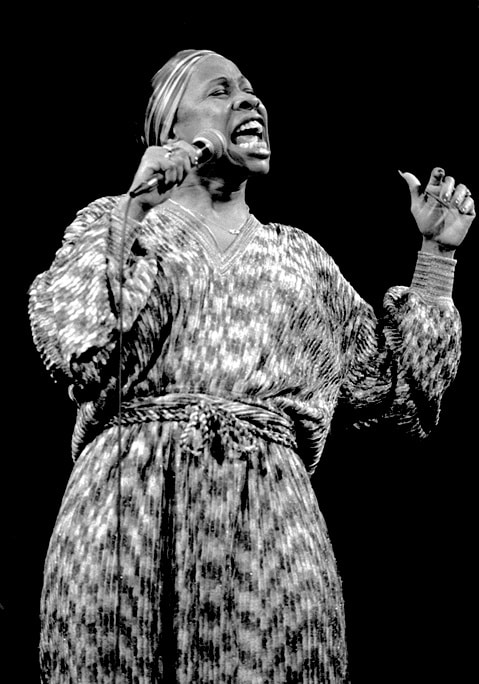
“Baby, It’s Cold Outside” (1949)
Recorded as a duet with Ray Charles in 1949, this early performance already reveals Carter’s instinct for elasticity. The tempo swings comfortably, but she nudges phrases slightly ahead or behind the beat, creating playful tension.
Her delivery avoids theatrical sweetness. Instead, she inserts quick rhythmic pivots and clipped syllables that subtly destabilize the surface charm of the tune.
“I Can’t Help It” (1958)
By the late 1950s, Carter’s phrasing had grown even more angular. On “I Can’t Help It,” she dismantles the melodic line, shortening some phrases and elongating others. The rhythm section must remain alert; her timing refuses predictability.
Rather than decorating the song, she interrogates it.
“Social Call” (1963)
The title track from her 1963 album marks a turning point in artistic autonomy. The tempo sits at medium swing, but Carter constantly shifts emphasis within the bar. She repositions consonants, delays resolution, and occasionally drops into near-spoken articulation before rejoining the melodic arc.
The performance keeps the form intact while allowing constant micro-adjustments in timing and emphasis.
“Open the Door” (1976)
Drawn from her independent-label period, “Open the Door” captures Carter in a live-oriented setting where spontaneity becomes central. The arrangement feels spacious, giving her room to stretch phrases dramatically.
She bends tempo almost imperceptibly, then snaps back into alignment with the band. The effect feels daring without ever losing coherence.
“Spring Can Really Hang You Up the Most” (1979)
This extended ballad performance reveals another dimension of her approach. Carter slows the tempo nearly to suspension, allowing space between lines to carry emotional weight. She often lands slightly late, heightening the lyric’s introspective quality.
The phrasing becomes conversational, then abstract, then suddenly precise again. It demands attentive listening.
“My Favorite Things” (1988)
Her interpretation of this standard resists conventional warmth. Instead of gliding smoothly across the familiar melody, she fragments it. Phrases appear in unexpected shapes, sometimes compressed into tight rhythmic cells.
The rhythm section follows her closely, adjusting to sudden tempo stretches and accelerations. The performance feels exploratory rather than reverent.
“Droppin’ Things” (1990)
One of her original compositions, “Droppin’ Things” reflects Carter’s emphasis on mentorship and band interaction. The groove remains steady, but her vocal line dances across it unpredictably.
She alternates between sharp rhythmic stabs and long, floating lines. The tension between structure and freedom becomes the defining feature.
“Look What I Got!” (1988)
Released in 1988 and later earning a Grammy, this track combines compositional clarity with improvisational openness. The melody is more accessible than some earlier material, yet she still reshapes phrases subtly.
The energy feels buoyant, though never relaxed. Even straightforward passages carry slight rhythmic misalignment that keeps the performance alive.
“I’m in the Mood for Love” (1992)
A later recording of this standard shows Carter refining rather than softening her style. The tempo breathes slowly. She leans into sustained tones, then fractures them with clipped consonants.
Rather than building toward climactic peaks, she allows the piece to hover. The emotional center emerges through pacing rather than volume.
A Listening Path Through Betty Carter Songs
For listeners exploring her evolution:
- “Baby, It’s Cold Outside” (1949) — early rhythmic elasticity
- “I Can’t Help It” (1958) — bebop-inflected phrasing
- “Social Call” (1963) — emerging independence
- “Open the Door” (1976) — live-era expansiveness
- “Spring Can Really Hang You Up the Most” (1979) — ballad deconstruction
- “Look What I Got!” (1988) — compositional clarity with edge
- “Droppin’ Things” (1990) — original voice in full command
This progression shows how her improvisational instincts intensified rather than mellowed over time.
Final Thoughts
Betty Carter’s recordings resist passive listening. They require attention, not because they are inaccessible, but because they are alive with motion. Tempo shifts slightly. Lines refuse symmetry. Familiar melodies dissolve and reform.
Across decades of recordings, her phrasing remains mobile and unpredictable. Tempo flexes slightly. Lines fragment and reassemble. The performances reward close listening because they never settle into fixed shapes.