

Al Cohn rarely pursued the spotlight directly.
Across decades of studio work, band arranging, and small-group recording, his presence was felt more through tone and craft than through overt display. The tenor sound remained warm, relaxed, and conversational—rooted in swing yet open to the cooler language that followed.
Listening across the arc of Al Cohn albums means tracing continuity rather than rupture.
Nothing in the music insists on attention, yet the detail of phrasing, balance, and ensemble dialogue reveals a musician whose authority grows clearer with time.
From Brooklyn Beginnings to the Herman Band
Born in Brooklyn in 1925, Cohn came of age within the final flowering of the swing era.
Early professional work placed him alongside musicians who valued clarity of line and rhythmic ease, and his tenure with Woody Herman’s Second Herd in the late 1940s proved decisive. There he became part of the “Four Brothers” tenor section, a sound that blended lightness with precision and helped shape post-swing ensemble writing.
Arranging, studio work, and collaborations followed, but small-group recordings would ultimately reveal the most personal dimension of his playing.
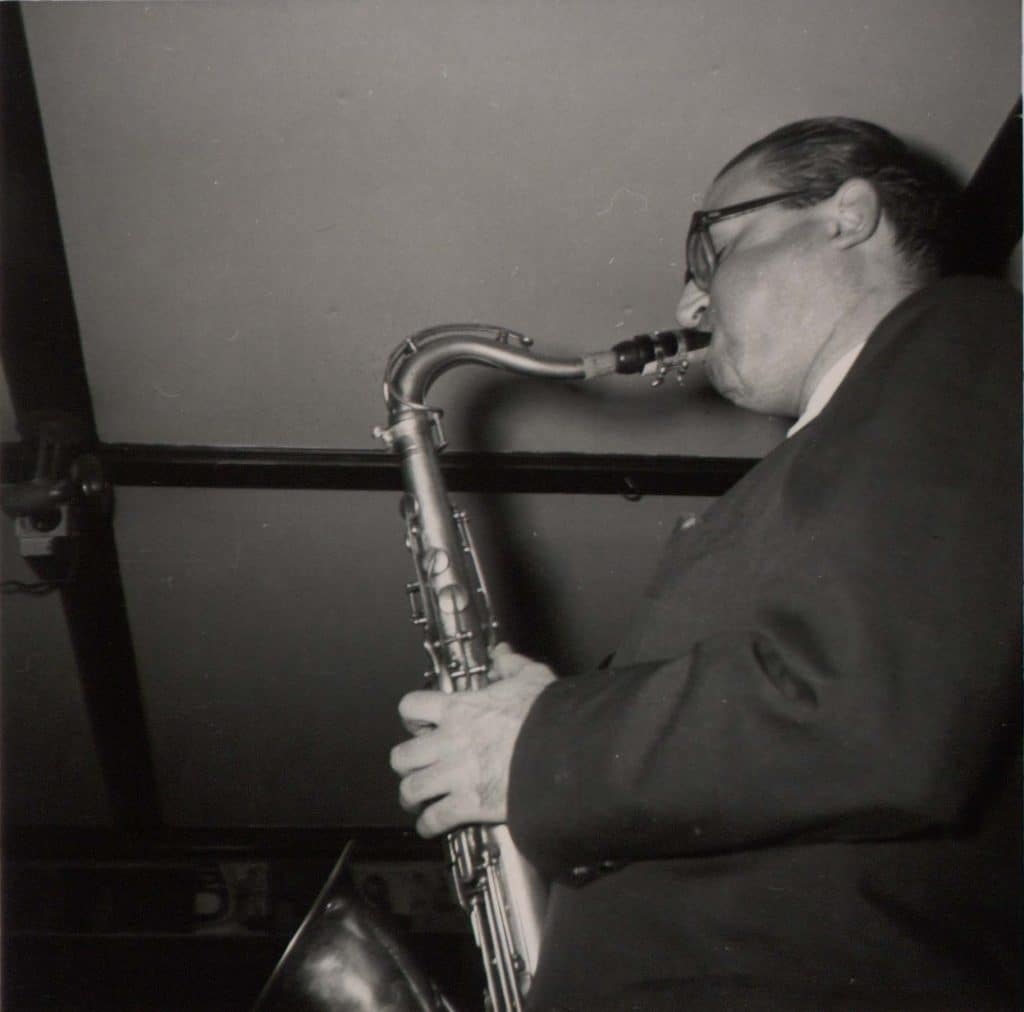
Cool Lyricism in Focus: Cohn’s Tones (1950)
Among the earliest leader statements, Cohn’s Tones captures a musician balancing swing inheritance with emerging cool-jazz restraint.
Lines unfold without urgency, phrasing favors clarity over density, and the ensemble breathes easily around the tenor voice. Even at this stage, Cohn’s authority lies in understatement rather than virtuosity.
Nothing here argues for importance.
The confidence is quieter than that.
Dialogues in Tenor Sound: The Brothers (1956)
Shared with Zoot Sims, this session presents conversation as structure.
The two tenor voices intertwine without competition, shaped by mutual listening and rhythmic ease rooted in swing tradition. Standards become frameworks for tone, blend, and melodic patience rather than technical display.
Within the landscape of Al Cohn albums, this partnership reveals how personality can emerge through balance instead of contrast.
Swing Tradition Revisited: Al and Zoot (1957)
Another collaboration with Sims deepens the same conversational language.
Rhythmic feel remains buoyant, improvisations unfold naturally, and repertoire links past and present without nostalgia. The music neither recreates swing nor abandons it; instead, it allows tradition to remain alive through relaxed invention.
The result feels effortless, though the control beneath it is exact.
Arranger and Soloist Combined: You ’n Me (1960)
Paired with trumpeter Joe Newman, Cohn’s dual identity as arranger and improviser becomes central.
Ensemble textures are shaped with care, yet the solos retain spontaneity and warmth. Structure supports expression rather than limiting it, reflecting the broader studio discipline that defined much of his career.
Here, craft and lyricism meet without friction.
Mainstream Clarity: Al Cohn’s America (1976)
After years of varied work, this recording reflects mature simplicity.
The tenor tone remains relaxed, phrasing economical, and repertoire grounded in melodic strength. Nothing feels forced toward modernity; instead, the music trusts continuity and experience.
Across later Al Cohn albums, this calm assurance becomes a defining quality.
Late-Career Conversation: Heavy Love (1983)
Recorded near the end of his life, Heavy Love carries a reflective atmosphere without turning inward completely.
Improvisations remain conversational, rhythm sections supportive rather than assertive, and melody continues to guide direction. The playing suggests endurance rather than farewell.
Completion arrives quietly, consistent with everything before it.
A Listening Path Through Al Cohn Albums
For listeners approaching this catalogue, several recordings offer clear entry points:
- Cohn’s Tones (1950) — early cool-jazz lyricism
- The Brothers (1956) — tenor dialogue with Zoot Sims
- Al and Zoot (1957) — relaxed swing continuity
- You ’n Me (1960) — arranger’s clarity within small group
- Al Cohn’s America (1976) — mature melodic restraint
- Heavy Love (1983) — late reflective warmth
Together they trace a career shaped less by stylistic change than by deepening refinement.
Final Thoughts
Al Cohn’s discography does not hinge on innovation or dramatic reinvention.
Instead, it reveals the long strength of musical conversation—tone shaped patiently, rhythm carried lightly, and ensemble balance treated as expressive ground rather than background. Swing tradition remains present, but softened by cool-jazz clarity and years of listening.
What endures across decades is a sense of ease that never becomes casual.
The music speaks without raising its voice, and in that restraint lies its lasting authority.