
Jazz in the 1980s was supposed to have lost its way.
Depending on who was telling the story, fusion had softened into something built for radio, the young traditionalists were busy turning the clock backwards, and the really exciting innovations had already happened in the previous two decades.
But listen to the records and that version of the 1980s quickly falls apart.
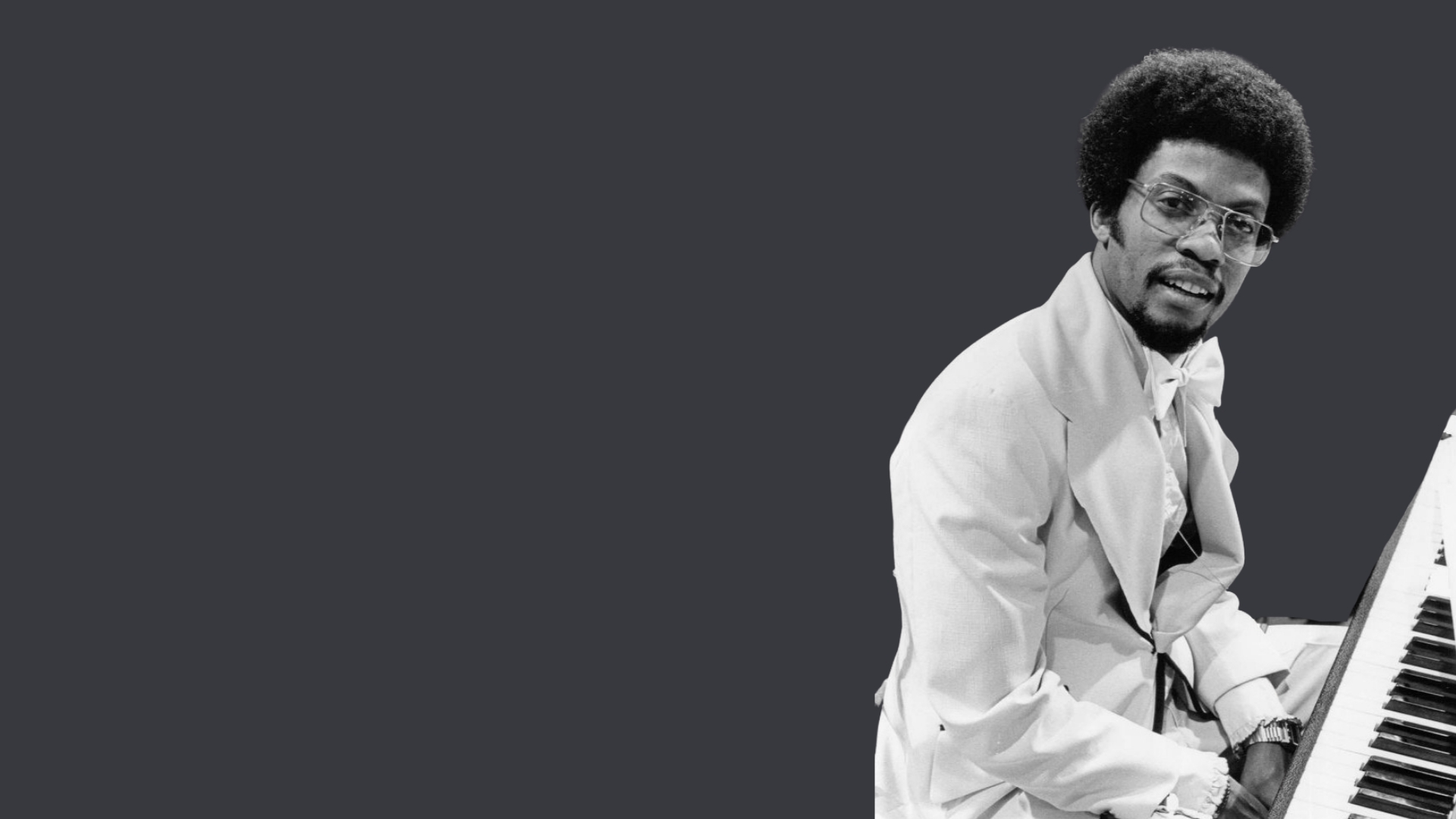
In 1981, Columbia signed a nineteen-year-old Wynton Marsalis while he was still playing with Art Blakey. Two years later, Herbie Hancock put scratching and a turntablist at the centre of “Rockit” and had an international hit.
ECM was developing a radically different European sound, while in New York Steve Coleman and the musicians around M-Base were experimenting with rhythm in ways that pointed towards the next decade.
Independent European labels such as Black Saint and Soul Note were documenting major American jazz musicians who were finding fewer opportunities at home.
All of which makes the 1980s much harder to dismiss — and much more fun to revisit.
Across ten years, jazz produced acoustic post-bop, hard electric fusion, harmolodic funk, European chamber jazz, avant-garde experiments and the beginnings of M-Base. Some of the decade’s biggest names looked backwards for inspiration; others were making music that still sounds strange today.
The 36 albums below tell that wider story. Rather than ranking them, we’ve arranged them by release year, from 1980 to 1989, so you can hear just how much the music changed in a single decade.
Weather Report – Night Passage (1980)
Most of the album was recorded live in the studio at the Complex in Los Angeles in front of an invited audience, which is why the band sounds like it does here rather than like the layered studio records either side of it.
Joe Zawinul, Wayne Shorter, Jaco Pastorius, Peter Erskine and percussionist Robert Thomas Jr. play “Fast City” at close to breaking point, and Zawinul’s “Three Views of a Secret” gets its definitive reading.
They also cover Duke Ellington’s “Rockin’ in Rhythm”, which tells you something about how the band understood its own lineage. The closing “Madagascar” comes from a live performance in Osaka.
Keith Jarrett – Nude Ants (1980)
Recorded at the Village Vanguard in May 1979 and released the following year, this is the final document of Jarrett’s European quartet with Jan Garbarek, Palle Danielsson and Jon Christensen — captured, oddly, in a New York basement rather than anywhere in Europe.
The playing is looser and more combative than the studio records, with Garbarek pushing harder than he tends to on ECM. Anyone who only knows Jarrett through the solo concerts or the later Standards Trio will find a different musician here.

David Murray – Ming (1980)
Murray was twenty-five and recording for the Italian label Black Saint when he put this octet together: Olu Dara and Butch Morris on trumpet and cornet, George Lewis on trombone, Henry Threadgill on alto, Anthony Davis on piano, Wilber Morris on bass and Steve McCall on drums.
The album is named after the photographer Ming Smith, Murray’s partner at the time. What makes it hold up is the writing — Murray arranges for eight players with an ear for Ellington and Mingus voicings while leaving room for the free playing that came out of the New York loft scene he had grown up in.
James Blood Ulmer – Are You Glad to Be in America? (1980)
Ulmer had played guitar in Ornette Coleman’s band and took harmolodics somewhere Ornette never did, which is toward funk, blues and something close to punk.
The album first came out in Britain on Rough Trade, a label better known for The Fall and Scritti Politti, and the crossover audience it found there was not a jazz audience. David Murray, Oliver Lake, Olu Dara, Amin Ali and Ronald Shannon Jackson all appear. Forty-five years on it still sounds abrasive in a way very little jazz from 1980 does.
Pat Metheny & Lyle Mays – As Falls Wichita, So Falls Wichita Falls (1981)
The twenty-minute title piece takes up the whole of the original first side, built from synthesiser washes, tape loops and Nana Vasconcelos on percussion and voice.
It is the record where Metheny and Mays stopped writing tunes and started writing long-form pieces, and the approach fed everything the Pat Metheny Group did afterwards. “September Fifteenth”, the closing track, is a quiet tribute to Bill Evans, who had died on that date in 1980.
Chick Corea – Three Quartets (1981)
Corea wrote three long pieces for a quartet of Michael Brecker, Eddie Gomez and Steve Gadd, dedicating the second to Duke Ellington and the third to John Coltrane.
It is his most straightforwardly acoustic record of the decade and one of the few places you can hear Gadd — better known for pop and studio work — playing sustained jazz at this level. Brecker plays with a fury that makes the Coltrane dedication feel earned rather than polite.
Art Blakey & The Jazz Messengers – Album of the Year (1981)
Blakey was sixty-one and the band contained Wynton Marsalis, Bobby Watson, Billy Pierce, James Williams and Charles Fambrough. Within a few years most of them had signed their own deals.
As a record it is a straight, hard-swinging Messengers date; as a document it captures a new generation of players still working under a bandleader who had been running the same finishing school since the 1950s.
Woody Shaw – United (1981)
Shaw’s last album for Columbia, made with Steve Turre on trombone, Mulgrew Miller on piano, Stafford James on bass and Tony Reedus on drums.
The harmonic language is denser than anything the neo-traditionalists were doing — Shaw built lines out of fourths and pentatonics in a way that no other trumpeter of his generation managed — and the major label dropped him shortly afterwards. He spent the rest of the decade recording for smaller European labels.
Stanley Clarke & George Duke – The Clarke/Duke Project (1981)
“Sweet Baby” reached number 19 on the Billboard Hot 100, which is a chart position no jazz musician had any business having in 1981. The album is unapologetically a pop-funk record made by two players who could have recorded anything they liked, and it belongs on this list precisely because of how much of the decade’s fusion followed it toward vocals, drum machines and radio. Duke’s keyboard playing throughout is far better than the format demands.
Pat Metheny Group – Offramp (1982)
The Synclavier guitar synthesiser Metheny plays on “Are You Going with Me?” was new technology and he had worked out what to do with it before almost anyone else.
Nana Vasconcelos joins the group, “James” is the Metheny tune that other guitarists learned first, and the album won the Grammy for Best Jazz Fusion Performance. It sold in numbers ECM had not seen from a jazz record and it remains the entry point to Metheny for a lot of listeners.
Ornette Coleman – Of Human Feelings (1982)
Recorded in April 1979 direct to two-track digital at CBS Studios in New York, making it one of the first jazz albums committed to digital tape, and then left unreleased for three years.
Prime Time — two guitars, two basses, two drummers, Ornette on alto — plays harmolodic funk that sounds simultaneously chaotic and tightly organised. Denardo Coleman, Ornette’s son, is one of the drummers. It is the most approachable Prime Time record and still the one that confuses people most.
Al Di Meola – Electric Rendezvous (1982)
Jan Hammer, Anthony Jackson, Steve Gadd and Mingo Lewis back Di Meola on the album that closed out his run of high-velocity electric records for Columbia.
“Ritmo de la Noche” and the “Elegant Gypsy Suite” carry the flamenco and Latin material he had been developing since the mid-seventies, while Hammer’s synth solos date the record in the best sense — this is exactly what 1982 fusion sounded like when it was played by people at the top of their instruments.
Jean-Luc Ponty – Mystical Adventures (1982)
Ponty had come through Frank Zappa’s band and the Mahavishnu Orchestra before signing to Atlantic and selling a remarkable quantity of records under his own name.
Mystical Adventures is built around a five-part suite and leans on layered violin lines and sequenced keyboards rather than blowing. Fusion violin is a small field and Ponty is the reason anyone thinks about it at all.
Art Ensemble of Chicago – Urban Bushmen (1982)
Recorded live in Munich in May 1980 and released as a double album on ECM. Two hours of the Art Ensemble in a concert hall — Lester Bowie, Roscoe Mitchell, Joseph Jarman, Malachi Favors and Don Moye moving between free improvisation, New Orleans parade music, silence and hundreds of small percussion instruments. Manfred Eicher’s recording captures the space around the group, which matters more here than on almost any other record they made.
Keith Jarrett – Standards, Vol. 1 (1983)
Jarrett booked Power Station in New York in January 1983 with Gary Peacock and Jack DeJohnette and recorded enough material for three albums in a matter of days. The trio then stayed together for roughly thirty years.
At the time, a musician known for hour-long improvised solo concerts playing “All the Things You Are” looked like a retreat; in practice it produced the most durable working trio in modern jazz and reset how a generation of pianists approached the standard repertoire.
Herbie Hancock – Future Shock (1983)
“Rockit” was produced with Bill Laswell and Michael Beinhorn, featured Grand Mixer DXT scratching, won a Grammy and took five awards at the first MTV Video Music Awards.
It put turntablism in front of a mass audience years before hip-hop had radio saturation, and a lot of DJs cite it as the first time they saw scratching treated as an instrument. Jazz critics were unimpressed. Hancock, who had already done this once with Head Hunters, carried on regardless.
Steps Ahead – Steps Ahead (1983)
Michael Brecker, Mike Mainieri, Eddie Gomez, Peter Erskine and a young Eliane Elias on her first album with the band. Don Grolnick’s “Pools” is the track everyone knows, with a melody that has been transcribed by more saxophone students than almost anything else from the decade.
This is the acoustic-leaning version of the group before the electronics took over on later records, and it is the one to hear first.
Pat Metheny Group – First Circle (1984)
Pedro Aznar’s arrival on vocals, guitar and percussion, and Paul Wertico’s first studio album as the group’s drummer. The title track is in 22/8 and somehow does not sound like an exercise.
This was the last Pat Metheny Group album for ECM before the move to Geffen, and it closes out the run of records that made the group’s sound — Aznar’s wordless vocals became a fixed part of it from here on.
Kenny Wheeler – Double, Double You (1984)
The Canadian-born, London-based trumpeter recorded this for ECM with Michael Brecker, John Taylor, Dave Holland and Jack DeJohnette. Wheeler’s writing — long melodies that keep resolving somewhere other than where you expect — sits oddly well with Brecker, who plays with more restraint here than on his American dates. “Foxy Trot” and the title suite are the ones to start with.
Dave Holland Quintet – Jumpin’ In (1984)
The first album by the quintet that would occupy Holland for most of the decade: Kenny Wheeler, Steve Coleman, Julian Priester and Steve Ellington.
Holland writes for the group as a genuine ensemble, with the horns weaving rather than trading, and the rhythmic language points directly at what Coleman would do with M-Base. It is one of the few records of the period that manages to be free and tightly organised at once without either quality winning.
Wynton Marsalis – Black Codes (From the Underground) (1985)
Marsalis was twenty-three at the recording, with Branford Marsalis, Kenny Kirkland, a teenage Charnett Moffett and Jeff “Tain” Watts.
Whatever anyone thinks about Marsalis’s later positions on jazz history, this is a genuinely difficult record — fast, harmonically dense, with Watts pushing the metre around underneath — and it is a long way from the polite conservatism the young lions were accused of. Kirkland’s playing on it is a good argument for him being the most underrated pianist of the decade.
Allan Holdsworth – Metal Fatigue (1985)
Holdsworth’s legato technique and his chord voicings had already made him the guitarist other guitarists asked about — Eddie Van Halen spent years telling anyone who would listen.
Metal Fatigue, with Chad Wackerman, Jimmy Johnson and Gary Husband, is the most accessible version of what he did, largely because of Paul Williams’s vocals on several tracks. The solo on the title track is the one people learn.
Wayne Shorter – Atlantis (1985)
Shorter’s first album under his own name in a decade, arriving as Weather Report wound down. It is a composer’s record: dense layered writing for keyboards, voices and percussion, with Shorter’s soprano threading through rather than dominating.
Listeners expecting the Blue Note albums of the sixties tend to bounce off it. Taken on its own terms it is one of the most distinctive things he ever made.
Steve Coleman and Five Elements – Motherland Pulse (1985)
Coleman’s debut as a leader, recorded for the German label JMT, with Graham Haynes, Geri Allen, Lonnie Plaxico and Marvin “Smitty” Smith among the personnel, plus a young Cassandra Wilson as guest.
This is the first substantial document of M-Base — a Brooklyn collective built around interlocking rhythmic cycles rather than swing — and its influence on the next thirty years of jazz has turned out to be much larger than the sales suggested at the time.
Miles Davis – Tutu (1986)
Marcus Miller wrote, produced and played most of the record, building the tracks in the studio and leaving space for Miles to play over the top. It was Davis’s first album for Warner Bros. after three decades with Columbia, it is named after Desmond Tutu, and the Irving Penn cover portraits are among the most reproduced photographs in jazz.
The album won Miles a Grammy and remains the cleanest demonstration of what he was doing in the eighties: treating a produced electronic backing as material rather than accompaniment.
John Scofield – Still Warm (1986)
Scofield’s first album after leaving Miles Davis’s band, with Darryl Jones on bass, Omar Hakim on drums and Don Grolnick producing.
The tone is drier and the compositions more song-shaped than the fusion around it, and the record established the guitar sound — slightly overdriven, harmonically sideways — that a generation of players copied. “Protocol” turns up on setlists to this day.
Mike Stern – Upside Downside (1986)
Stern’s debut as a leader after his own stint with Miles, and a snapshot of who was in New York at the time: Michael Brecker, Bob Berg, Dave Weckl and Jaco Pastorius, in one of Jaco’s last studio appearances before his death the following year.
Stern’s writing on it is unusually direct — blues forms and rock rhythm underneath serious bebop lines — and it set the template for the club-band fusion that filled New York venues for the next twenty years.
Yellowjackets – Shades (1986)
The album where saxophonist Marc Russo joined and the band shifted from keyboard-led pop-fusion toward a genuine jazz quartet.
Russell Ferrante, Jimmy Haslip and Ricky Lawson had been working together since the late seventies, and the writing here is more harmonically ambitious than the smooth-jazz label suggests. “And You Know That” became the group’s calling card.
Chick Corea Elektric Band – Chick Corea Elektric Band (1986)
The record that introduced John Patitucci and Dave Weckl to a wide audience and set the standard for eighties fusion virtuosity — for better and worse, depending on who you ask. The synth sounds have dated hard and the playing has not.
Weckl’s approach to the kit on this album alone changed how a decade of drummers thought about coordination and studio sound.
Joe Henderson – The State of the Tenor, Vol. 1 (1986)
Recorded live at the Village Vanguard over three nights in November 1985 with Ron Carter and Al Foster, and no piano. Henderson had spent much of the seventies underrecorded and this is the album that put him back in front of people, six years before the Verve contract that made him a commercial success in his fifties.
Playing tenor in a trio leaves nowhere to hide, and Henderson’s control of harmony without a chordal instrument underneath him is the whole point of the record.
Abdullah Ibrahim – Water from an Ancient Well (1986)
Ibrahim recorded this in exile with his Ekaya septet — Carlos Ward, Ricky Ford and Ben Riley among them — while apartheid was still in force in South Africa.
The writing draws on Cape Town church music, marabi and the hymn forms Ibrahim grew up with, arranged for three saxophones and trombone in a way that gives the whole record a processional weight. The title track has been played at more South African memorials than any other jazz composition.
Michael Brecker – Michael Brecker (1987)
Brecker was thirty-eight and had played on hundreds of records before making one of his own. Kenny Kirkland, Pat Metheny, Charlie Haden and Jack DeJohnette back him, and is one of the earliest showcases for the EWI— the electronic wind instrument he did more with than anyone.
The version of Don Grolnick’s “Nothing Personal” here became a standard almost immediately.
John Scofield – Blue Matter (1987)
Dennis Chambers on drums, Gary Grainger on bass, Mitch Forman on keyboards and Hiram Bullock on second guitar. This is the funk-heavy end of Scofield’s Gramavision run and the record that made Chambers famous outside session circles.
Where Still Warm is dry and composed, Blue Matter is loud and physical, and the two of them together cover most of what electric jazz guitar did in the second half of the decade.
Tony Williams – Civilization (1987)
Williams put together a quintet of Wallace Roney, Bill Pierce, Mulgrew Miller and Charnett Moffett and signed to Blue Note, and the results reframed him as a composer and bandleader rather than the drummer from Miles’s second great quintet.
The writing is knotty post-bop with unusual forms, and Roney’s playing here is the reason he spent the next decade being compared to Miles.
Bill Frisell – Lookout for Hope (1988)
Frisell’s band of Hank Roberts on cello, Kermit Driscoll on bass and Joey Baron on drums, recorded for ECM. The record moves between country melodies, bluegrass rhythms, noise and something like chamber music, often inside a single track.
Nothing else in eighties jazz sounded like it, and the American vernacular strand Frisell opened up here runs through a huge amount of what has been recorded since.
Branford Marsalis – Trio Jeepy (1989)
A double album with no piano, made with the bassist Milt Hinton — then in his late seventies, and a man who had played with Cab Calloway in the 1930s — and Jeff “Tain” Watts on drums. Delbert Felix takes over the bass on some tracks.
It is loose, funny and full of studio chatter, and the generational gap between Hinton and the other two is the record’s whole character. A good closing argument for a decade usually described as stiff.
Albums that just missed
Any list of this length leaves out records that could reasonably have made it. McCoy Tyner’s Horizon, Dexter Gordon’s Gotham City and Freddie Hubbard’s Born to Be Blue all belong in a fuller picture of what the previous generation was doing in the early eighties.
Jack DeJohnette’s Special Edition made Tin Can Alley in 1981, Lester Bowie recorded The Great Pretender the same year, and Ronald Shannon Jackson’s Mandance in 1982 carried the harmolodic thread alongside Ulmer. George Russell’s The African Game and Bobby Hutcherson’s Farewell Keystone both have strong advocates. Narrow the criteria differently and half of them would replace half of the list above.
