

Jazz history is full of extraordinary personalities. The musicians who shaped the music often lived lives every bit as dramatic, complex and unpredictable as the sounds they created.
From the early pioneers of New Orleans through to the innovators of bebop, modal jazz and modern improvisation, the story of jazz is really a collection of individual journeys. Musicians developed new musical languages, navigated difficult social realities and built careers in an art form that was constantly evolving.
In this guide we’ve gathered 50 of the best jazz biographies and autobiographies ever written, covering figures such as Louis Armstrong, Charlie Parker, Miles Davis, Duke Ellington, Thelonious Monk and Herbie Hancock.
Some of these books were written by historians and critics who spent years researching their subjects. Others come directly from the musicians themselves, offering a rare view of life on the bandstand, in the studio and on the road.
If you want to understand jazz through the lives of the people who created it, these books are an excellent place to start.
In a rush? Here’s our quick-start guide before we dig into the full 50…
- Best jazz autobiography: Miles by Miles Davis
- Best researched biography: Thelonious Monk: The Life and Times of an American Original by Robin Kelley
- Best for understanding bebop: To Be, or Not… to Bop by Dizzy Gillespie
- Best for musical analysis: John Coltrane: His Life and Music by Lewis Porter
- Best for Charlie Parker fans: Bird Lives! by Ross Russell
- Best for jazz history: Louis Armstrong: An Extravagant Life by Laurence Bergreen
- Best for a brutal honesty: Straight Life by Art Pepper
- Most personal portrait of a jazz giant: Sophisticated Giant by Maxine Gordon
- Best for understanding jazz composition: Duke: A Life of Duke Ellington by Terry Teachout
Note: As an Amazon Associate we earn from qualifying purchases. This post contains affiliate links, meaning we may receive a commission if you click on a link and make a purchase, at no cost to you.
Jazz Trumpet Biographies
Miles: The Autobiography

Written with poet Quincy Troupe, Miles Davis’s autobiography traces the career of one of the most influential musicians in modern jazz.
Davis describes his early musical development, his time working with Charlie Parker in the bebop era and the groundbreaking groups he later led throughout the 1950s and 1960s.
The book is particularly revealing in its descriptions of musicians such as John Coltrane, Cannonball Adderley and Herbie Hancock, giving readers a rare insider perspective on some of the most important recordings in jazz history.
To Be, or Not… to Bop

Dizzy Gillespie played a central role in the development of bebop during the 1940s.
His autobiography recounts the creative atmosphere surrounding the birth of that movement, when musicians such as Charlie Parker and Thelonious Monk began experimenting with new harmonic and rhythmic ideas.
The book combines humour, personal stories and historical insight, making it one of the most engaging accounts of the bebop era.
Louis Armstrong: An Extravagant Life

Laurence Bergreen’s biography traces Armstrong’s life from his childhood in New Orleans to his global fame as a musician and entertainer. Using extensive archival research, Bergreen reconstructs the social and musical environment that shaped Armstrong’s career and the early development of jazz.
Satchmo: My Life in New Orleans – Louis Armstrong

In this autobiographical account Armstrong reflects on his upbringing and the musical culture of early twentieth-century New Orleans. He describes the brass band parades, dance halls and musicians who influenced his development.
Clifford Brown: The Life and Art of the Legendary Jazz Trumpeter – Nick Catalano

Clifford Brown’s career was tragically short, yet his lyrical trumpet style became hugely influential.
Nick Catalano’s biography explores Brown’s life and recordings, particularly his work with drummer Max Roach.
Lee Morgan: His Life, Music and Culture – Tom Perchard
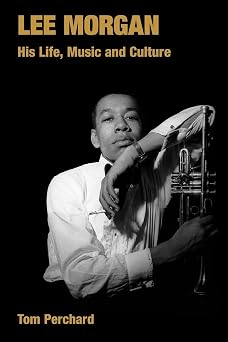
Lee Morgan emerged as a teenage trumpet prodigy with Dizzy Gillespie’s band before becoming one of the leading voices of hard bop.
This biography examines both his musical achievements and the circumstances surrounding his tragic death in 1972.
Alto Saxophone Biographies
Bird Lives!

Ross Russell’s Bird Lives! was one of the earliest full-length biographies of Charlie Parker, the alto saxophonist whose innovations helped launch the bebop revolution in the mid-1940s.
Russell was not only a writer but also the founder of Dial Records, the label that produced many of Parker’s most famous recordings. This gave him unusually close access to Parker and the musicians around him, and much of the book is built from first-hand observation of the bebop scene in Los Angeles and New York.
The biography traces Parker’s early years in Kansas City, where he absorbed the blues-heavy swing style of the local bands before developing the harmonic and rhythmic approach that would transform jazz improvisation.
Russell also places Parker within the wider social and musical environment of the time, describing the clubs, musicians and recording sessions that shaped the early bebop movement.
Although some details have been debated by later historians, Bird Lives! remains one of the most widely read and influential books about Parker and the birth of bebop.
Charlie Parker: His Music and Life

Carl Woideck’s biography takes a more analytical approach to Charlie Parker’s life and work than many earlier accounts.
While the book covers the major events of Parker’s life — from his early years in Kansas City through his breakthrough recordings in the 1940s and his later struggles — Woideck places particular emphasis on the music itself.
Drawing on Parker’s recordings, compositions and improvisational style, the book explores how the saxophonist reshaped the harmonic vocabulary of jazz. Woideck examines key performances and recordings in detail, explaining how Parker’s phrasing, rhythmic flexibility and use of advanced harmony created a new language for improvisers.
For readers interested not only in Parker’s life but also in understanding why his playing had such a profound influence on later generations of musicians, this book provides one of the most thorough and carefully researched studies available.
Straight Life
